
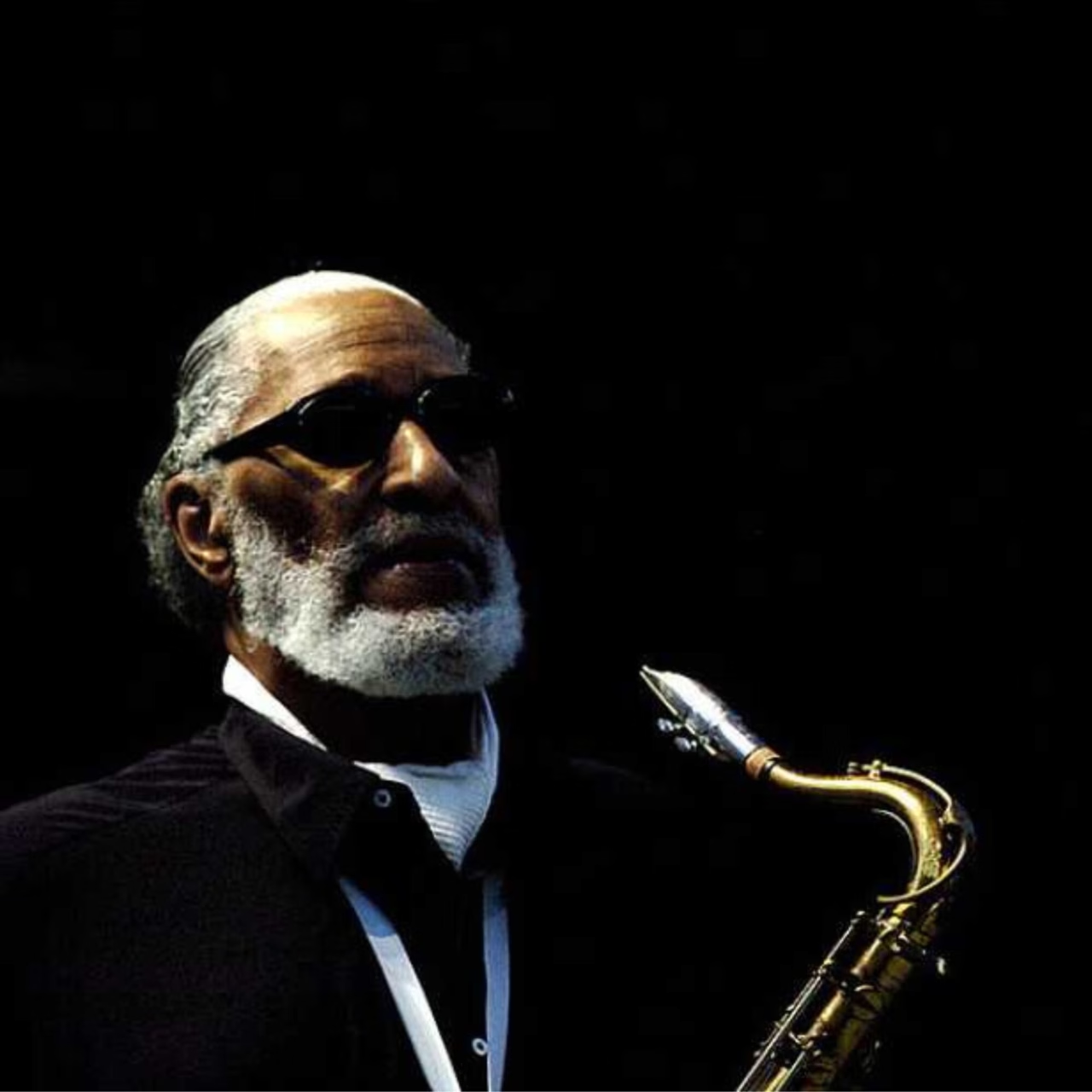
On May 26, jazz legend Walter Theodore “Sonny” Rollins died at the age of 95. Born in Harlem in 1930, Rollins was steeped in the musical legacy of the Harlem Renaissance. In Rollins’ early teens, he became inspired by also Harlem-dwelling Coleman Hawkins and picked up the tenor saxophone at 16 years old, the instrument he is most well known for today. Throughout high school, he was mentored by Thelonious Monk, eventually playing professionally with Monk as well as jazz behemoths Miles Davis and Charlie Parker and the, at the time, up-and-coming John Coltrane. Rollins’ professional career spanned 65 years from 1949 to 2014, when he retired due to his ailing health.
Rollins’ musical style continuously evolved throughout his career, playing multiple genres including bebop, hard bop, calypso, free jazz, and jazz fusion with varying levels of critical and popular success. Ultimately, Rollins’ impact on the field of jazz was undeniably colossal. Rollins received Grammy Awards for Best Jazz Instrumental Album, Best Jazz Performance, and a Lifetime Achievement Award. Rollins also received the 2010 National Medal of Arts, was a recipient of the 34th Annual Kennedy Center Honors and was given the Montreal Jazz Festival’s Miles Davis Award.
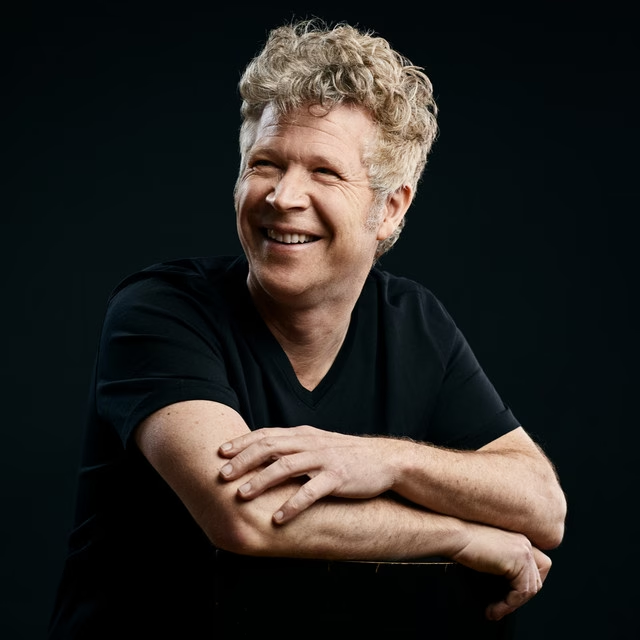
Last week, CHMA sat down with Sackville native Joel Miller, a JUNO- and ECMA-award winning saxophonist and composer and part-time lecturer at Mount Allison University, to talk about Rollins’ significance, importance and legacy.
Although Rollins was an American musician, his musical influence reached across borders, with his music even broadcasting on the now-defunct RCI towers here in our very own marshes. This was Miller’s first contact with Rollins’ music where, as a teenager, he would record Gilles Archambault’s Radio Canada midnight jazz show on cassette tapes so he could listen to it the next morning. It was in those defining moments when Rollins became to Miller what Hawkins was to Rollins,
“I was getting into the saxophone at the time but I was playing mainly alto saxophone. And that had a lot to do with why I switched to the tenor saxophone because then I could sound more like Sonny Rollins,” explained Miller.
Rollins’ music was technically sound but Miller highlighted that there was a human component that made it unique.
“His personality was really able to be translated through his playing. . . he was always just kind of joking around with the music.”
In a departure from the serious, cold and intimidating jazz standards like Coltrane’s Giant Steps, or Michael Brecker’s Some Skunk Funk, Miller found himself drawn to the charisma and swagger with which Rollins approached music, despite being surrounded by more serious contemporaries.
Early in his career, Miller leaned on several jazz greats to build a solid foundation. It wasn’t until later on that he was once again drawn back to Rollins, finding inspiration from the uniqueness of Rollins’ sometimes lengthy solos.
“I found that Rollins’ approach to improvising, the playfulness, the humor, the sort of river of creativity that he taps into when he plays. . . it’s a deeper way of improvising. To me, it’s Sonny Rollins. I’m more inspired by him than I was early in my career.”
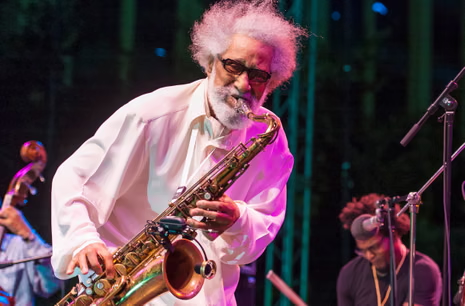
Sonny Rollins performing at the Detroit Jazz Festival in 2012 | Photo: Jack Vartoogian
At one point, as Miller prepared to attend a Rollins concert, he was warned that he may be disappointed with the performance, as Rollins could be hit or miss. Of course, no artist, no matter how successful, is spared from harsh critiques, and sometimes that criticism is valid. Rollins and his 20-minute solos were not an exception to this, being called self indulgent and repetitive. Although Miller points out that, what some may call repetitive, others might call hypnotic.
While Rollins’ musical prowess was undeniably a titanic force in the world of jazz, he was also a leader of social and environmental change, using his platform to voice his advocacy. Rollins believed jazz should be about the music and not one’s race or ethnicity. In 1961, Rollins returned to recording music after a three-year hiatus and fans had high expectations. Rollins met them, releasing his critically-acclaimed album The Bridge debuted the Sonny Rollins Quartet, which featured no piano, replacing it instead with a guitar. However, the guitar was played by Jim Hall, a white musician. Rollins received harsh criticisms for this, as race relations in the United States were especially fraught at the time with the Civil Rights Movement gaining momentum. Miller, also a white musician, appreciated how Rollins dealt with this,
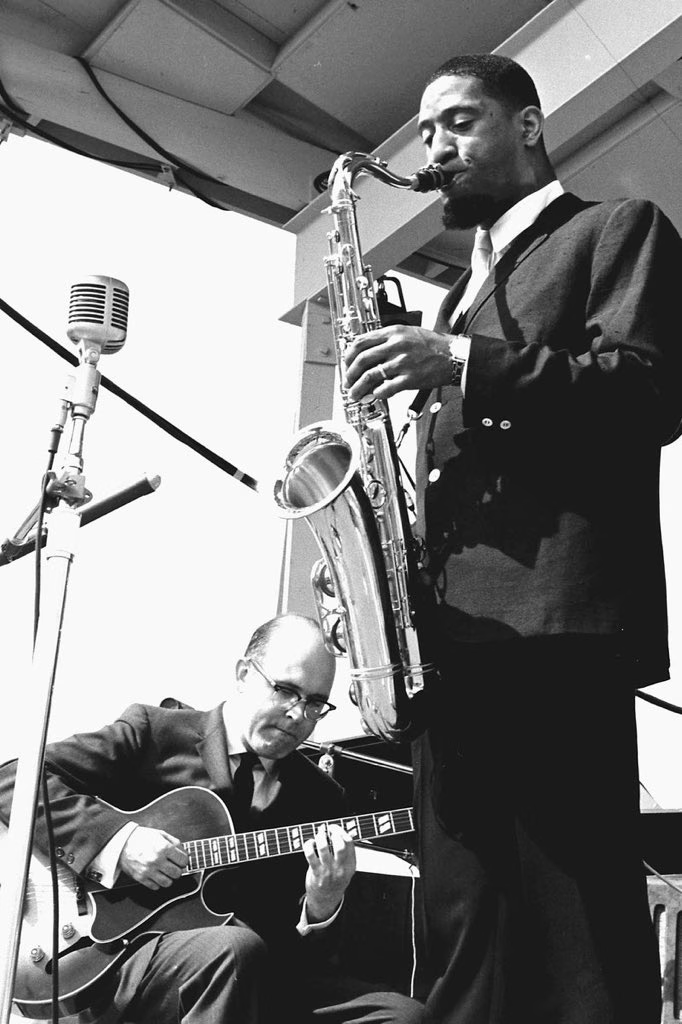
Sonny Rollins and Jim Hall recording together | Photo: Unknown
“He was criticized by white audiences and black audiences for this, so Sonny Rollins, the way that he approached this, it was so gentle. [Rollins] just said ‘Well, Jim Hall is brilliant’ and he appreciated what he brought to the band.”
Miller says Rollins was a great leader, even if he did not intend to be, and that he brought great harmony in a musical sense as well as harmony among the races. In his career, Miller has often felt out of place in the jazz world, frequently playing with bands where he was the only white musician. But Rollins’ welcoming attitude made Miller feel at home in the world of jazz. Miller says that his musical and social leadership was special, and will be missed.
Joel Miller has received high praise throughout his career, but one of his more memorable critiques came from a negative review given after a concert in Vancouver, where a critic compared his playing to a “Sonny Rollins honking.” And while some may find that to be a criticism, Miller found it to be high praise.