
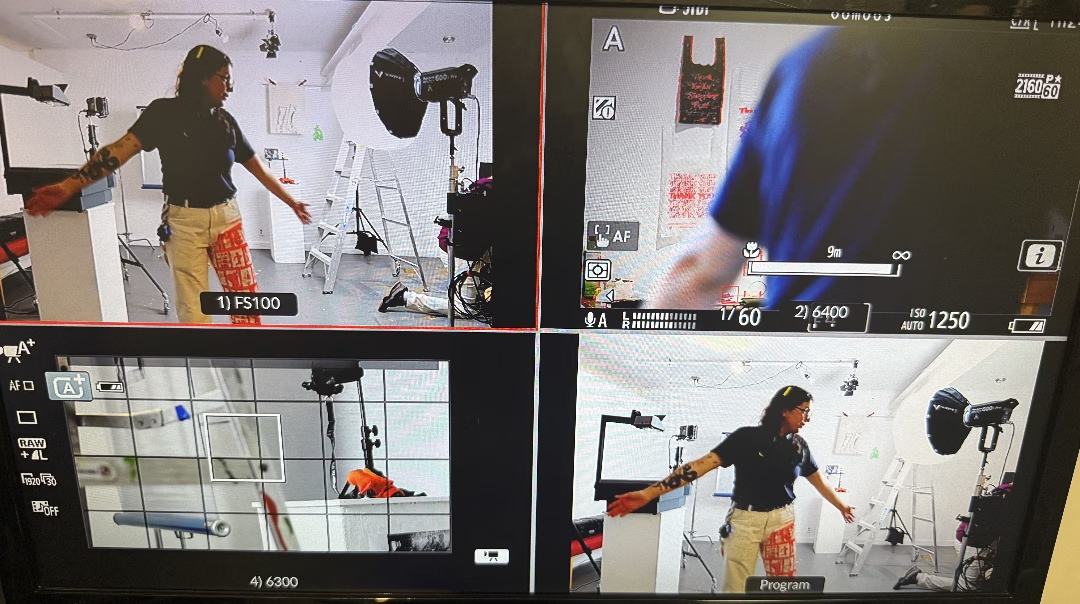
During a five-week residency at Struts Gallery in Sackville, Montreal artist Alex Apostolidis is learning more about what it would take to set up their own video platform. They readily admit they don’t entirely know how to do it yet.
“I’m gonna be learning about and setting up a PeerTube server, and I really don’t understand virtual servers and stuff, but I’m learning,” Apostolidis said.
The research is part of a larger project Apostolidis is pursuing at Struts, looking at how artists can create and share broadcast work without depending so heavily on companies such as Google and Meta. PeerTube is a free, decentralized video platform made up of independently operated sites, known as instances, that can connect with one another. Instead of one company controlling the entire service, different people or organizations can operate their own PeerTube platforms and choose how they are run.
Apostolidis does not expect to have a PeerTube server running by the end of their residency. Instead, they’re using their time at Struts to learn how the technology works, with the hope that the research could eventually form the basis of a grant application for a network connecting artists across Canada.
“I’d like to write a grant to fully realize having a cross Canada network of different live stream artists and people who are using broadcast in their work,” Apostolidis said.
They envision a “non-Google, no Meta” hub where artists could store, show and livestream their work, building on questions Apostolidis was already exploring before arriving in Sackville.
Their practice spans photography, video, performance, sculpture and installation, with recent work focusing particularly on television and broadcast media. Apostolidis often uses humour to approach subjects that are considerably more serious.
“A lot of the things that I’m talking about or addressing in my works are not funny,” Apostolidis said. “Using humor as an access point for them makes it accessible to be discussed.”
One example is iWant2BeOnTV, a video and performance collective Apostolidis started as their final university project. The first version was made remotely over Zoom, with Apostolidis cutting participants out of their individual Zoom boxes and placing them into a shared digital environment. The project also included a music video made for Montreal music group Rivalled Envy.
“iWant2BeOnTV is a video performance collective that reimagines the TV special as a space for DIY queer creation that’s community-oriented and made,” Apostolidis said.
Some of the same people have worked with Apostolidis on the project for about five years, while other collaborators have joined along the way. Charvel Rappos has co-directed the project with Apostolidis for the past two years.
Around 50 people were involved in the latest production, The Spelling Bee of the Century. Apostolidis said the show explored ideas around authority and morality, using a spelling bee and Quebec’s language politics as a framework for that discussion.
Those ideas did not mean the performance had to feel like a lesson.
“When it comes down to it, it was just a really entertaining evening,” Apostolidis said. “But I think all these things still came to the surface.”
That combination of entertainment and more difficult ideas is part of what attracts Apostolidis to television. They said television can influence how people understand the world around them, including by reinforcing cultural norms.
Apostolidis pointed to queer representation on television, particularly before the streaming era, and said those portrayals could be tokenizing or reduce queer people to recognizable stereotypes.
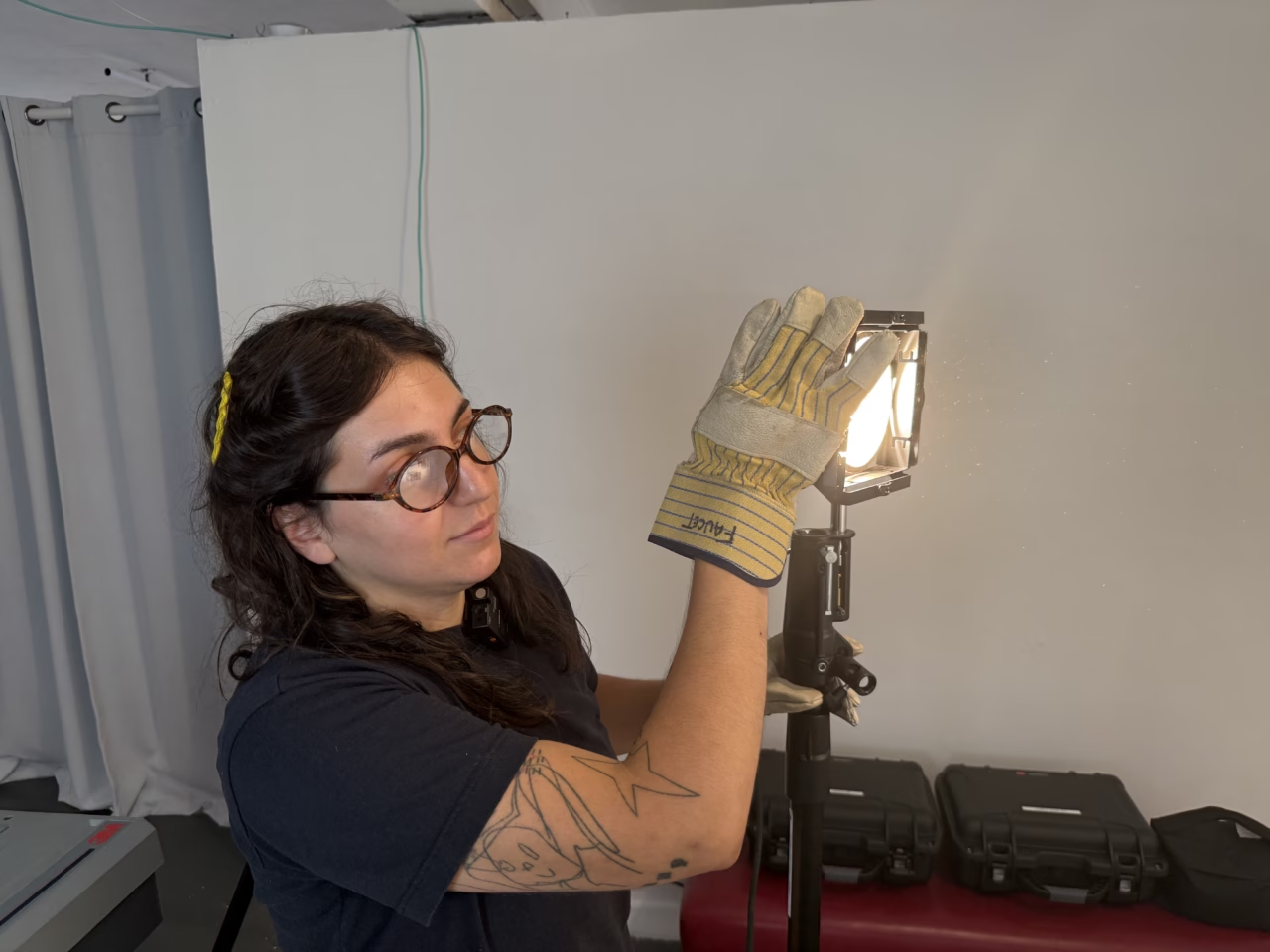
“Being queer is not something that really needs to be explained or performed,” Apostolidis said.
That also influences how Apostolidis makes their own work. They said most of the people they collaborate with are queer, and that working with a largely queer crew can create an environment where people feel more comfortable and respected.
At the same time, Apostolidis questions how far their work reaches beyond those communities. One question they repeatedly confront is who actually watches their work, and whether art intended to challenge people is reaching audiences whose views might genuinely be changed.
“I don’t know if any far right conservatives are watching my work and having their mind changed about what they think about,” Apostolidis said.
It’s a question without an easy answer, particularly as Apostolidis explores smaller, independently controlled alternatives to the major platforms where huge audiences already spend their time. They aren’t arguing that artists should abandon those platforms altogether.
Apostolidis uses Instagram and said social media can be useful for connecting with people and discovering things, even as they wish more information was available outside those platforms.
“I don’t like how much time I spend on my phone, but I’m not gonna sit here and be like, ‘Instagram reels aren’t funny,’ ’cause they are,” Apostolidis said. “There’s so much funny stuff on the internet.”
Their concern is less about whether artists should use social media than whether they should have other options.
“We don’t need to succumb to different media giants,” Apostolidis said. “Us as artists have the power to band together and have quite a loud voice and have control in our representation.”
PeerTube is one of the options Apostolidis is researching. Rather than functioning as a single website like YouTube, PeerTube allows people or organizations to operate their own video platforms, which can connect with others so videos and interactions can travel between them.
Running one requires technical knowledge and resources, and Apostolidis is still learning that side of the process. They’re relying on friends and online resources to better understand how PeerTube servers work and what would be involved in eventually establishing one.
That research has also led Apostolidis to think about what media literacy should mean. They argue it shouldn’t stop at understanding what people see on their screens, but should also include some understanding of the systems that determine where media is stored and how it reaches an audience.
“I truly do believe that our media literacy needs to include talking about how these servers and platforms are made,” Apostolidis said, “because as long as people don’t know, they won’t feel like they have the choice for something else.”
Apostolidis said they may bring zines explaining alternative online platforms to Struts and CHMA so people can learn more about the options that exist. Their larger cross-Canada network remains an idea for the future, but for now, they’re using their time in Sackville to develop the knowledge they would need to pursue it.
Their residency at Struts continues until Sept. 16.