
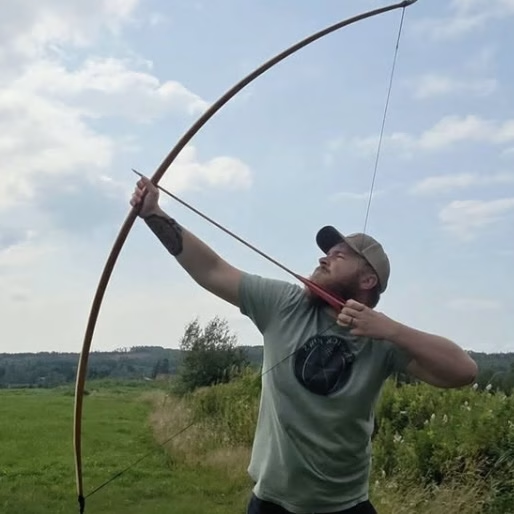
Archery is in Jake Fenwick’s blood.
His mother’s maiden name is Archer, and he says his family history is ‘riddled with archery’.
Perhaps it’s no surprise the Ontario native started Fenwick Bows and has found a way to make his living as a modern bowyer—or bow-maker—who ships his bows around the world from the shop he built for himself behind his house in Sackville.
Fenwick, who specializes in English longbows and warbows, started making them as a teen after he fell in love with archery. Luckily, his dad had a Shaker furniture shop.
“ I didn’t have much money—bows are expensive—but I did have a wood shop, so I started making them. And by the time I was in high school, that had turned into a pretty good business,” he said. “I wasn’t making good money, but for a high school kid, I was making pretty good money.”
After high school, his passion took him around the world to learn from different bowyers, eventually landing in New Zealand. While living there, he took a trip to Iceland where he met his wife Jillian. They lived for a few years outside of Canada before moving to a small village in Ontario on Lake Huron.
But soon the young couple wanted to put down roots and start a family, so they started looking for a house.
Little did they know they would end up in Sackville, but that’s just what happened when Jillian stumbled on a house on Kijiji.
”We just fell in love with it,” Fenwick said. “And so we just drove out and we, probably foolishly, we just bought it, you know, dove right in.”
And in true Maritime fashion, he already had a connection to the small town that reminded him so much of the towns he grew up in in Ontario.
“My grandparents met at Mount Allison randomly, which we found out actually after we moved. But I grew up listening to Maritime music and it felt like home, you know?”
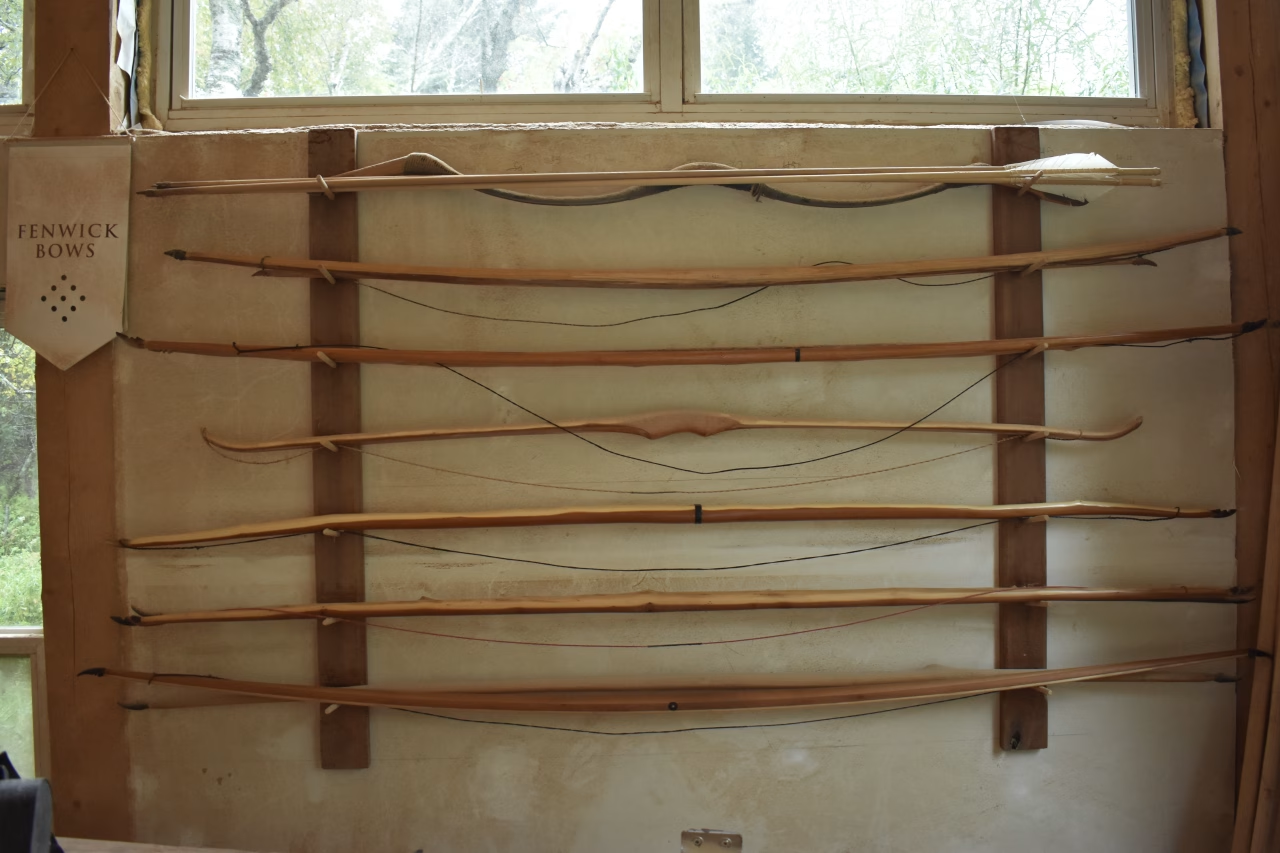
After they bought the house, he felt like he should get a “real” job, so he gave up bowyering and worked as a carpenter for a few years. He said it was “almost like a sabbatical where it was a total refresh,” but all the while messages rolled in: “Can you make me a bow?”
He figured out a price that would be sustainable, but one which he didn’t expect folks would be willing to pay.
He was wrong.
“ I always kind of joke, with bow making, to raise a family doing it, this is the first time it’s been really good maybe since like the 1600s. Because nobody needs bows anymore . . . so I feel really lucky to be able to be doing this.”
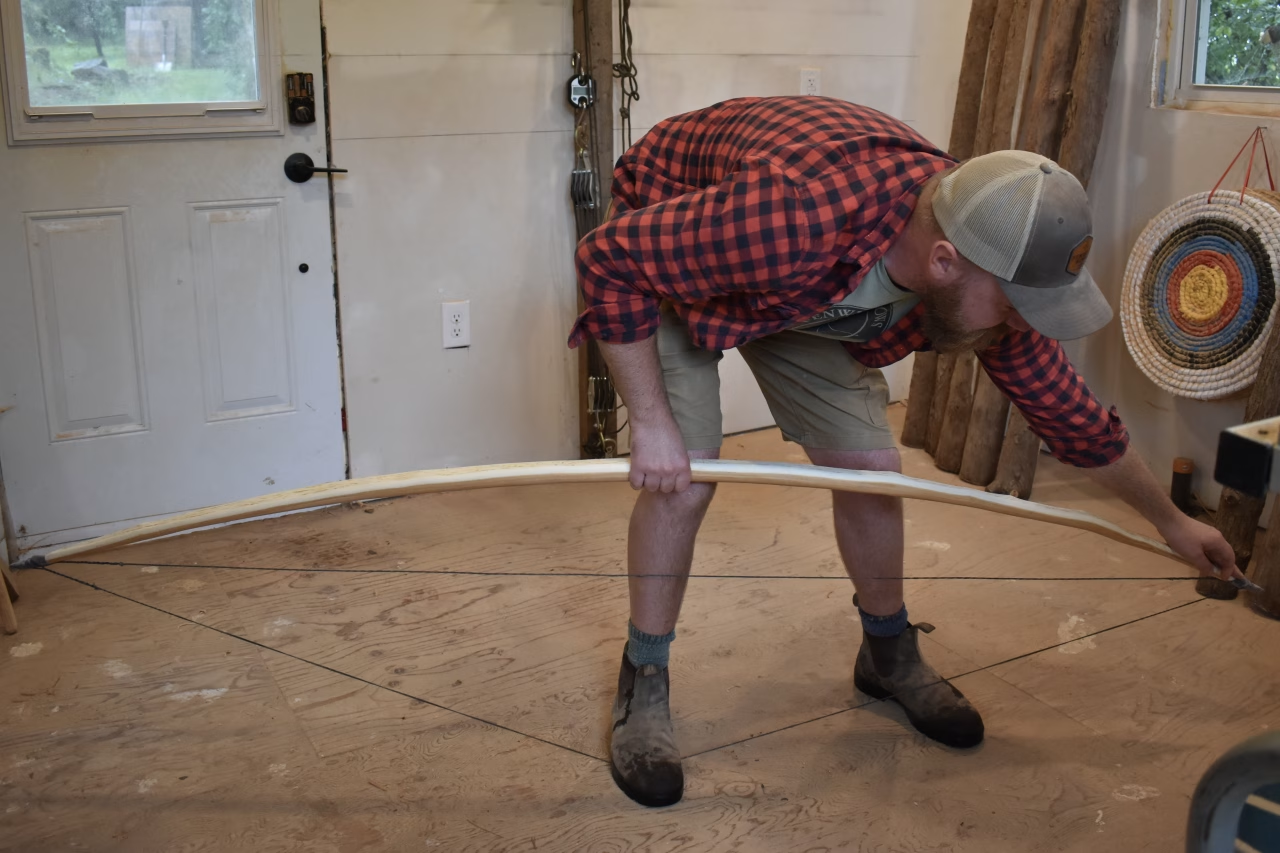
The bows
Fenwick’s bows are replicas of longbows recovered from the Mary Rose, a ship that sank in 1545. Given that wood rots easily over time, they are the only known bows of the time period ever discovered.
The bows are called self bows, or bows made from a single piece of wood, and the wood that is best, historically and now, is yew, thanks to its unique properties, he said.
“ You’ve got heartwood in the middle. So the heartwood’s this beautiful deep red kind of gold colour, red-orange, I should say, and it resists compression. So it is really strong. It does not want to bend. And the sapwood is this lovely creamy colour and it’s like an elastic. You can bend it like crazy, and it doesn’t break.”
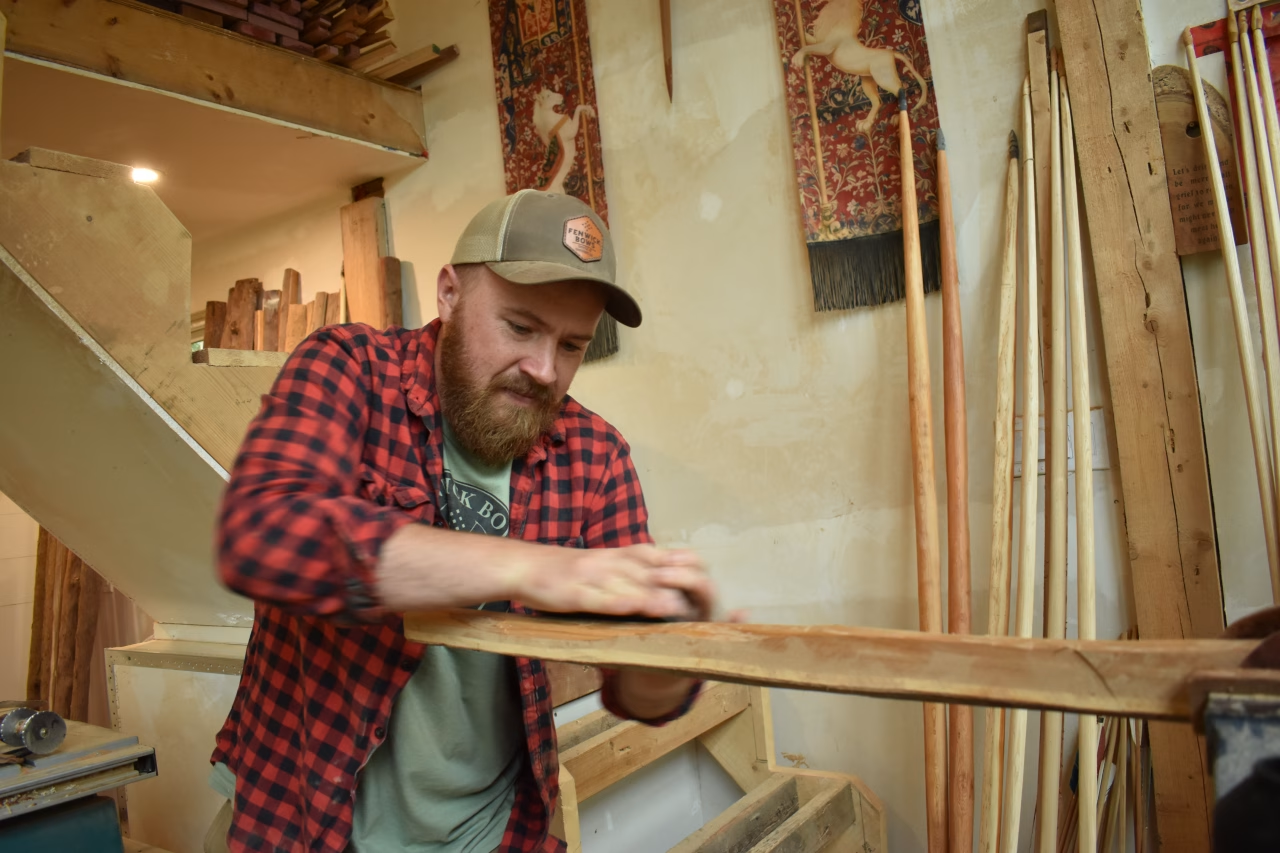
Together, those properties make it perfect for bows.
Though he has a few suppliers, including one in British Columbia, sourcing the wood is one of the biggest challenges, and you may walk by 60 or more trees before finding a suitable one, said Fenwick.
“ It’s a difficult thing because it seems that any good wood to make bows does not want to grow straight, and you need it to be straight. You need it to not be twisted.”
After selection, the wood is dried for two or three years—seasoned—and cut into pieces—staves—to be turned into bows. Fenwick then shapes the staves, mostly by hand, using a drawknife, hand plane and rasp.
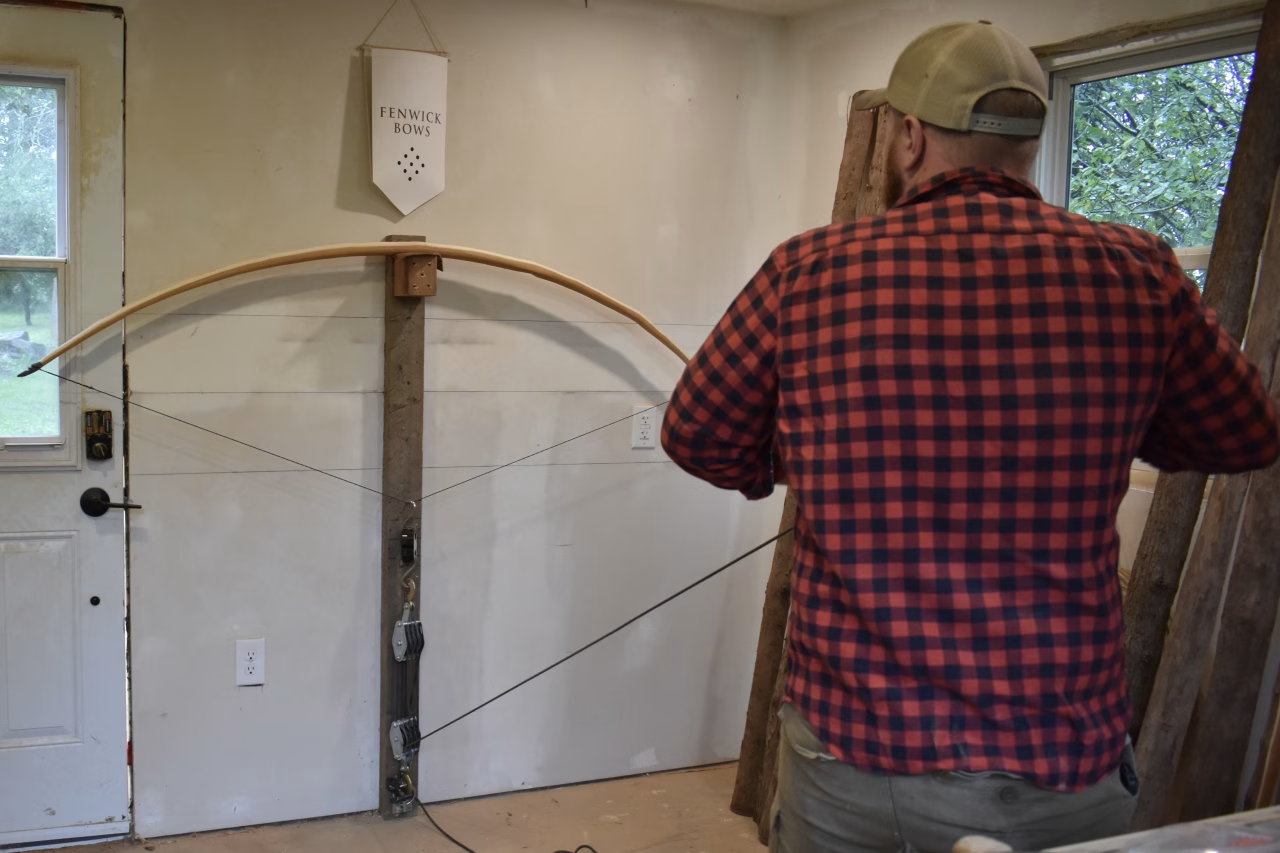
Then comes the part he considers the true art, where he uses a wall mount and pulley system to see how the bow bends, called tillering. It reveals which pieces of wood want to be bows, and which ones he’s going to have to fight.
“ You’re taking something that was alive that is now dead, and you get to breathe life back into it. And there is this very visceral kind of thing where when you see it bending, (and) it looks like the wind blowing a branch.”
Follow him at Fenwick Bows or on Facebook or Instagram to see demonstrations of his bows and to learn more about English warbows and longbows.