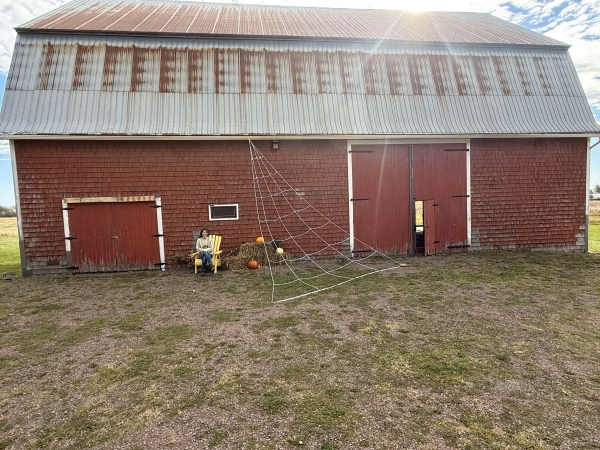

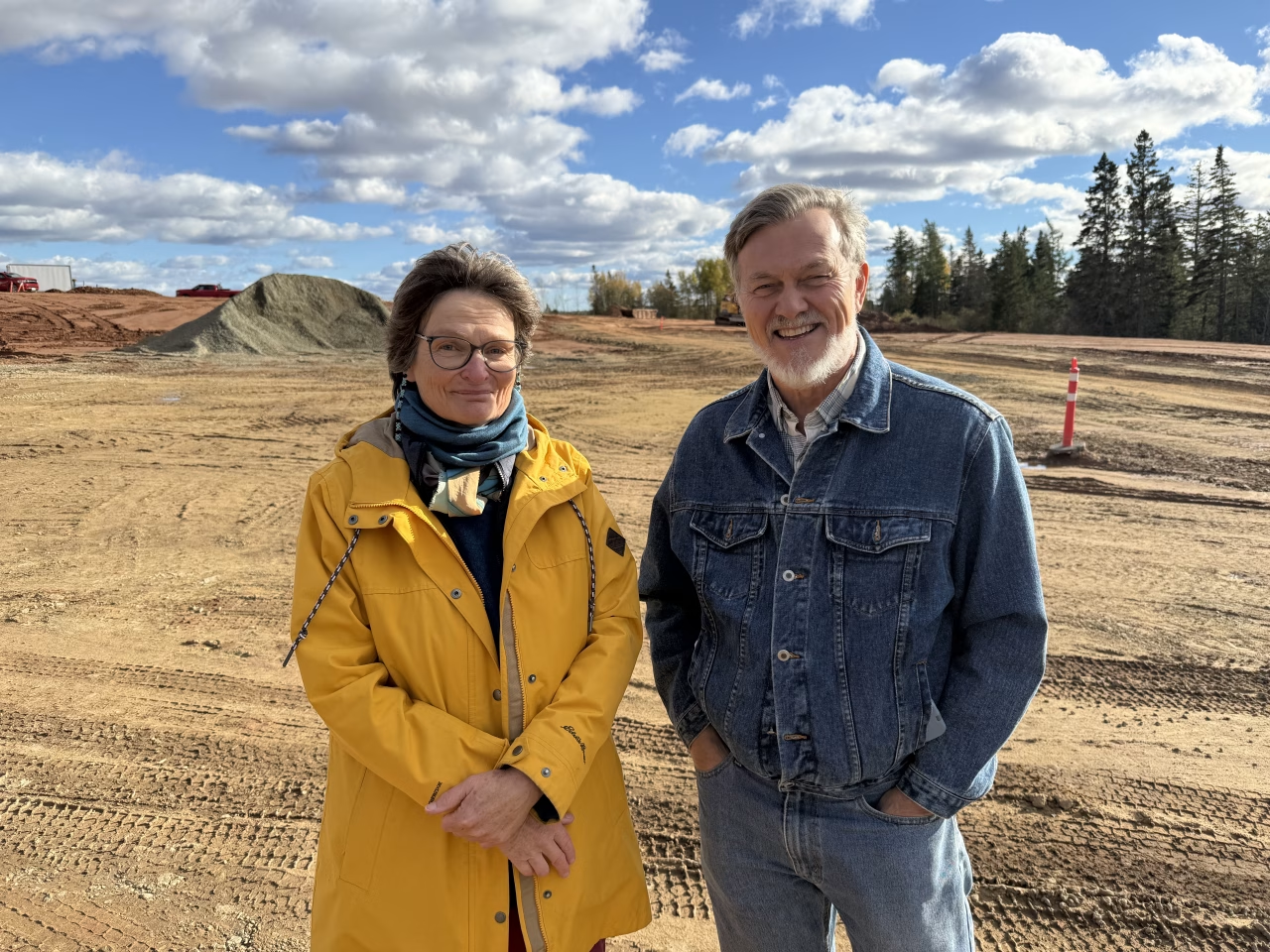
Excavation work has gotten under way at the Freshwinds Eco-Village property on Fairfield Road in Sackville, where organizers are planning a 68-unit housing cooperative.
Heavy machinery was excavating parts of the property during a recent visit by CHMA. For co-chair Sabine Dietz, seeing activity on the site is an encouraging sign after three and a half years of planning.
“I think there have been multiple times where we could have thrown in the towel,” she said.
Dietz described herself as tenacious and stubborn, qualities she said have been important throughout the project. She also spoke about the different perspectives board members have brought to their work, along with the advice they’ve received from outside specialists.
Fellow co-chair Eric Tusz-King said seeing the activity at Fairfield Road has been encouraging. Since Freshwinds was first proposed in 2023, organizers have made changes to the housing plans while working through funding and municipal approvals.
Dietz said crews have cleared the land needed for the buildings, but the cooperative is still waiting for building permits before foundations can be laid for the townhouses.
The group wants to bring more affordable and accessible housing to Tantramar, with homes for people of different ages, incomes and needs.
Under the site plan approved by Tantramar council in March, Freshwinds would include 40 apartments across three multi-unit buildings and another 28 units in seven townhouse buildings. The earlier proposal called for 62 units, including semi-detached homes.
Dietz said more than 130 people are on Freshwinds’ contact list, although that doesn’t mean everyone on it intends to move in. The cooperative has not yet opened applications for the homes.
Unlike a conventional rental development, Freshwinds would be collectively owned and managed by its members rather than an outside landlord. Members would pay monthly housing charges to help cover the property’s costs. They would also have a say in how Freshwinds is run and maintained.
Tusz-King said organizers have worked with an occupational therapist on the layout of accessible units, including where furniture would go. They’ve also looked at ways to reduce noise inside the homes, particularly for neurodivergent members.
Dietz said the accessible designs are also intended to help people remain in their homes as they grow older.
During the visit, Dietz pointed to an area of the property where organizers hope to create a wetland bioswale. The planted drainage area would collect rainwater runoff from part of the site. Dietz said the development is also being planned with extreme heat and hurricanes in mind.
The buildings themselves are being designed to use less energy. Tusz-King said the cooperative has worked with architects and engineers to pursue standards beyond conventional construction requirements, with the eventual goal of producing enough electricity on-site to meet the development’s needs.
The proposed buildings include rooms for meetings and other shared activities, while gardens are also planned for the property. Tusz-King said a separate communal building could be added if the cooperative secures additional funding.
Dietz, who hopes to live at Freshwinds herself, has spent time imagining what daily life there could look like. She wants members to have opportunities to spend time together while still respecting each other’s privacy.
“I personally imagine a very welcoming space,” she said.
Monthly housing charges have not yet been determined. Tusz-King said organizers are still working out what members would pay, although he described plans for provincial subsidies to help eligible households with housing costs.
The cooperative has not yet announced when members could begin moving into the development.