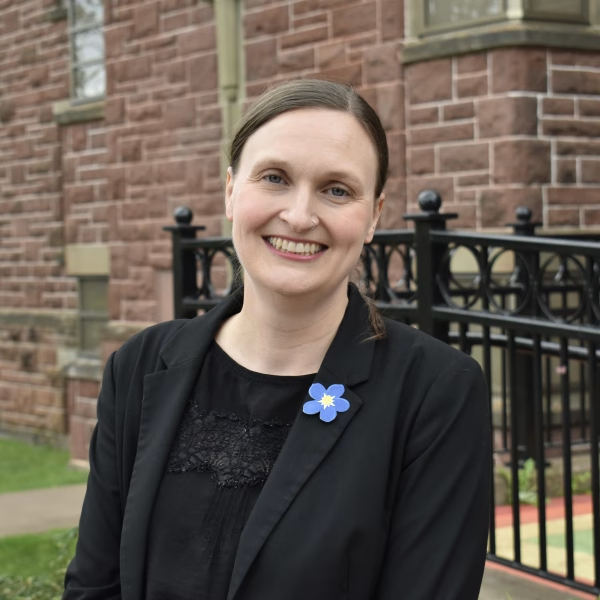

For Sacha DeWolfe, one of the important questions surrounding the National Day for Truth and Reconciliation comes a day later.
“I’m interested in what happens on October 1st,” said DeWolfe, a member of Natoaganeg First Nation and an assistant professor at Mount Allison University. “What meaningful and authentic relationships are being built in order to work together as an entire community on issues and opportunities I think that matter to all of us?”
As Sept. 30 is marked across the country, CHMA spoke with four First Nation people about what reconciliation means to them and what they believe needs to continue after the day is over.
Richard “Dick” Paul, a Wolastoqiyik knowledge keeper from Kingsclear First Nation, describes reconciliation as acknowledging the past without remaining there. Paul, 72, said he taught Native Studies at Fredericton High School for about 16 years and continues to work as a knowledge keeper, including with the New Brunswick Department of Education.
Paul said what happened in the past continues to affect not only those who experienced it, but their relatives and later generations. He connects the “truth” in Truth and Reconciliation to truth and honesty in the Seven Teachings.
“We have to be aware of and acknowledge what has gone on in the past,” Paul said. “Not to live in the past, but to make sure we know about it, and we never forget it so it never happens again.”
Stanley Barnaby, a member of Listuguj Mi’gmaq First Nation and CEO of the Joint Economic Development Initiative, or JEDI, said there were parts of that history he did not know himself.
“I personally, even as an Indigenous person, did not know a lot of that true history,” Barnaby said.
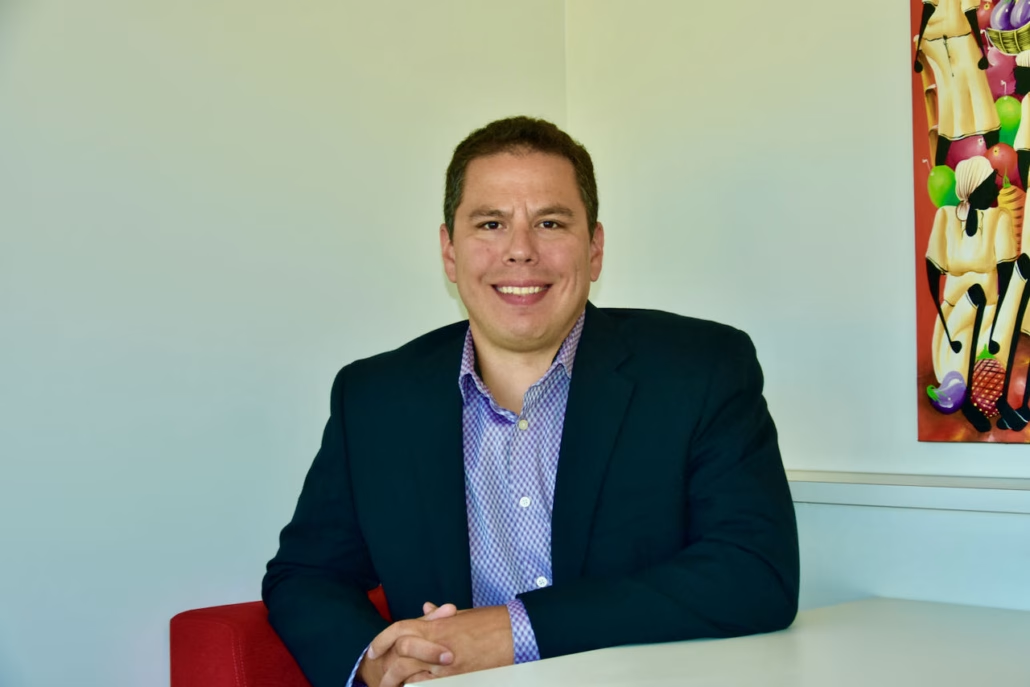
Some Elders and community members who lived through traumatic experiences did not speak about them because of the pain involved, Barnaby said. As he learned more, he came to better understand communities and members of his own family. That history now influences his work, he said, including his focus on creating opportunities for young people and First Nation communities.
Karl Hele has encountered resistance to some of those histories. Hele, an Anishinaabe scholar from Garden River First Nation in Ontario and a professor at Mount Allison, said some people have difficulty hearing details about residential schools and missing children, or other histories that conflict with stories they have grown up with about their families, communities or Canada.
“There’s this unwillingness to listen,” Hele said, because those histories can disturb “family, community and Canadian narratives that people feel shouldn’t be disturbed.”
Hele’s research has explored Indigenous history, politics and law, including the history of his home community and the Anishinaabeg of the Upper Great Lakes.
Paul has seen changes in what is discussed publicly during his own lifetime. He remembers a time when being Native was viewed negatively by some and when ceremonies, spiritual teachings and languages were suppressed. Today, he said, young people are learning teachings and language in First Nation schools and outside of them. He has watched other schools begin to incorporate that knowledge and seen more people participate in powwows.
“At one time we didn’t talk about it,” Paul said. “Nobody wanted to know about it, try to hide it under a rug. But it’s not happening anymore.”
Earlier in his career, Paul said he tried to start a drumming group at Fredericton High School, but students were too shy to participate publicly. At a Truth and Reconciliation event this week, he watched five young women who had attended the school drum during a ceremony.
“Now we see the confidence in our young people becoming stronger,” Paul said. “They’re being more proud of who they are.”
DeWolfe previously worked with the provincial Department of Education and said curricula now include more First Nation topics than when she began working in the field, although she said there is still room for improvement in how those resources are used.
At Mount Allison, she pointed to the university’s partnership with the Three Nations Education Group. The two renewed their memorandum of understanding for another five years earlier this year, continuing a partnership focused on Indigenous-led, community-based post-secondary learning.
DeWolfe said she is cautious about measuring progress through institutional statements or symbols alone.
“It shouldn’t mean that an institution knows the right words or can put the right symbols up at the right time,” DeWolfe said. “It’s those ongoing relationships that matter.”
She said those relationships should be reciprocal, respectful and meaningful. Rather than approaching First Nation communities by first asking what they need, DeWolfe said institutions should also recognize what communities already have, what they value and what they are trying to create. Her emphasis was on working alongside First Nation people rather than making decisions for them.
Through JEDI’s cultural awareness workshops and training, Barnaby said people are encouraged to understand the history and get to know First Nation communities.
“What can I do in my life to be an ally, to be an advocate, to support the First Nation communities and people?” Barnaby said.
He said that could include looking for opportunities within a school, business or organization, supporting First Nation communities and organizations, and building trust and partnerships with community members.
For Paul, that work cannot be limited to the National Day for Truth and Reconciliation. He said the past needs to continue to be acknowledged and studied, while younger generations carry that knowledge and their teachings forward.
“I think it’s not just another day, the September 30th,” Paul said. “But what about the next day and the day after that and the day after that?”