
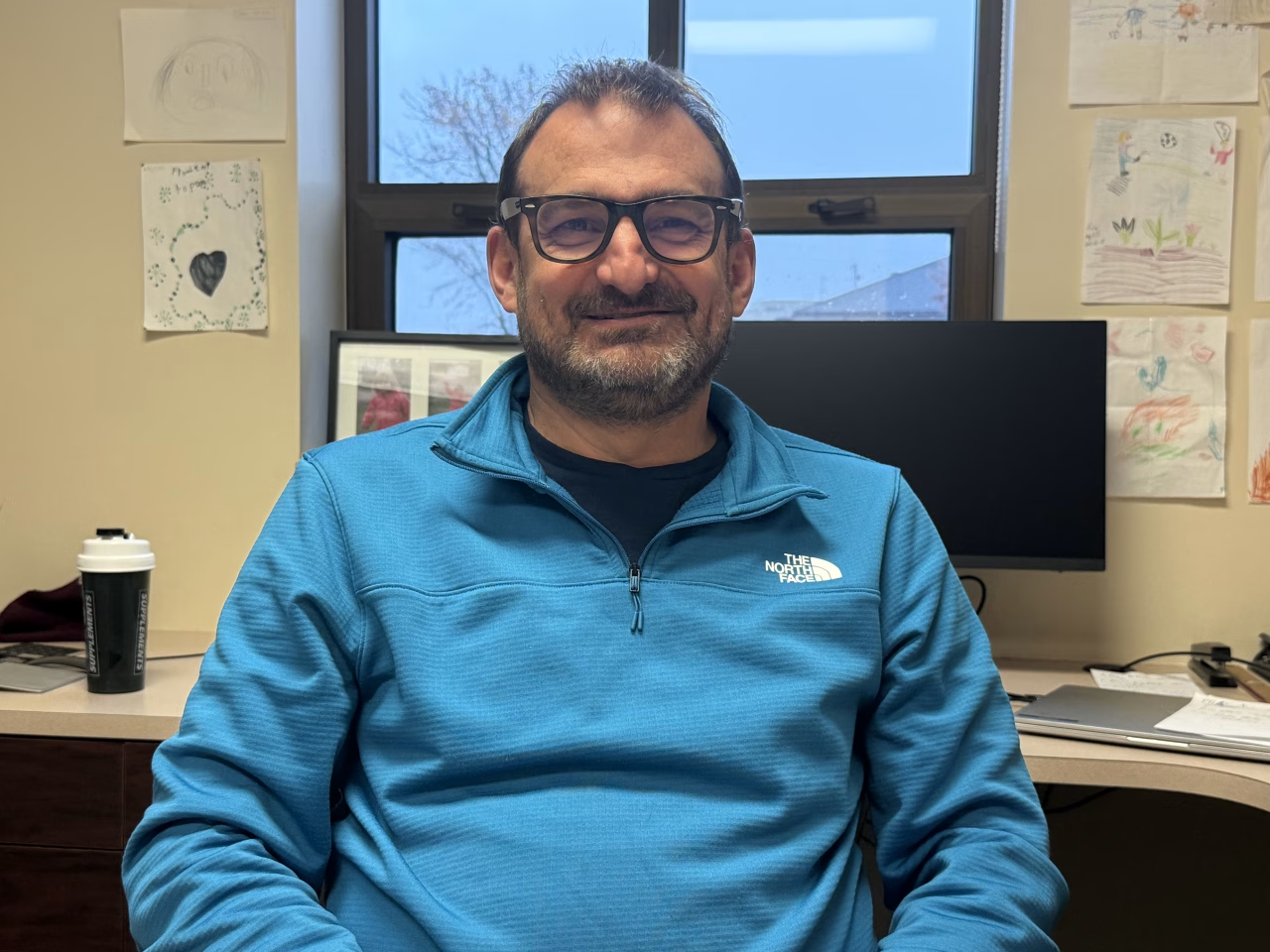
A Mount Allison University physics professor is helping develop equipment for a particle collider in New York, with $400,000 in provincial funding supporting the university’s work.
Dr. David Hornidge is working with scientists from around the world on the Electron-Ion Collider (EIC). The project is based at Brookhaven National Laboratory, a research facility on Long Island in New York State, where scientists are preparing the new accelerator.
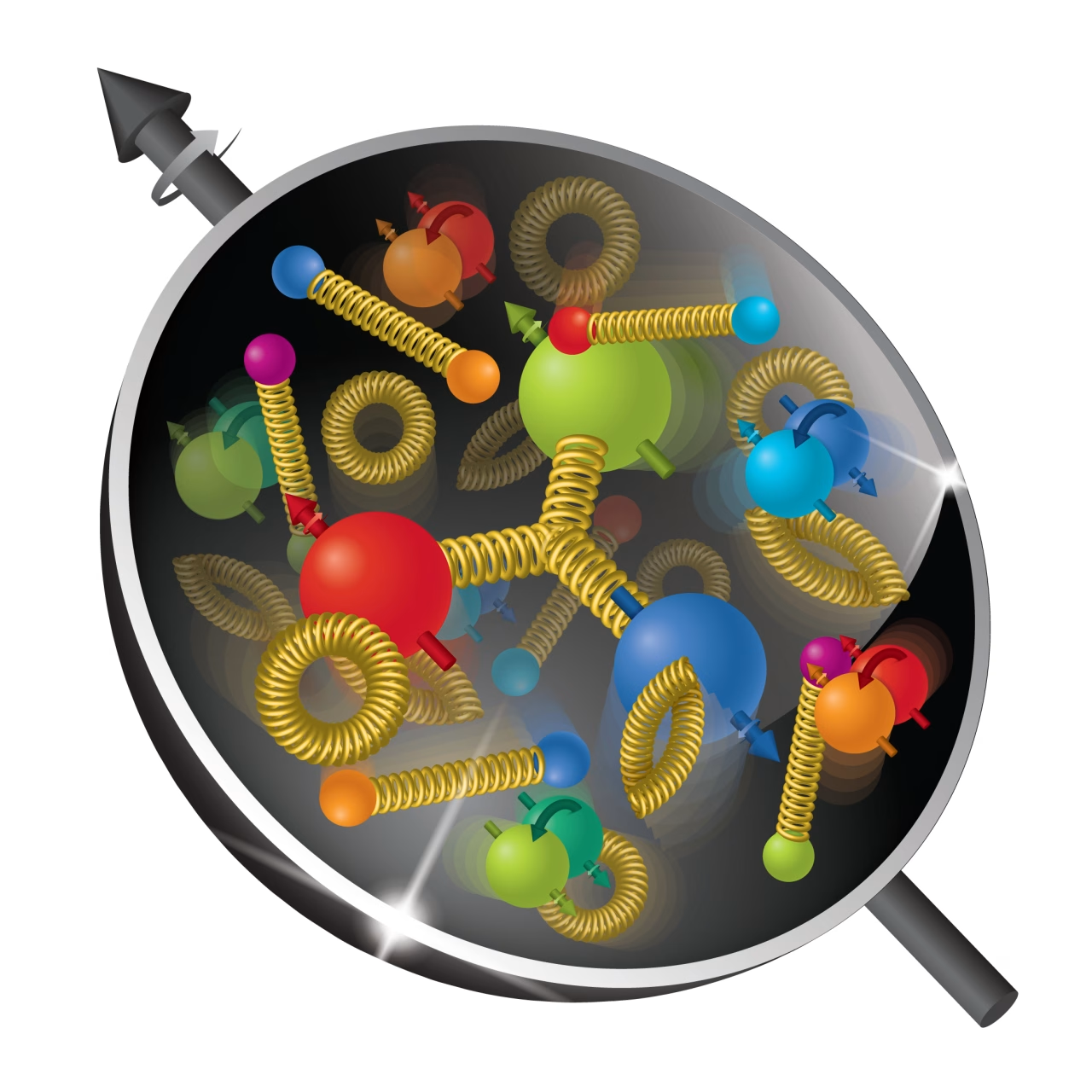
Much of the work centres on understanding the proton. It’s one of the particles that make up the nucleus of an atom, and inside it are smaller particles called quarks.
“We know that protons exist. We know that they’re made up of quarks, but we don’t know why they have the mass that they have,” Hornidge said.
Quarks interact through the strong nuclear force, carried by particles known as gluons. The theory behind these interactions is called quantum chromodynamics. Physicists have spent decades studying how the force works, but there are still questions they haven’t been able to answer.
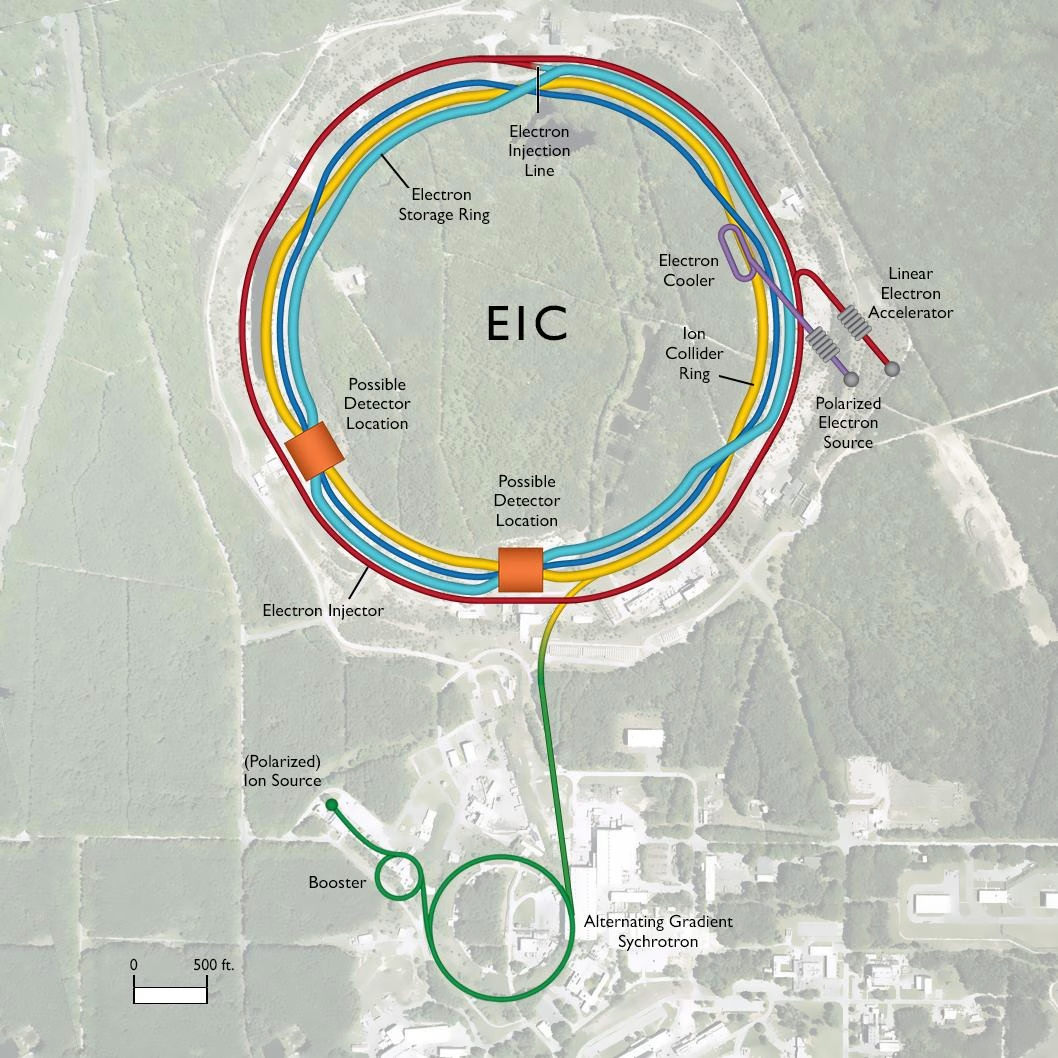
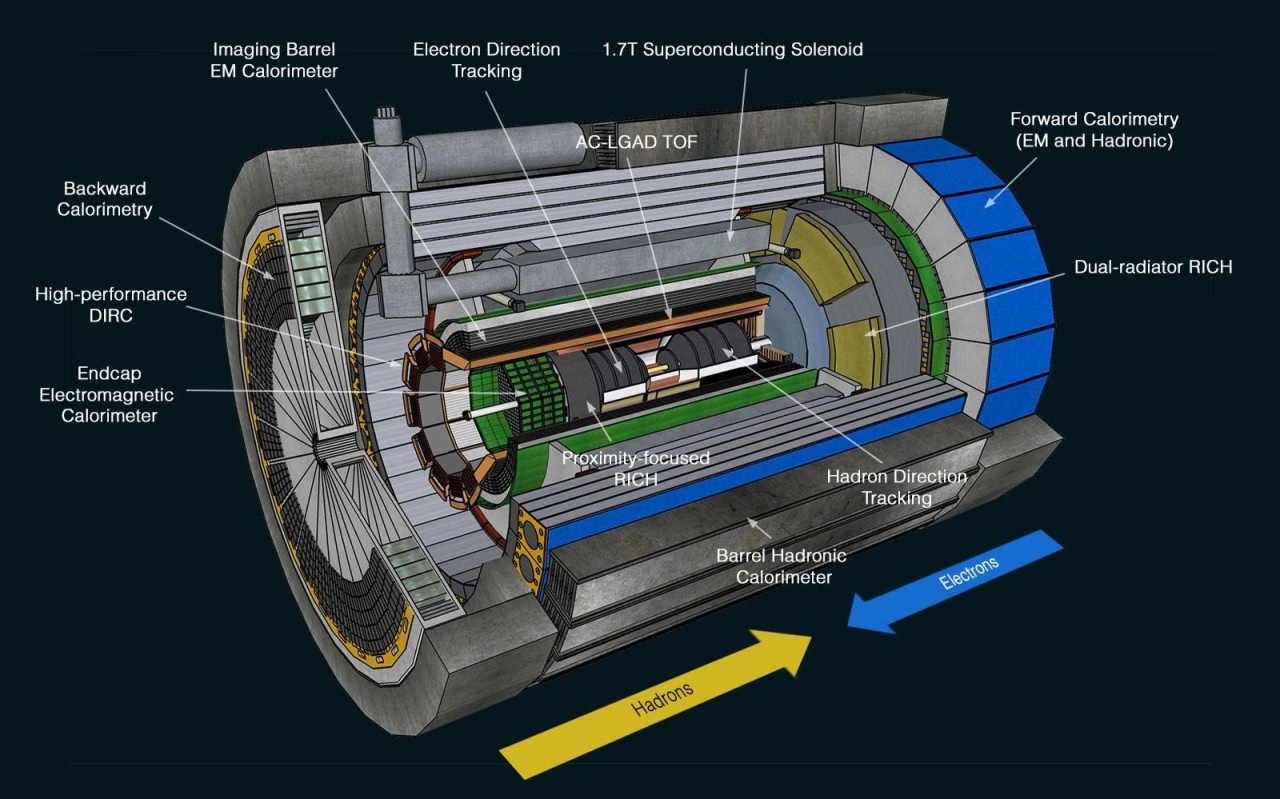
The EIC will send electrons around one ring and protons or heavier atomic nuclei around another, with the beams meeting at designated collision points. Scientists will examine what comes out of those collisions and use the measurements to test their understanding of the proton.
Hornidge explained that studying something so small requires extremely high energies. The machine also needs intense particle beams to produce enough collisions for scientists to collect meaningful data.
Working with researchers at the University of Regina, Hornidge is helping develop the Barrel Imaging Calorimeter, a component of a much larger detector known as ePIC. The detector will contain numerous interconnected systems, each responsible for collecting different information about the particles produced.
Hornidge gave an example of a collision producing about 50 particles, which might then decay into 100 or 200 others. The detector records the energy left behind as those particles pass through it. That information is turned into electrical signals, allowing scientists to identify what was produced and measure the particles’ energy and direction. Building equipment capable of making those measurements presents its own challenges.
“So we use technology that exists, but we often have to change it and make it specific to what we’re doing,” Hornidge said.
Hornidge said a prototype of the Barrel Imaging Calorimeter developed by the Regina group was taken to Jefferson Lab in Virginia this summer for beam testing. These tests allow researchers to examine how equipment performs under conditions similar to those expected at the finished collider and make improvements before installation.
The $400,000 awarded to Mount Allison comes from ResearchNB’s Impact Fund. It’s part of the funding needed for the university to participate in a larger Canadian effort, backed by a $5.34-million Canada Foundation for Innovation grant. Researchers at the University of Manitoba are leading that grant, with Mount Allison and other institutions involved.
Hornidge said the funding will help pay for components of the calorimeter. He added that securing provincial support wasn’t guaranteed, particularly because subatomic physics isn’t necessarily among New Brunswick’s traditional research priorities.
Hornidge said the project could provide opportunities for students to gain practical experience with electronics, engineering and advanced data analysis, including machine learning. His team has been working with New Brunswick Community College, with hopes that electronics and engineering technology students could travel to research facilities in Regina and British Columbia to help assemble equipment.
Hornidge has taught at Mount Allison since 2003, combining teaching with experimental research. He said he still works with some of his former students, including those who have gone on to careers in physics.
One of his former undergraduate students is now pursuing a PhD at MIT, while another has become a professor at Dalhousie University.
Hornidge estimates the collider may not begin operating until around 2035. Although Brookhaven already has some accelerator infrastructure, additional components must be built, and the detector will need to be assembled and tested before experiments can begin.
Some of his colleagues in Regina may have retired by the time the collider is ready, he said.
Hornidge said that in experimental physics, a decade can pass between coming up with an idea and publishing the results. And after all that work, the findings aren’t always what researchers anticipated.
Sometimes the measurements don’t agree with what theorists predicted. Hornidge said that can lead to new questions and another round of experiments.

Theodore Ramharack holds a Bachelor of Arts in Political Science from Western University and a diploma in Broadcast Journalism. He recently completed an internship with CBC News’ The National.
Originally from Ontario, he moved to Sackville to join CHMA as a local journalist and is excited to get to know the Tantramar region and share stories from the community.