
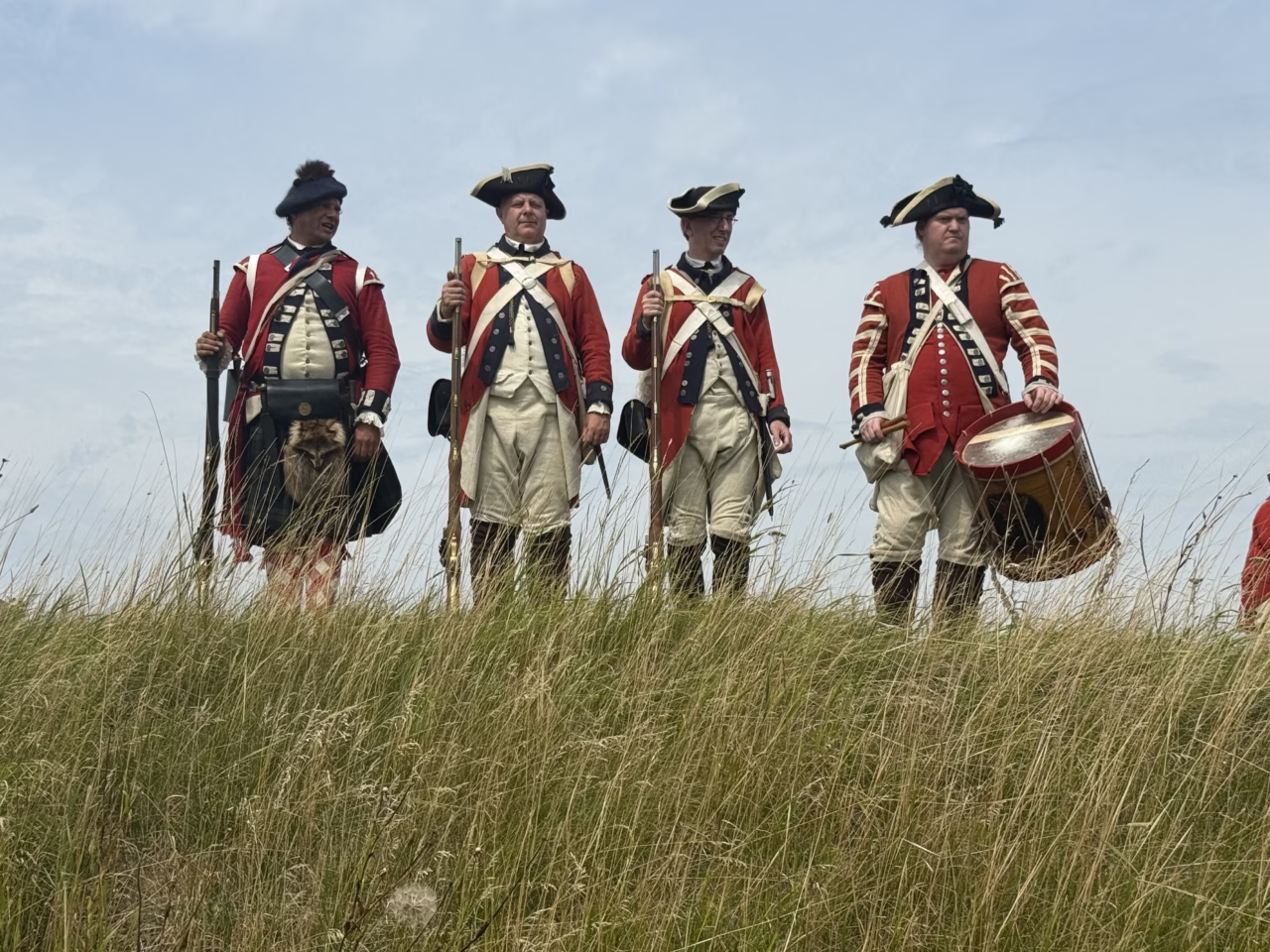
Alistair James Hamilton looked like he had stepped into the field from another century. A sash across his shoulder marked him as a sergeant, and in his hands was a sergeant’s fusil as historical reenactors set up camp near St. Mark’s Anglican Church in Mount Whatley.
Hamilton was portraying a sergeant with the 84th Regiment of Foot, one of several reenactors who came to Mount Whatley for a weekend marking 250 years since the Eddy Rebellion and Siege of Fort Cumberland. The fighting was part of the American Revolution, but it happened here in 1776, years before New Brunswick became a province.
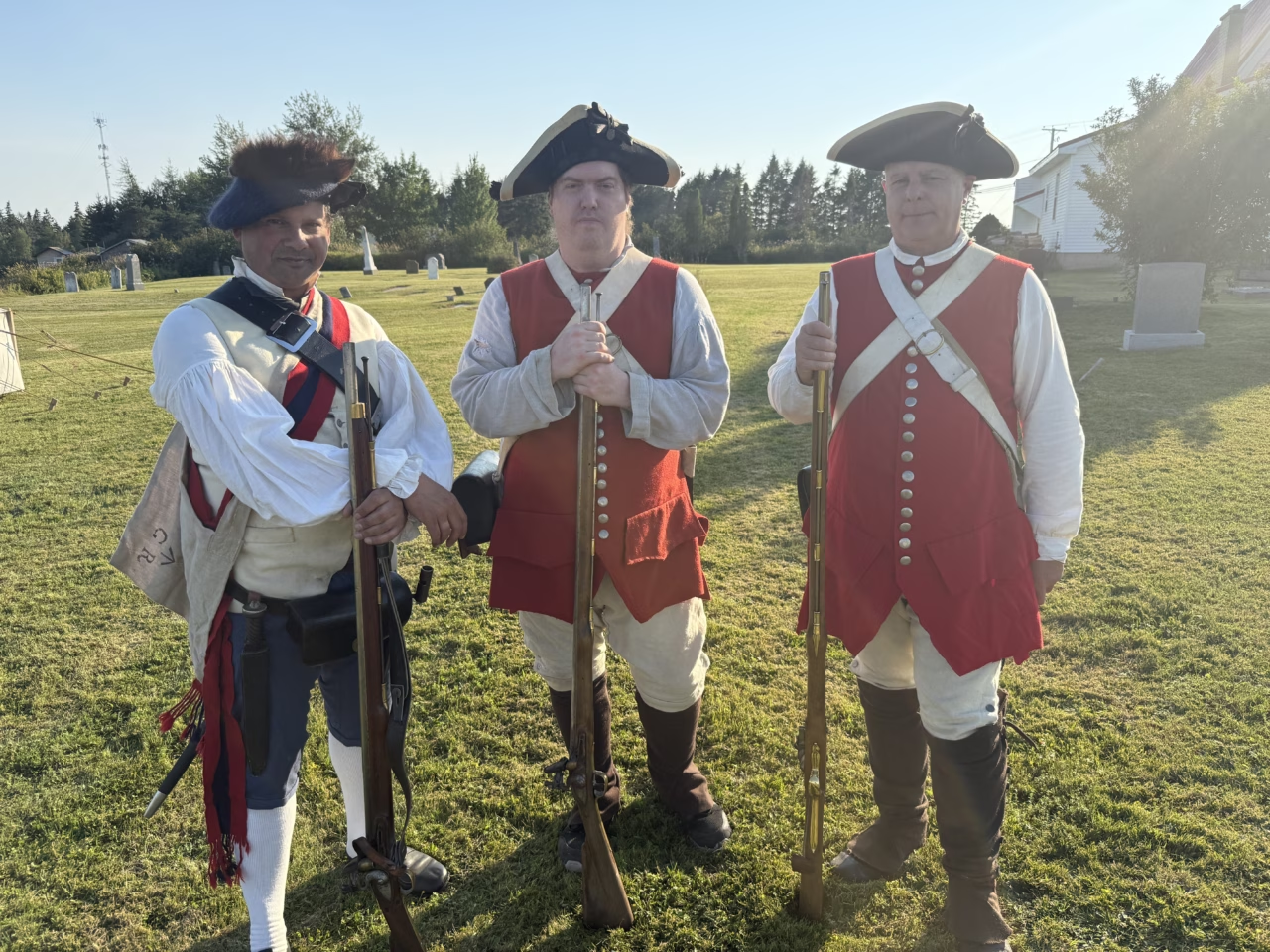
The field where Hamilton stood Friday was close to Camp Hill, where a rebel force had made its base 250 years earlier while trying to capture nearby Fort Cumberland.
“I think it’s important for younger generations to learn their history and to know why these areas are here,” Hamilton said.
“These aren’t just blocks of stone and bits of mortar in the middle of the wilderness,” he said. “They served a purpose, and they saw what really made up these communities.”
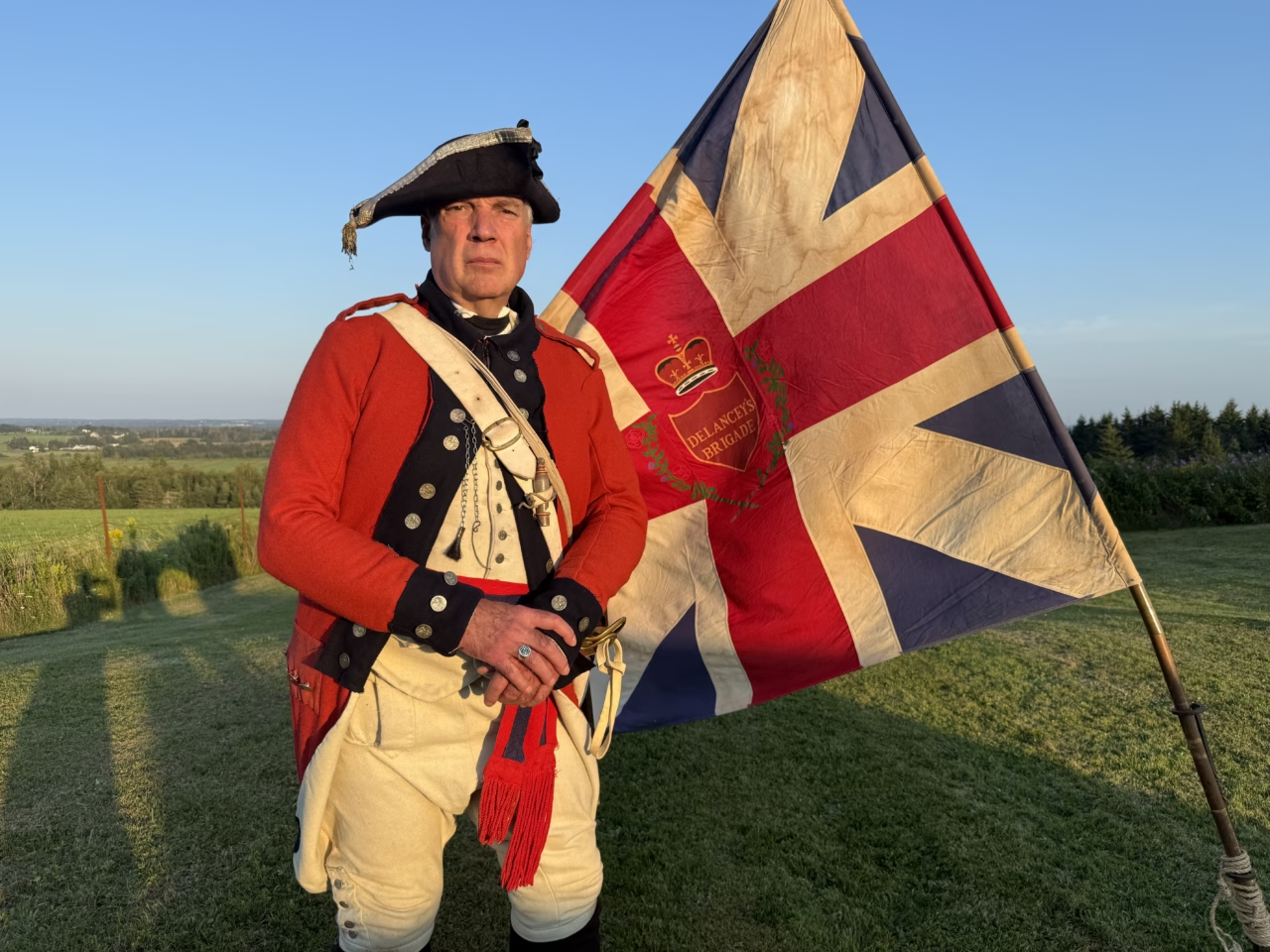
Steve Fowler has spent more than 30 years as a historical reenactor and is a sergeant with DeLancey’s Brigade Historical Re-enactors. He said many New Brunswickers know the American Revolution through the Loyalists who arrived after the war, but less about what was happening here while it was being fought.
“I think for most New Brunswickers, the story of the revolution really starts with the story of the Loyalists when they arrived in 1783, which is certainly a huge part of our history,” Fowler said. “But the fact is that there were things going on here throughout the revolution, including actual battles, like the one here.”
There was no New Brunswick when that battle happened. In 1776, the area was part of Nova Scotia and the American Revolution was underway to the south. Jonathan Eddy, a former member of the Nova Scotia Assembly, supported the rebellion and wanted Nova Scotia to join it.
He travelled south looking for support, then assembled a force of about 180 men. His target was Fort Cumberland, which he hoped to capture and use as a foothold for the rebel cause in Nova Scotia.
Eddy’s men established themselves at Camp Hill, in the area now known as Mount Whatley. They tried to cut the British garrison at Fort Cumberland off from the outside and captured the Polly, a ship carrying winter supplies from Halifax, on Nov. 6.
Then they tried to take the fort.
An attack on Nov. 13 failed. Nine days later, the rebels tried again, this time setting buildings near the Fort on fire in hopes the wind would carry the flames inside. The defenders managed to control the fires and held their position.
Despite attempts to cut off communication, word eventually reached Halifax and reinforcements arrived. Crown forces attacked Camp Hill before dawn on Nov. 29 and drove Eddy’s force from the area.
Among the people visiting Camp Hill on Friday was Diane Isaacson, who had travelled from Massachusetts after learning about the anniversary only a few days earlier. Her connection to what happened there went back generations, with members of her family among the people caught up in the siege.
Looking past the reenactors and across the farmland around Mount Whatley, Isaacson tried to picture what her ancestors would have seen.
“It must have looked like this in the 1760s,” she said.
Isaacson was also trying to determine which of the surrounding farms may have belonged to her ancestors. She has been to historical reenactments before, but said part of what made this trip different was “seeing the living history piece of it in the space where this happened.”
Kristen Benidom also came with a family connection to people on the rebel side of the siege. She was familiar with reenactments in New England, but this time she was seeing the story from a different side.
“I’ve been to a lot of reenactments down in the New England area,” Benidom said. “So it’s really interesting to come up here and see the British camp.”
On Saturday, the anniversary events moved a few kilometres away to Fort Beauséjour–Fort Cumberland National Historic Site, the fort Eddy’s force had been trying to capture.
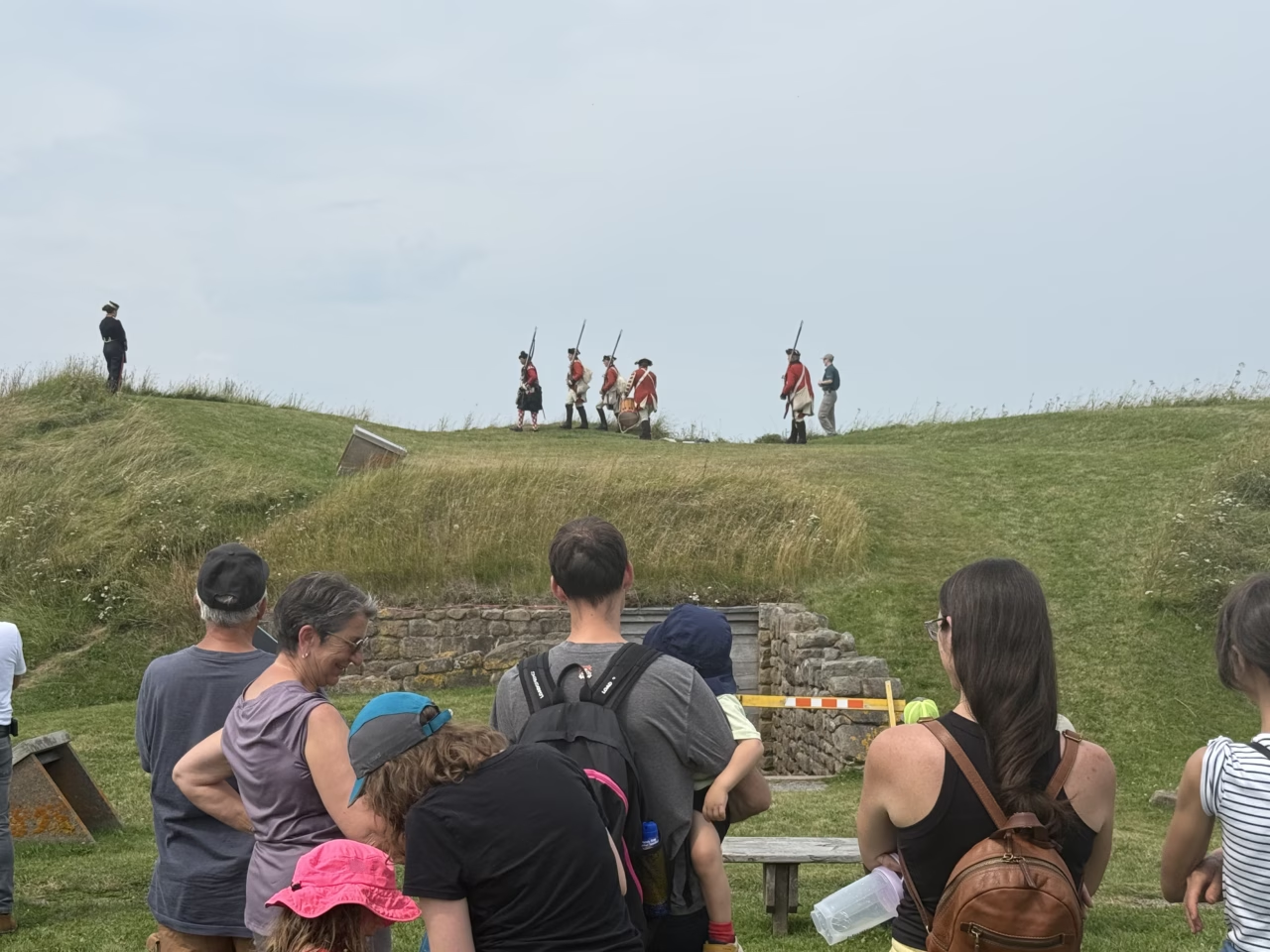
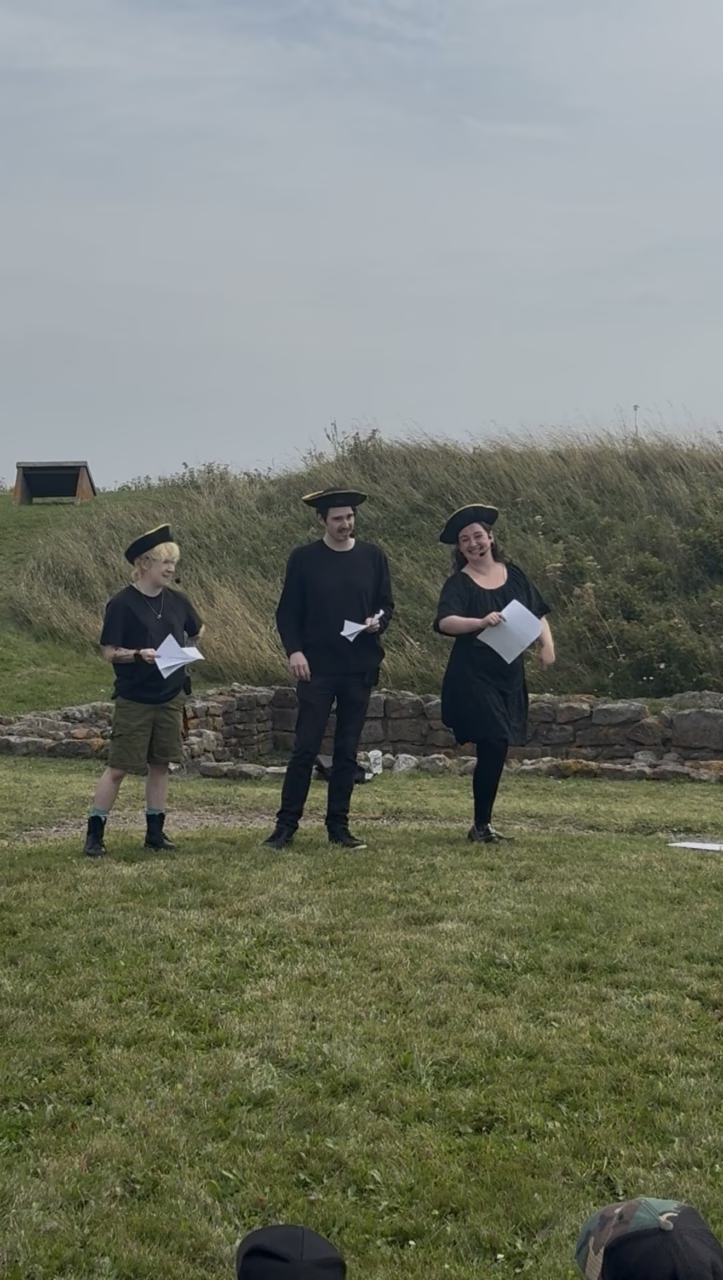
Military commands carried across the grounds before the crack of muskets. Reenactors drilled around the fort and demonstrated their weapons, then acted out the story of the siege in a short performance called History in 10 Minutes. Visitors watched the events unfold on the same grounds where the fighting had taken place 250 years earlier.
Christophe Lerat, visitor experience coordinator at the national historic site, said the battle of 1776 is not as well known as the Fort’s history surrounding the 1755 siege. The anniversary gave them a chance to put more attention on that part of the Fort’s history.
“The best way to get people interested in history is to get people to be able to live and get to touch history,” Lerat said.
Much of what visitors saw during the demonstrations came from research done by the reenactors. Fowler said members of DeLancey’s Brigade study the people they portray and use reproduction weapons and equipment. Even the military drill performed Saturday comes from an 18th-century manual of arms used by British forces and their allies.
DeLancey’s Brigade has been around in some form for about 45 years, and Fowler said some members are now second and third-generation reenactors.
The fighting at Fort Cumberland was also not the only time the American Revolution reached the region. Fowler pointed to raids on settlements and later fighting along the Saint John River, events he said have been overshadowed by the Loyalist history that followed.
“There was an actual shooting war going on right here,” Fowler said. It was smaller than the fighting taking place in the Thirteen Colonies, he said, but it was real and its outcome mattered.
Eddy never took Fort Cumberland, and the attempt to bring Nova Scotia into the American rebellion failed. But Fowler said the fighting here shows the American Revolution reached this region years before the Loyalist migration that would later reshape what became New Brunswick.
“It influenced our history,” Fowler said. “It played a role in who we are and how we came to be where we’re at today.”
By returning to the places where the rebellion unfolded, the reenactors hoped to keep a little-known part of the region’s history from being forgotten.