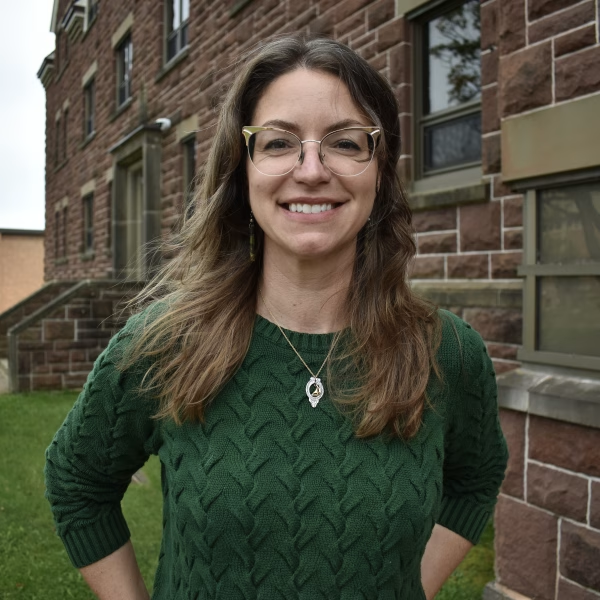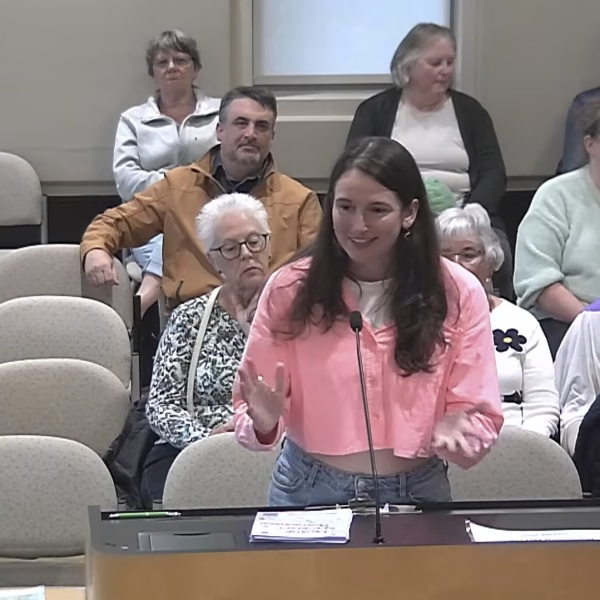

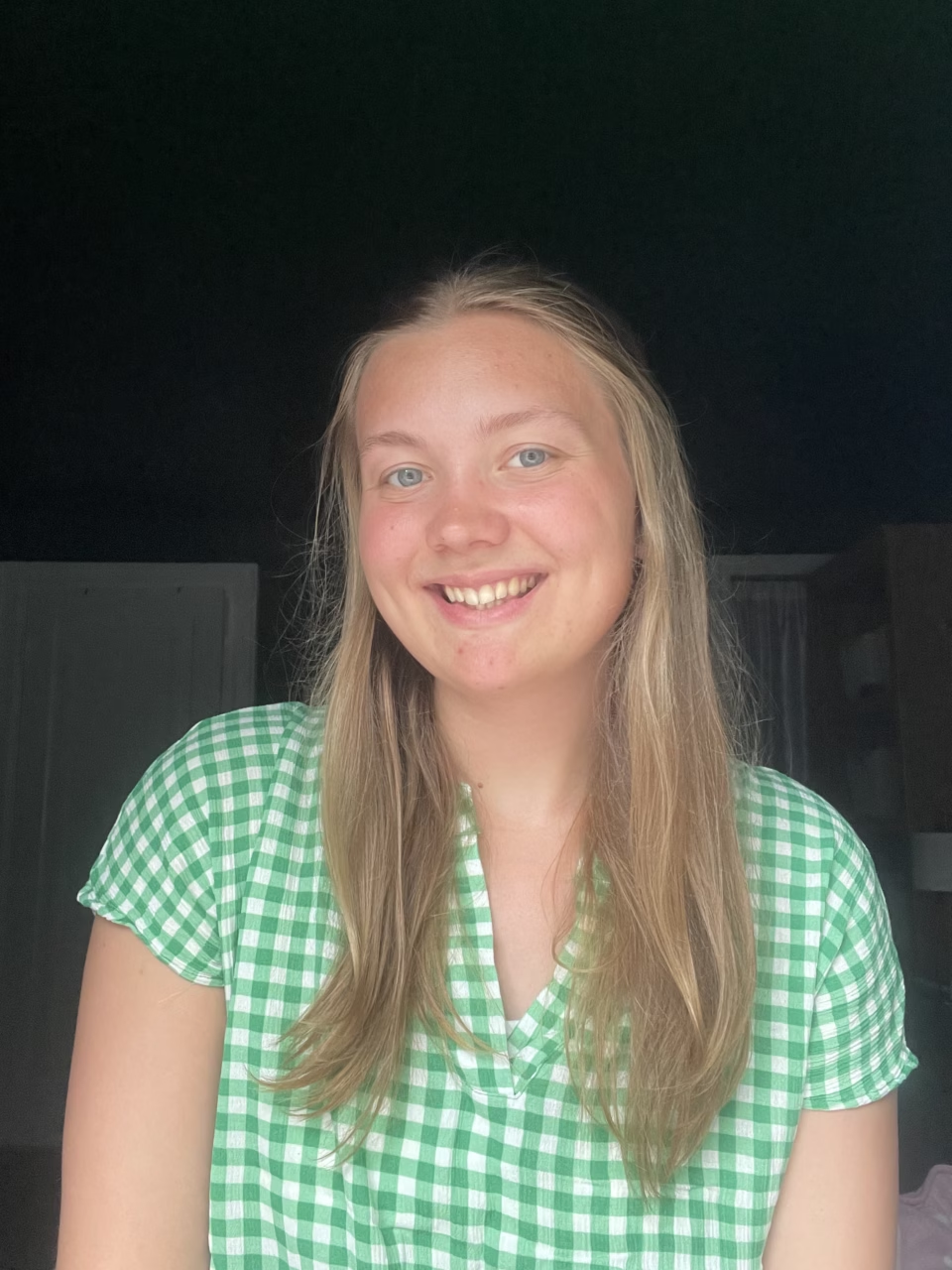
Families are often the people expected to care for us when we need help. But that assumption raises two questions Mount Allison student Lily Fraser has been thinking about – who counts as family, and why is so much responsibility for care placed within it?
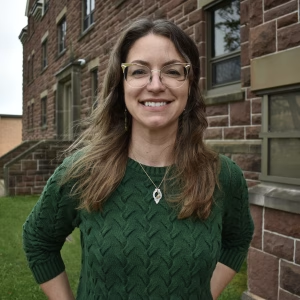
Fraser, an honours sociology and feminist and gender studies student, is beginning a thesis on how young adults make decisions about their current and future families. Her focus groups with Mount Allison students have yet to begin, but the questions behind the project reach beyond whether Gen Z plans to marry or have children.
For Fraser, even defining family is complicated.
“A family definitely does not have to have children,” Fraser said.
She pointed to adults who choose not to have children but still describe themselves as families. The further she got into the subject, she said, the harder it became to draw a clear boundary around the word.
“Defining family is near impossible because it’s always shifting,” Fraser said.
Rather than requiring a particular structure, Fraser said she is interested in the relationships people build and the ways they care for one another.
One idea Fraser is exploring is voluntary kin: people who aren’t connected by blood or law but are considered family.
“So voluntary kin is described as individuals outside of a blood or legal family unit that are designated to be family,” Fraser said.
Those relationships can take on greater importance when a blood or legal family isn’t present, she said, but they don’t have to replace an existing family. Voluntary kin can also exist alongside parents, siblings and other relatives.
For Fraser, that challenges the idea that the things people expect from family can only come from a nuclear family.
“There’s so many family functions that can be met with voluntary kin,” Fraser said, pointing to “relationships of care that are beyond the nuclear family unit.”
Her work also considers the other side of that question – what happens when a relationship with a biological or legal family doesn’t provide care?
Fraser has been reading about family estrangement, which can involve partially or completely ending contact with a relative. She said the reasons can vary, with some research looking at estrangement following violence or harmful family relationships.
Those ideas challenge a familiar assumption about family, that care comes from the people we’re related to.
Fraser’s interest in those questions began before her current thesis.
In earlier undergraduate work, she encountered writing about what is sometimes called the “abolition of the family.” Fraser described one of the ideas behind that work as a criticism that the nuclear family can privatize care that could instead be shared more collectively.
Fraser said her own upbringing in a nuclear family also made her curious about why that particular structure is often treated as the ideal.
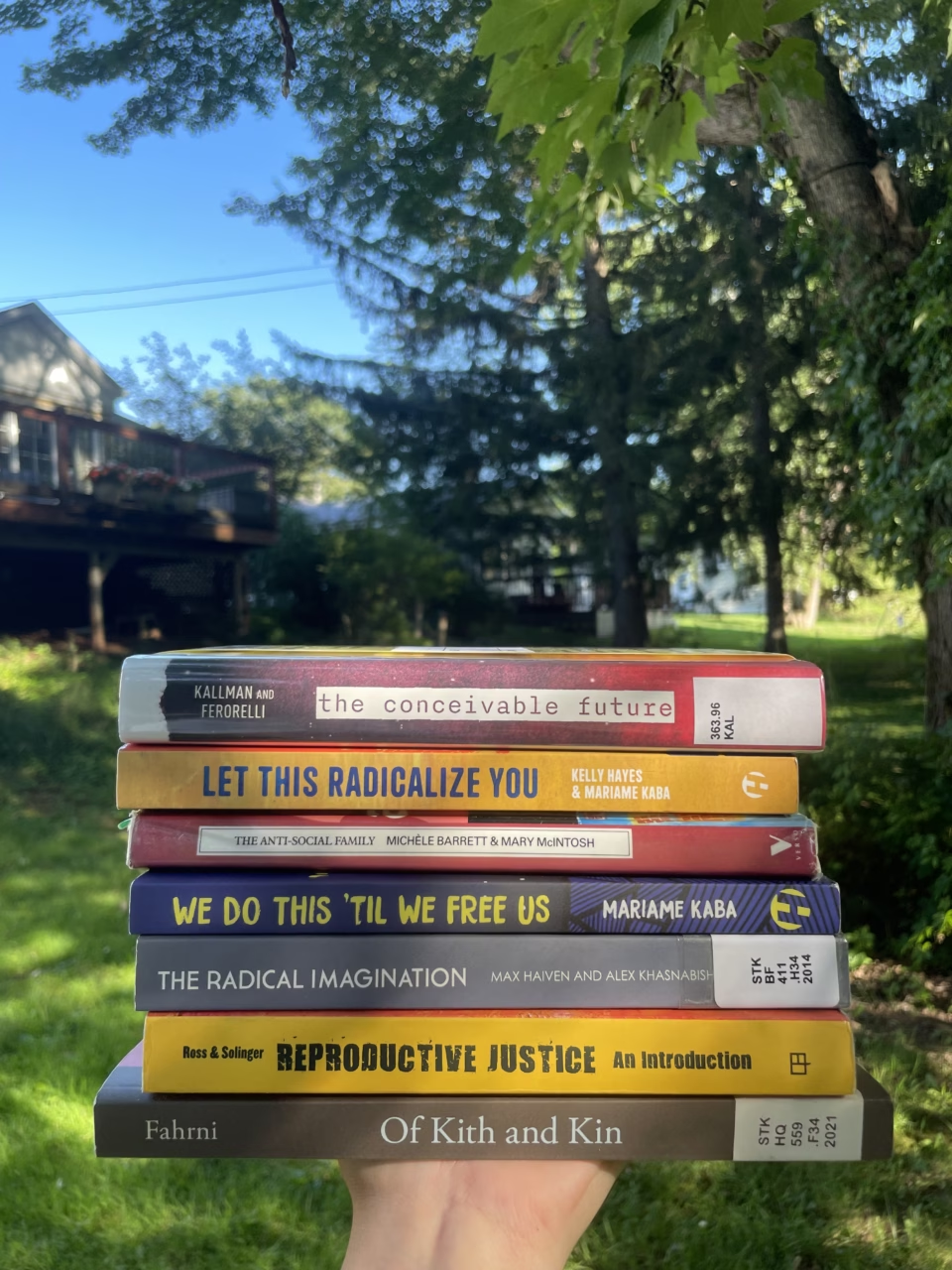
“I grew up in a nuclear family unit, and I was always curious why that was privileged and put on a pedestal,” she said.
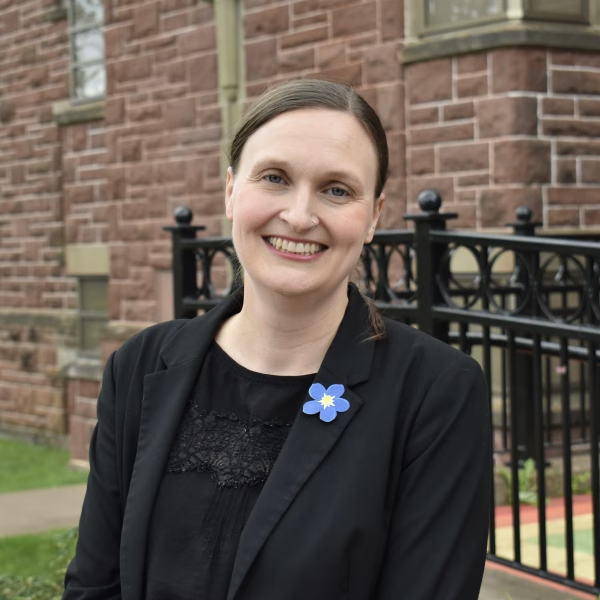
Fraser’s supervisor, Mount Allison sociology professor Christiana MacDougall, takes that question beyond how individual people define their families.
Sociologists can also understand family as a social institution. In that sense, family isn’t only about private relationships between people. It also has a broader role in how society is organized and in determining who is expected to care for whom.
“If you think of family as a social institution, how social institutions are serving us or failing us is really important to pay attention to,” MacDougall said. “Who’s benefiting from this? Who’s hurt by this?”
MacDougall said examining the nuclear family also means acknowledging that it isn’t always the safe and supportive environment society might expect it to be.
She pointed to violence that can occur within families, but also to a less obvious problem: isolation.
MacDougall described the “individualized responsibility” that can result when the nuclear family is treated as the “end all be all.”
Much of the responsibility for caring for another person can then fall within a small family unit. MacDougall questioned whether care could instead extend further into the communities people are part of.
“We are also responsible to the other people in our communities,” she said.
She pointed to the idea of caring more communally, including taking greater responsibility for people beyond an immediate household.
“It’s not serving many people well,” MacDougall said. “It’s causing a lot of harm because we’re putting all of our responsibility into these little pockets of people that we call the nuclear family.”
For Fraser, voluntary kin offers one example of how relationships of care can already reach beyond those boundaries.
Those questions are also being explored against the economic uncertainty facing young adults.
Fraser has been examining what researchers call “uncertainty spillover,” where uncertainty in one area of someone’s life can influence decisions in another.
“When young people are uncertain about their financial or housing or employment situation, they’re also likely uncertain about their reproductive decisions or their intimate relationship,” Fraser said.
Housing is one example.
Fraser said research has connected financial stability with decisions about when to have children. High housing costs can also affect where young adults live and who they live with, including staying with parents or living with friends and voluntary kin.
She has also encountered research showing lower fertility during periods of broader economic, political or environmental uncertainty.
That means questions about family can be both deeply personal and shaped by circumstances outside an individual’s control.
What Fraser doesn’t know yet is how Mount Allison students themselves will answer these questions.
Her thesis is still in its early stages, and the focus groups that will form the core of her research have not yet begun.
Fraser plans to hold her first focus groups after students return to campus this fall, followed by another round in the winter. She expects to have most of her information by February or March, with her thesis due at the end of March.
She wants to hear how Gen Z students make decisions about their current and future families, including whether issues such as affordability and the climate crisis enter into those choices. Fraser is also curious whether studying and living in a small town like Sackville influences how students think about family.
Part of what Fraser found while preparing for the project is that research often looks at particular family decisions separately. She said there is less work bringing together the different choices people make about their families and examining how they influence one another.
“I think this research is really important because this world is changing so rapidly and so many crises are taking place,” Fraser said.
She said that makes it important to pay attention to relationships of care and love, and to the barriers young adults may encounter while trying to build them.
Fraser doesn’t yet know how Mount Allison students will define family, or how much the pressures facing young adults will shape their answers.
Her focus groups this fall will begin asking who Gen Z considers family, who they expect to care for, and who they expect will care for them.
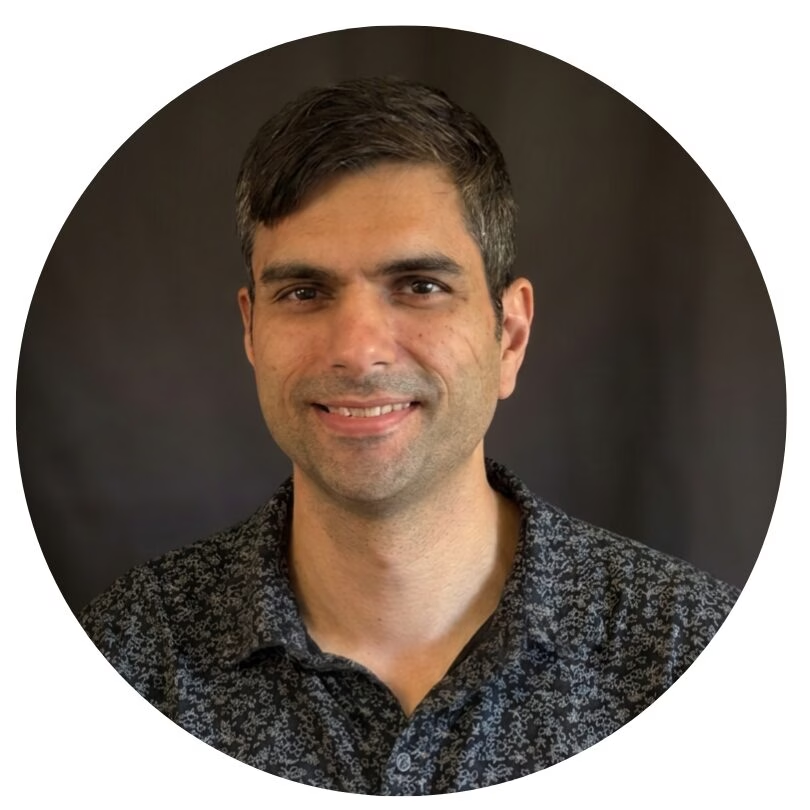
Theodore Ramharack holds a Bachelor of Arts in Political Science from Western University and a diploma in Broadcast Journalism. He recently completed an internship with CBC News’ The National.
Originally from Ontario, he moved to Sackville to join CHMA as a local journalist and is excited to get to know the Tantramar region and share stories from the community.