
Part of the foundation beneath Dorchester’s Keillor House is gradually sinking, contributing to movement in the original stone walls of the 213-year-old building.
The Westmorland Historical Society is preparing for an estimated $700,000 restoration, with the first phase focused on the section where the foundation is sinking. Society president Judy Morison said signs of the movement can now be seen inside the house.
“This has now gone from a nice thing to do to an urgent thing to do,” Morison said.
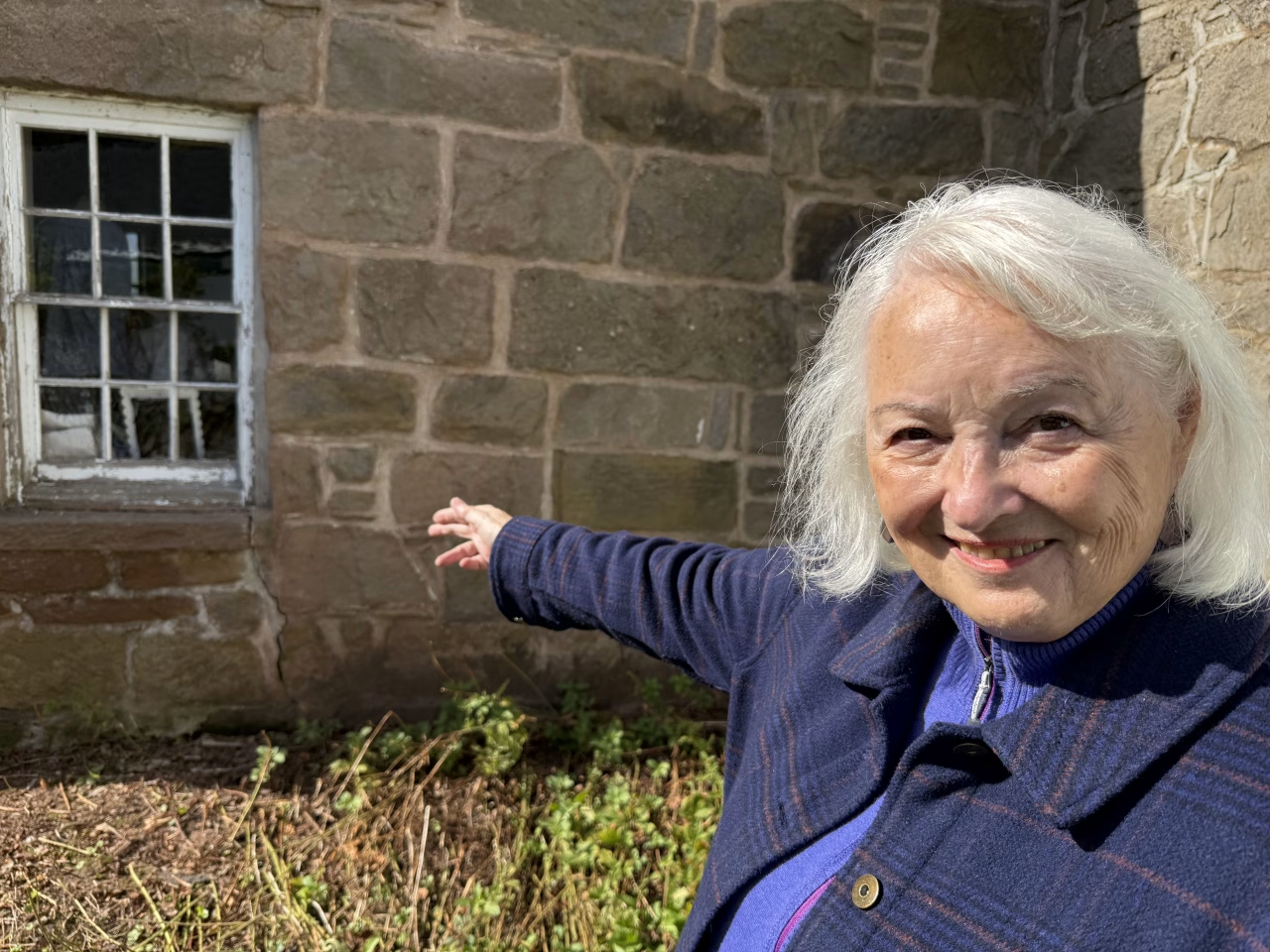
Standing behind Keillor House, Morison pointed to several places where the stonework has shifted. One crack runs beneath a window and another is visible near the back L of the building. The rear walls use what Morison described as rubble-stone construction, with stones of different sizes fitted together. She said the stonework is original to the house.
That construction differs from the more uniform stonework on the front. The Canadian Register of Historic Places describes the front façade as coursed ashlar stone, while the other façades are made from roughly squared, uncoursed stone.
The condition of the rear walls has been known for years. Morison said architects and engineers had previously examined the building and indicated that the stonework would eventually need attention. Resources, the COVID-19 pandemic and other demands contributed to the work being delayed.
The first phase will focus on the largest section of the main house. Morison said work there will involve the foundation itself and she expects part of the wall will need to be reconstructed.
“In time, the rocks are going to continue to shift,” Morison said.
She said some of the mortar surrounding the stones could be about 200 years old, and continued movement could eventually put the wall at risk.
“I suppose if it was left long enough, the wall would then fall,” Morison said. “I’m not even thinking about that because we’re going to fix it before that happens.”
Keillor House has been a provincially-protected heritage place since 1977. Heritage records trace the house back to 1813 and John Keillor, who farmed in the area and later served as a justice of the peace and a judge in Westmorland County.
The Canadian Register of Historic Places describes the house as a rare Atlantic Canadian example of a stone residence influenced by Palladian design. Single-storey wings flank its central two-storey section, and the stone construction is among the features identified as important to its heritage character.
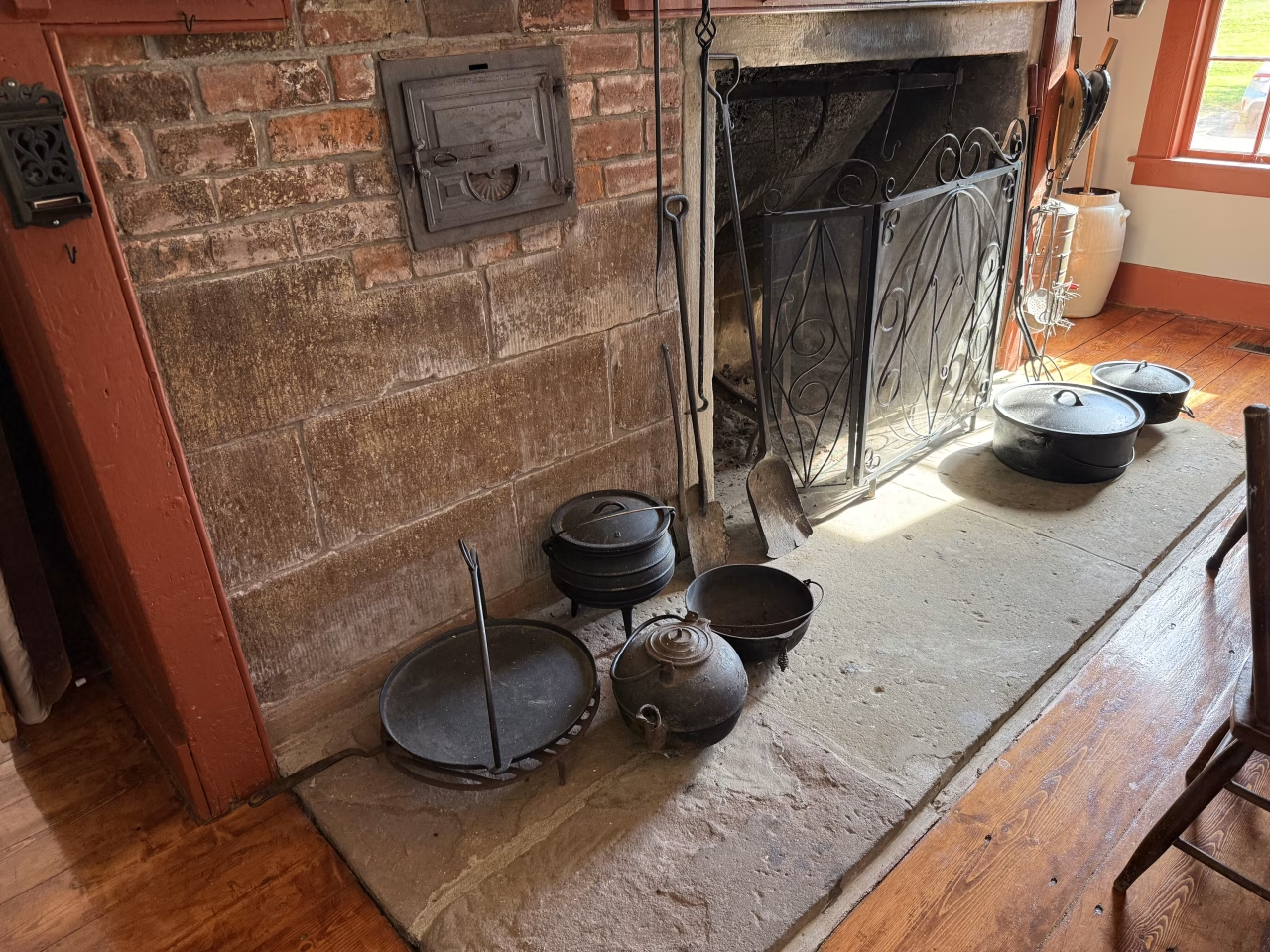
The house is still used as a museum. Its collection includes historical and genealogical material, and some programs show how cooking and textile work were done in the past. The Westmorland Historical Society has operated since 1967 and also looks after the St. James Textile Museum, Bell Inn and Payzant Building in Dorchester.
The front wall required its own major restoration in 2005, according to Morison and the Society’s fundraising information. Morison said the wall was dismantled one piece at a time, with each stone numbered before being returned to the same position.
The work ahead will be different. Morison said repairs will vary from one section to another, and the foundation adds to what will be required in the first phase. The Society expects the full project to take three to four years, with the work divided into three stages.
The Society estimates the restoration will cost $700,000. Some private funding has already been committed and government funding is also being sought, while fundraising will continue as work moves through the different sections of the building.
The current fundraising drive is intended to help get that work underway. The Society hopes to raise $100,000 by Dec. 31, and a matching gift will double donations received before then, up to that target. Morison said the money raised first will go toward the initial section of the project.
The matching gift is being made in memory of George and Ruth Stanley. The restoration would preserve the house while also protecting the historical and genealogical material kept inside.
“Keillor House is more than a museum. It is a symbol of our region’s history and identity,” Morison said in the Society’s fundraising appeal.