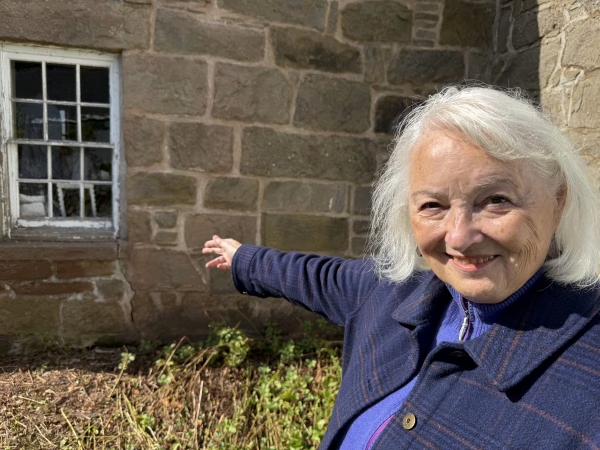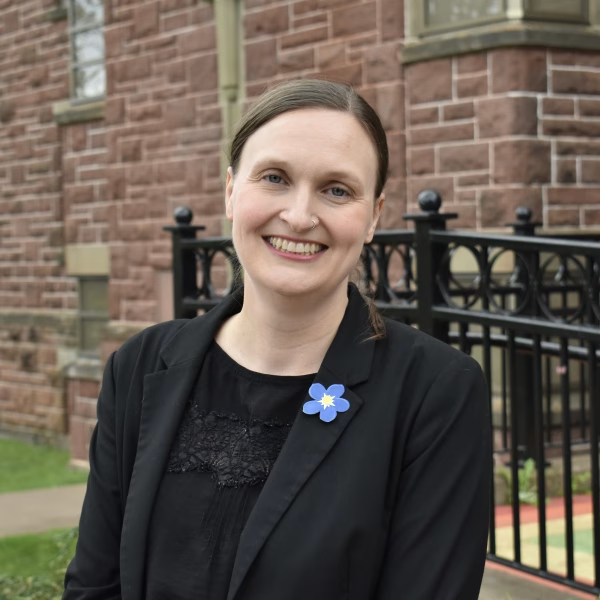

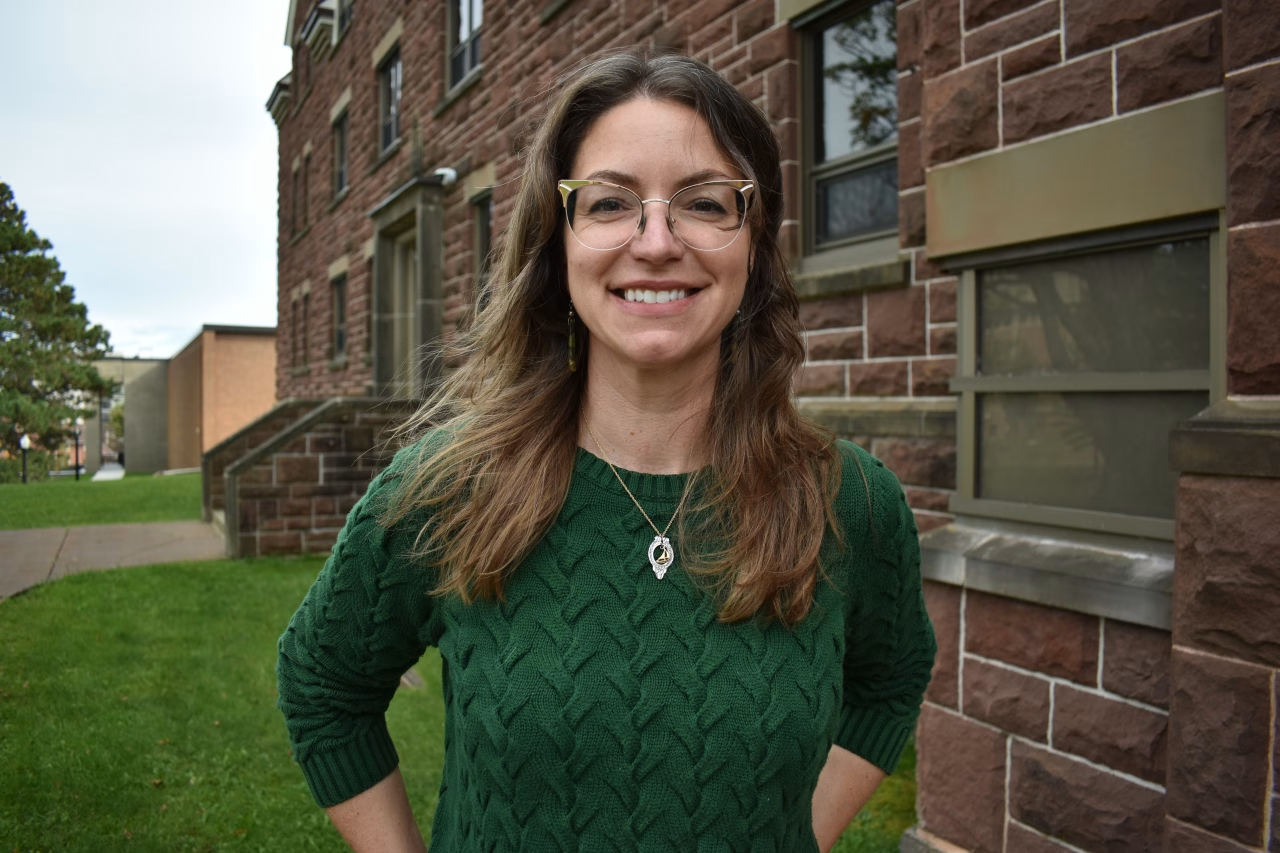
Natalie Donaher saw an opportunity in Tantramar’s 2023 amalgamation to reassess the municipality’s building codes for small-footprint housing.
She put out an open call on social media and quickly connected with another similarly-minded group. Their plans later diverged, but through that group she met the other two people who would form the board for Shelter Well Tantramar Cooperative Limited, a new nonprofit focused on advocacy for small-footprint, high-density housing—specifically a format called pocket communities.
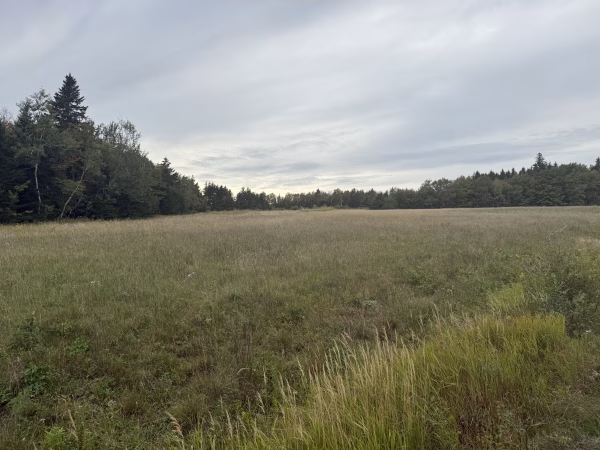
Later this month, the group will find out if a 1.5-acre parcel of land on the outskirts of Sackville is a suitable site for a pocket community co-op, Donaher said.
”We don’t know one way or the other whether it will succeed, but that’s the first step before then applying for funding at the provincial and federal levels for capital costs around actual breaking land.”
Listen to the audio below:
Some of those considerations include zoning requirements, which leads into the other large effort Shelter Well Tantramar has undertaken—a comparative study of zoning laws in other communities, so that they can better advocate for positive change here, she said.
With that study having a finished first draft and Shelter Well potentially positioned to begin development, Donaher felt it was time to formally introduce the nonprofit to council at the last regular meeting on Sept. 8.
” The amalgamation of the communities into Tantramar legally required the town to look over its bylaws within a certain period of time. So that’s looming,” she said. “And it was important, in my opinion, to be noticed at this point so that we can forward the information we’ve gathered up until this point to the policymakers that are going to be at the table very soon to make decisions around zoning and building codes and things like that.”
A pocket community is a form of housing where small houses are arranged around a central courtyard. The houses are similar in size to a cottage—between 400 and 750 sq. ft.—and, depending on zoning, five or six houses could be placed on a lot that would typically have a single-family dwelling.
It’s a style of housing that could be perfect for those looking to downsize but have pets or apartments otherwise don’t appeal to them, as well as aging folks who may be on a fixed income or need a single level for mobility issues. Students could even be considered.
The last case, Donaher said, could involve an alternative model of student housing, whereby the student would rent from the co-op for the school year, and then the co-op could manage it as a short-term rental for the summer months.
While there are still some big hurdles in the way, Donaher said if the property can be zoned for a pocket community and they can secure funding, the project could be completed within a couple years, provided they can also find the tradespeople to build it.