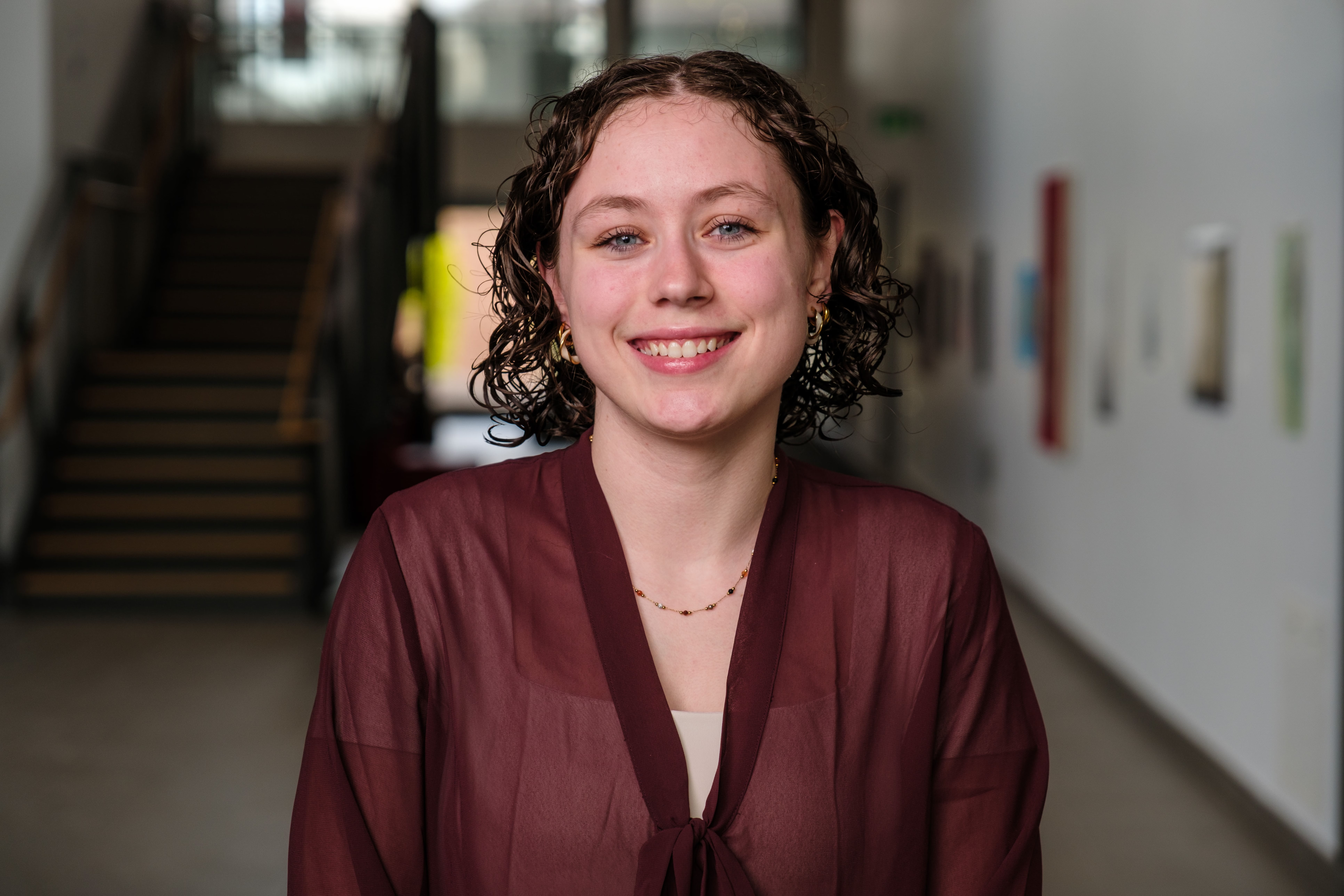

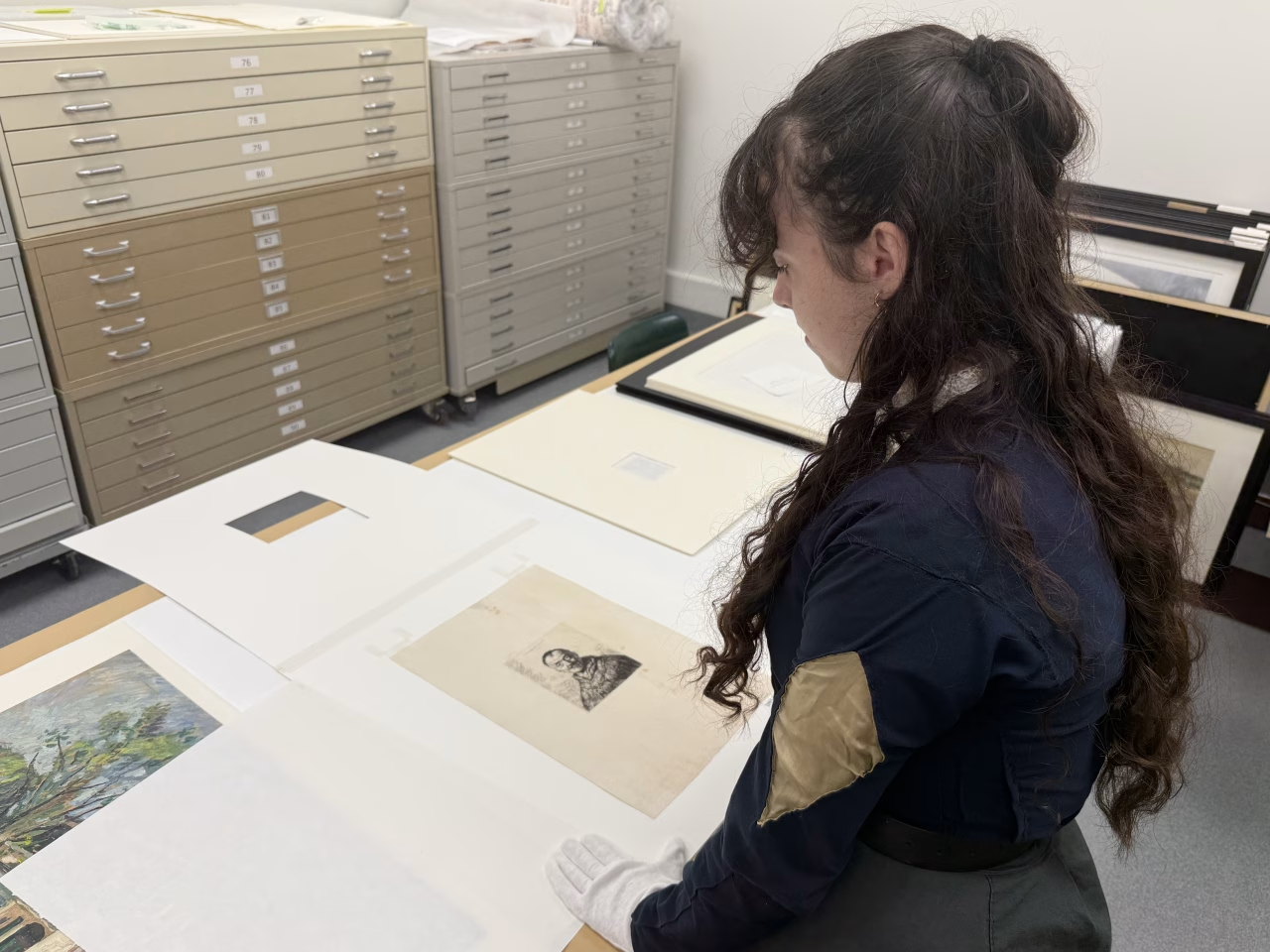
What started with four missing photographs in the Owens Art Gallery’s collection database sent summer intern Chloé MacKinnon into a months-long investigation involving centuries-old printing plates, mysterious codes and Rembrandt specialists an ocean away.
MacKinnon was looking through the gallery’s database this summer when they noticed four prints connected to Rembrandt did not have photographs attached to their records. They went downstairs to examine the prints and noticed a few things that seemed unusual.
“There were French titles on the prints themselves when I expected them to be either Dutch or English,” MacKinnon said. “There was like a code at the bottom right of the paper, which you’d normally never see in prints. So I thought it’d be worth it to research it.”
The four works were printed in the nineteenth century, nearly 200 years after Rembrandt’s death in 1669. That led MacKinnon into the complicated history of restrikes and eventually to a more surprising discovery about what the Owens prints actually were.
Following the plates
Rembrandt created etchings using copper plates. The plate would be prepared and exposed to acid to etch an image into its surface before being inked and run through a printing press. Because the image remained on the plate, more impressions could be produced after the artist’s death.
That possibility raises questions about authorship and whether a print made by someone else can still be considered an authentic work by the original artist.
“Restrikes, which is when an artwork is printed by another person, is sort of a bit controversial in the art world because some people say, ‘Oh, they are authentic Rembrandts,’ even though he didn’t print them,” MacKinnon said. “And some people say, ‘No, an artist must have a hand in every single step in making an artwork.’”
MacKinnon began tracing who owned Rembrandt’s copper plates after his death. Historical records helped them follow the plates through different owners, eventually leading to nineteenth-century French publisher and printer Auguste Bernard, who acquired a collection of Rembrandt’s copper plates in 1846.
MacKinnon initially thought Bernard may have been responsible for printing the Owens works. Rather than stopping there, they sent their findings to specialists for another opinion.
“One specialist came back and said, ‘Hey, your research is fine, but I don’t think that they’re actually etchings,’” MacKinnon said.
The response sent the investigation in a different direction.
A copy made from a print
MacKinnon’s research eventually led to Charles Amand-Durand, a nineteenth-century French printmaker known for reproducing the work of earlier artists through heliogravure.
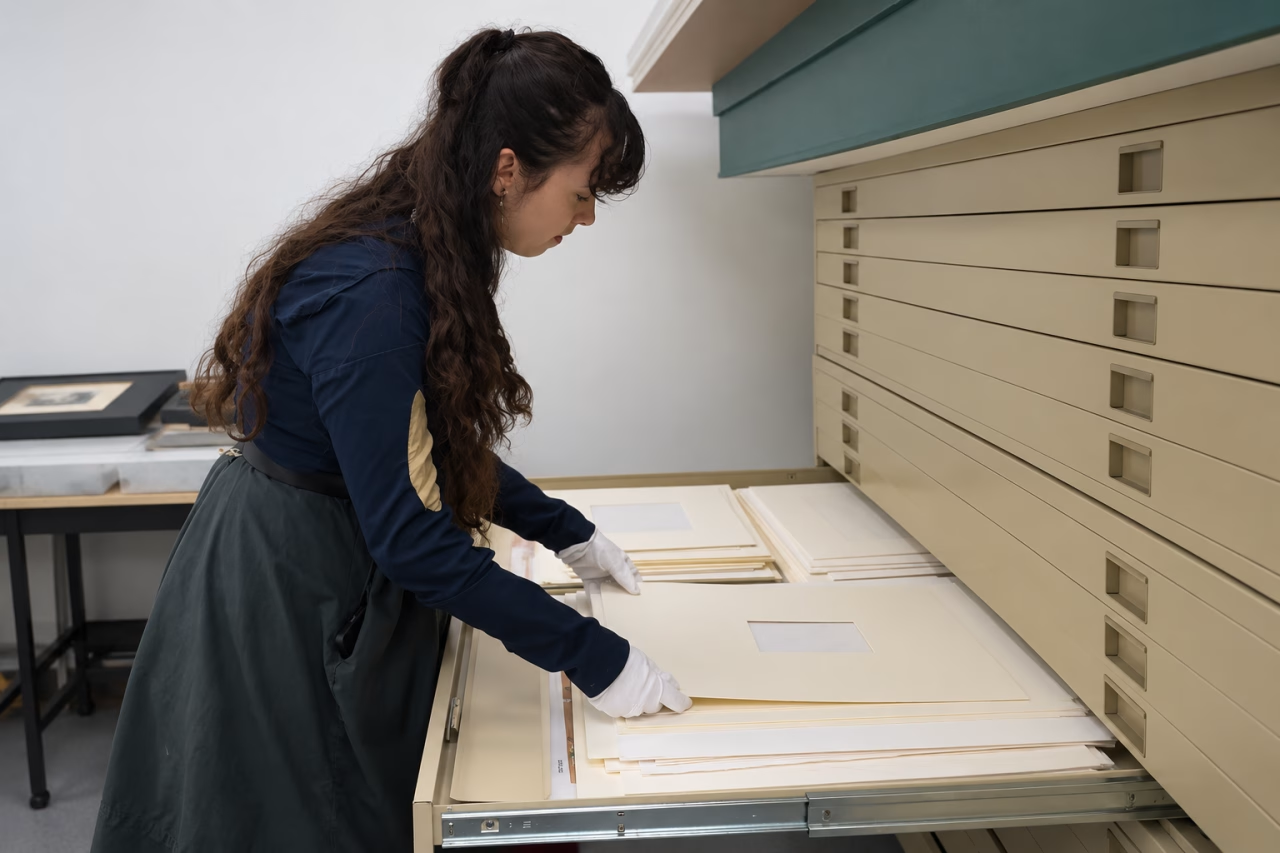
MacKinnon concluded that the Owens works were produced using that kind of process.
“So instead, he hunted down a couple of original prints, not the copper plates, but the prints themselves, and he made heliographs,” MacKinnon said.
The process allowed an existing print to be reproduced on a new plate, which could then be used to make new impressions.
“And then he made copies from that,” MacKinnon said. “And that’s the copies that we have.”
The finding made the history of the four works more complicated than MacKinnon first suspected. Rembrandt created the original images but MacKinnon’s research indicates the Owens impressions were produced centuries later using plates created by Amand-Durand from earlier Rembrandt prints.
The man who wasn’t Jacob Cats
Another part of MacKinnon’s investigation uncovered a case of mistaken identity that had survived for more than a century.
One of the Owens prints is labelled Jacob Cats, after the seventeenth-century Dutch poet and statesman. MacKinnon had previously seen a painting of Cats made around the same period as Rembrandt’s original etching and noticed the two men looked very different.
“In the painting, he looks incredibly different from the etching we have,” MacKinnon said. “So I thought there must be something more to that story.”
MacKinnon’s research found the image was not originally intended as a portrait of Cats. They traced the identification to nineteenth-century writer and art critic Charles Blanc, who compared the image with an unrelated depiction of Cats and concluded they showed the same person.
That identification was published and later carried onto Amand-Durand’s reproduction.
“So it is Jacob Cats,” MacKinnon said, describing Amand-Durand’s apparent reasoning, “and he printed that name on the etching that we have, which is why it’s mislabeled.”
Cracking the codes
The letters and numbers that first caught MacKinnon’s attention became another part of the investigation. MacKinnon initially wondered whether the markings had something to do with how the works were printed or the quality of the paper. With help from Owens conservator Jane Tisdall, they eventually found the codes pointed to catalogues scholars had used to document and classify Rembrandt’s prints.
One marking beginning with B, for example, led them to Adam Bartsch, whose catalogue became an important reference for Rembrandt’s prints.
Most of the codes began falling into place, but the print labelled Jacob Cats carried a code beginning with V that MacKinnon couldn’t explain. They initially considered whether it referred to scholar Willem Valentiner, but his catalogue was published in 1908, after the Owens had acquired the prints.
MacKinnon eventually traced the V to a W used in an earlier catalogue, with the change apparently coming down to language.
“At some point, that code got used in France, and the French way of saying W is double V,” MacKinnon said. “And then the double V got simplified to one V, which is where the V code comes from.”
The answer took MacKinnon months to find, making finally solving it one of the memorable parts of the project.
“It was fun to actually finally discover,” MacKinnon said.
Some mysteries remain
The project began around the end of May and occupied much of MacKinnon’s summer internship. It also took the research far beyond Sackville, as MacKinnon reached out to specialists and auction houses and corresponded with the curator of prints at the Rijksmuseum in Amsterdam, who helped answer some unresolved questions.
MacKinnon said they weren’t sure established researchers would respond to an intern asking questions about Rembrandt. While the auction houses they contacted didn’t respond, the researchers did.
“I didn’t expect anybody to respond,” MacKinnon said. “It was really impressive to see that they actually cared to respond to me even though I’m not like a big deal whatsoever.”
There are still pieces of the puzzle MacKinnon hasn’t solved. Other prints once recorded as part of the Owens collection have not been located, including one listed under the title The Cook’s Fire. MacKinnon hasn’t been able to find an image matching that title, with the closest possibility they found being another work known as The Pancake Woman.
There is also the question of Amand-Durand’s monogram. MacKinnon said his reproductions commonly carry a mark identifying them, but the four Owens prints they studied do not, despite resembling examples that do. If MacKinnon could ask Amand-Durand about the works today, that’s one mystery they would still like him to explain.
The investigation also meant spending the summer digging through old books and historical records, some containing remarkably detailed documentation of Rembrandt’s life, including inventories, bankruptcy records and marriage documents.
MacKinnon started with a much smaller question about why photographs of four prints were missing from a database. By the end of the summer, answering it had taken them through centuries of collectors, printmakers and scholars, and the history of four works that still have a few mysteries left to solve.
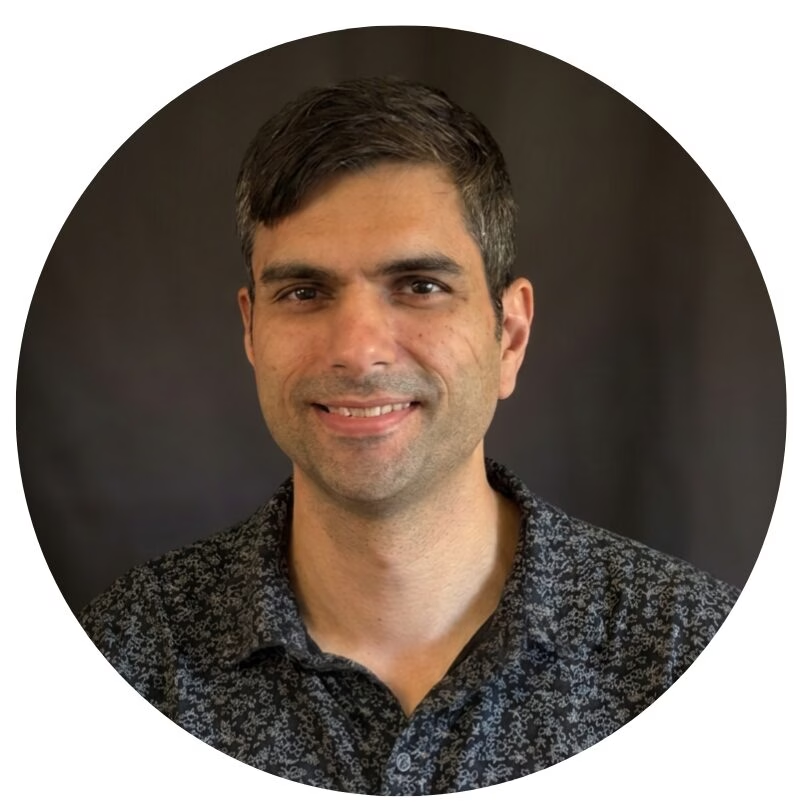
Theodore Ramharack holds a Bachelor of Arts in Political Science from Western University and a diploma in Broadcast Journalism. He recently completed an internship with CBC News’ The National.
Originally from Ontario, he moved to Sackville to join CHMA as a local journalist and is excited to get to know the Tantramar region and share stories from the community.