
The province says future AI data centre developments will be limited, but not now
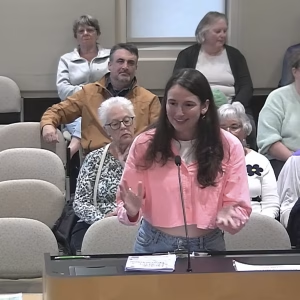
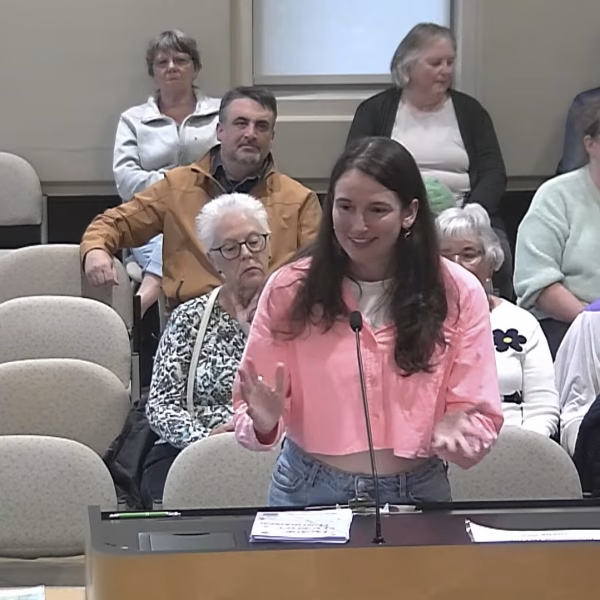
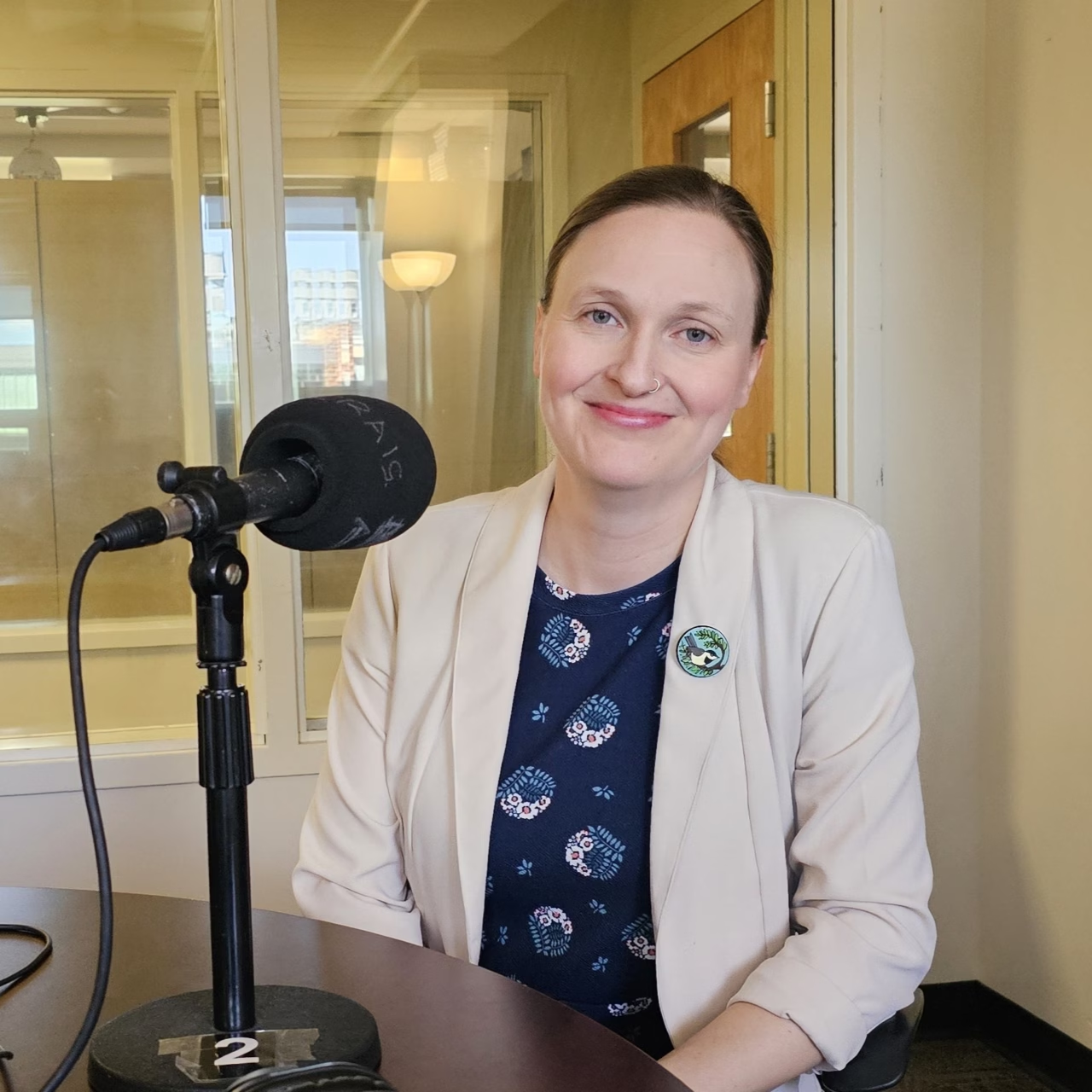
Megan Mitton says regulations should protect communities, the environment and energy prices.
The New Brunswick government says it plans to limit the number of energy-intensive data centres developed in the province. It has not publicly said how many would be permitted or provided details about the limits.
The announcement follows calls for a moratorium on current and future developments. Meanwhile, a proposed 390-megawatt data centre and gas-fired generating station near Lorneville remains under environmental review.
Hear the story below:
Mitton’s call for a moratorium
Tantramar MLA Megan Mitton introduced a motion calling for the moratorium during the final sitting of the legislature in June.
Mitton is the deputy leader of the Green Party of New Brunswick. CHMA News spoke with her recently.
“I brought forward a motion in the legislature this spring that called for a moratorium on the development of data centres until proper laws and regulations could be put into place that wouldn’t harm communities, wouldn’t harm our environment, and wouldn’t have negative impacts on energy prices.” Mitton said.
The motion did not receive a vote before the legislature began its summer recess. Mitton asked for unanimous consent to extend the sitting but several Liberal members opposed the request.
The government has since said there will be limits on the number of data centres because of their electricity demands. It also says developments must not place additional pressure on the electricity grid or ratepayers.
However, the province has not publicly specified a maximum electricity demand, how many data centres would be permitted, or how the protection for ratepayers would work.
The government has described the planned limits as applying to future development. The Lorneville proposal remains under the province’s existing environmental review process.
Mitton said electricity demand is only one concern.
“These plants, they require water for cooling, and there’s the question of how it impacts local residents. The noise from having that many basically building full of computers running, so that buzzing sound.”
She also criticized the proposed use of natural gas at Lorneville.
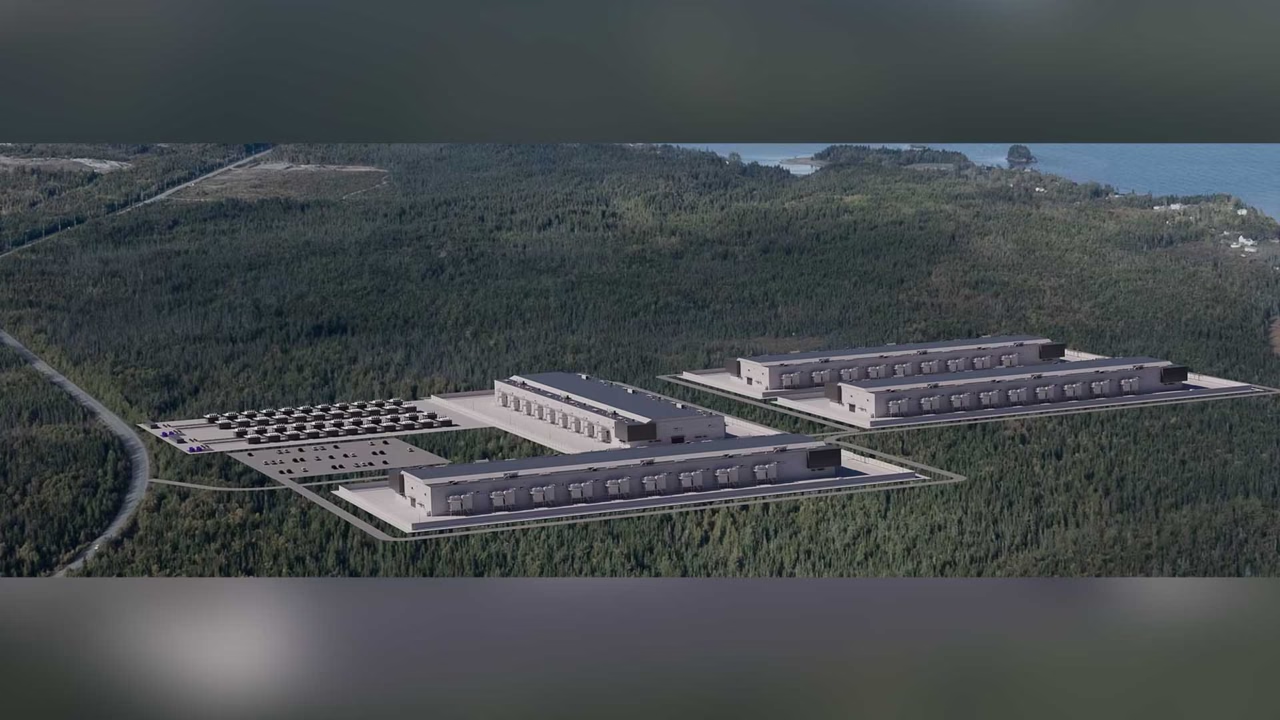
“In the Lorneville example, they want to power about half of it with a gas plant and half of it from NB Power,” she said, “which is a terrible idea.”
Other projects being considered
Mitton said she is aware of other possible developments in New Brunswick.
“I am concerned because I know there are other data centres being considered in other places up in Bathurst area,” she said. “And I know that the municipality of Miramichi is looking at allowing data centres.”
Mitton said she is not opposed to every use of artificial intelligence.
“It doesn’t mean there’s no place for AI anywhere. There are some specific cases that can make sense.”
But she said the expansion of generative AI carries environmental and human costs.
“Having generative AI being trained on all of our data, using all of this energy and water, is a ridiculous plan,” Mitton said. “There are so many factors to this, from the exploitation of workers in other countries who have trained these machines. They’re not intelligent on their own. They’ve been trained by people.”
A 2023 investigation by Time reported that OpenAI used workers employed by an outsourcing company in Kenya to label disturbing material used to make ChatGPT safer. The workers took home less than $2 US per hour.
The interview also turned to calls for fossil-fuel generation to be replaced with renewable electricity and battery storage.
“The cost of batteries has plummeted. It’s gone down so much,” Mitton said.
Costs that do not appear on a spreadsheet
But some batteries require minerals associated with environmental damage and abusive working conditions. Reports of child labour in cobalt mining in the Democratic Republic of the Congo have raised questions about the supply chain behind battery technology.
Mitton was asked whether Canada or New Brunswick guarantees that batteries used in mass energy storage projects are free of unethically sourced cobalt. She said she was not certain.
Canada’s Fighting Against Forced Labour and Child Labour in Supply Chains Act requires certain companies and government institutions to report the steps they have taken to prevent and reduce those risks. The reporting requirement does not itself certify that an individual battery contains only ethically-sourced materials.
Mitton said governments should support recycling and stronger standards instead of treating increased mineral extraction as the only solution.
“There are ethical pathways for these things,” she said. “And again, yes, recycling, reusing, having higher standards.”
Mitton connected the cobalt discussion to the broader effects of AI, mining and energy production.
“I think when we look at any of these things, from AI to mining to energy production, we need to have stronger democracies and stronger systems that actually hear the voices of the people on the ground, of the people who are impacted, and not just the people at the top, the people who stand to profit,” she said.
Mitton said some costs are left out when governments and companies calculate whether developments are economically worthwhile.
“There’s externalities that are not being accounted for,” she said. “That might be the cost of the pollution, the cost of the use of water, the negative impact on the workers. We’re not seeing that in the price.”
But those costs still exist, Mitton said.
“It’s just that other people are paying them, and maybe they’re paying them with their health,” she said. “There’s those things that might not show up on the spreadsheet but is still part of reality, and so we need to be accounting for that.”
Mitton said the discussion requires nuance.
“There will be some uses that make sense for gas, or for use of plastics and things like that,” she said. “But we should be smart about how we’re gonna use that carbon budget that we have.”
She said the barrier is political rather than technological.
“We have all the technology we need, we’re just missing the political will.”

About the reporter
Clinton Davis is a PT journalist/producer with CHMA News covering Tantramar (including Sackville, Dorchester, Port Elgin, Midgic and surrounding communities). He reports on municipal government, public safety, community events, local business, regional issues and ideas across Tantramar.