
Sex ed for grownups: Why the questions do not stop after graduation
Apparently, the questions do not disappear with age, wisdom or our whites (hairs).
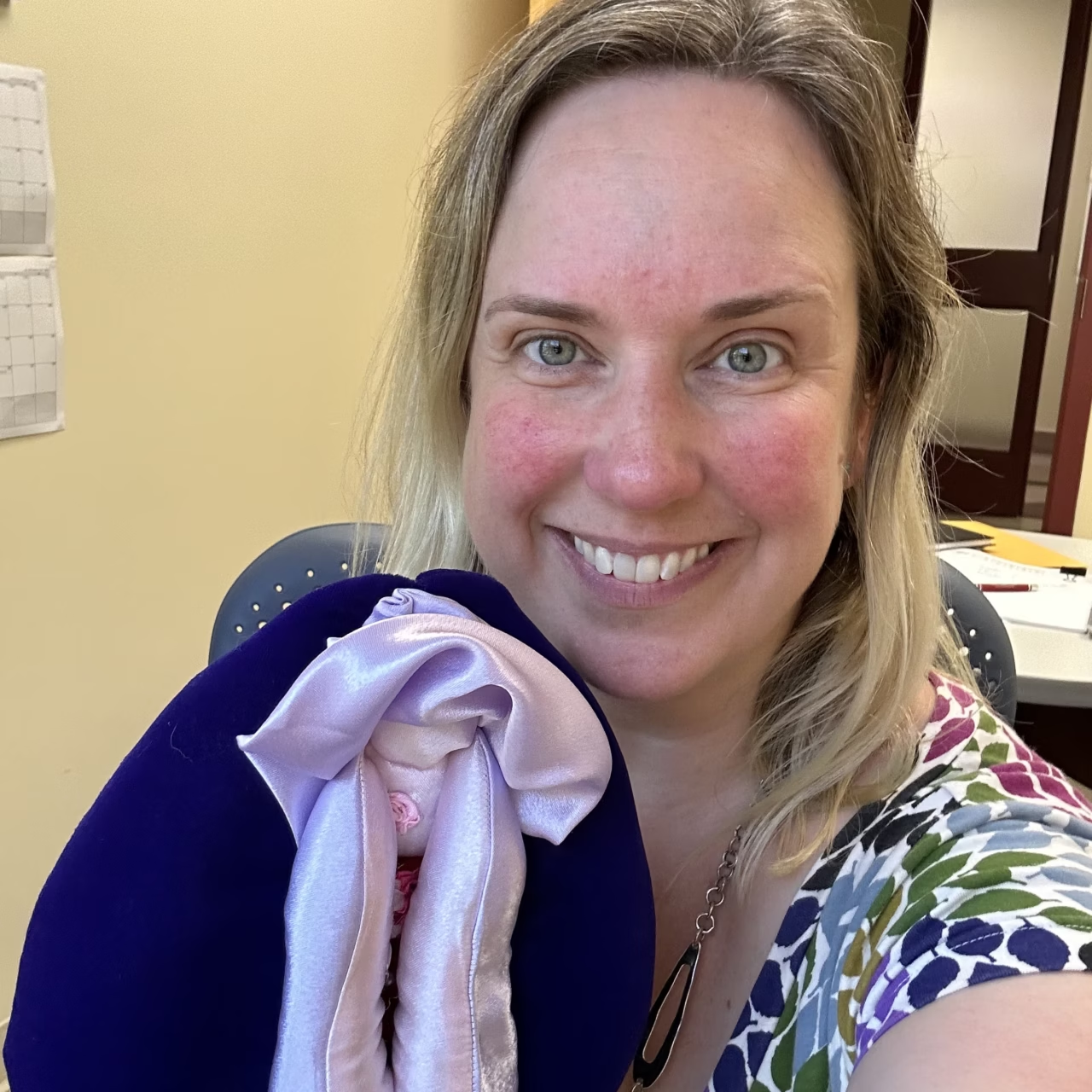
Dr. Lisa-Dawn Hamilton teaches neuroscience and human sexuality at Mount Allison University in Sackville. Alongside her academic work, she runs Sex Ed East, an adult sex education initiative based in New Brunswick.
According to Hamilton, many adults are still trying to make sense of sex, relationships, and what is considered “normal” and that, that’s normal.
She says adults are navigating a contradiction.
“We live in a sex negative culture where there’s sexual things kind of all over the place, but no actual real conversations about sex.”
The adult version of “am I normal?”
In her workshops across the province, Hamilton says a familiar theme often resurfaces.
“Essentially what it came down to is ‘am I normal?’. It’s just really that variation of ‘is this thing that I prefer normal?’”. Spanning generations, it’s the same question she hears from university students year after year.
Hamilton says many people did not receive comprehensive sex education growing up, and some feel embarrassed admitting they still have questions.
“I set out to do education for the average adult, but a lot of people are embarrassed to reach out and say, I don’t know about sex. So what I’ve ended up doing actually is a lot of education of parents.”
Teaching parents to start earlier
Through Sex Ed East, Hamilton works with parents and professionals across New Brunswick. Some attend because they want to support their children differently than they were supported themselves. Others are educators or health professionals looking for clearer language.
“And so a lot of my training is just keep your face neutral.” Hamilton said, referring to how adults react when young people ask questions.
She says tone and reaction matter. Young people notice not just what adults say, but how they say it.
Hamilton says early conversations about sex and consent do not need to begin with explicit topics. They can begin with body autonomy.
“I think parents should start early around things like consent. If someone’s punching their sister… you can’t touch people unless they say so,” she said.
Even the language adults use can shape a child’s comfort level later. She says small shifts in our language can help reduce stigma and create space for safer, clearer conversations as children grow.
“Using correct names for body parts, not calling them silly names, not calling them private parts,” Hamilton said. “Sometimes I say bathing suit parts instead.”
Rethinking what makes sex healthy
Hamilton says improving sex education also means challenging cultural assumptions.
“One of the biggest things we need to push back on is the idea that sex has to be spontaneous.”
She argues that communication does not make intimacy less natural.
“Great sex and healthy sex comes from having those conversations. Wouldn’t you rather have someone who a hundred percent wants to be there with you?”
Hamilton says changing the culture around sex does not happen overnight. But it begins with adults becoming more comfortable talking – with partners, with children, and with each other.
This story is part five of a six-part interview series with Hamilton. The final part looks at where these conversations are headed in Atlantic Canada, and what it would take to make open, informed discussions about sex feel normal.

Clinton Davis is a community journalist and audio producer covering the people, events, and ideas shaping the Tantramar region.