
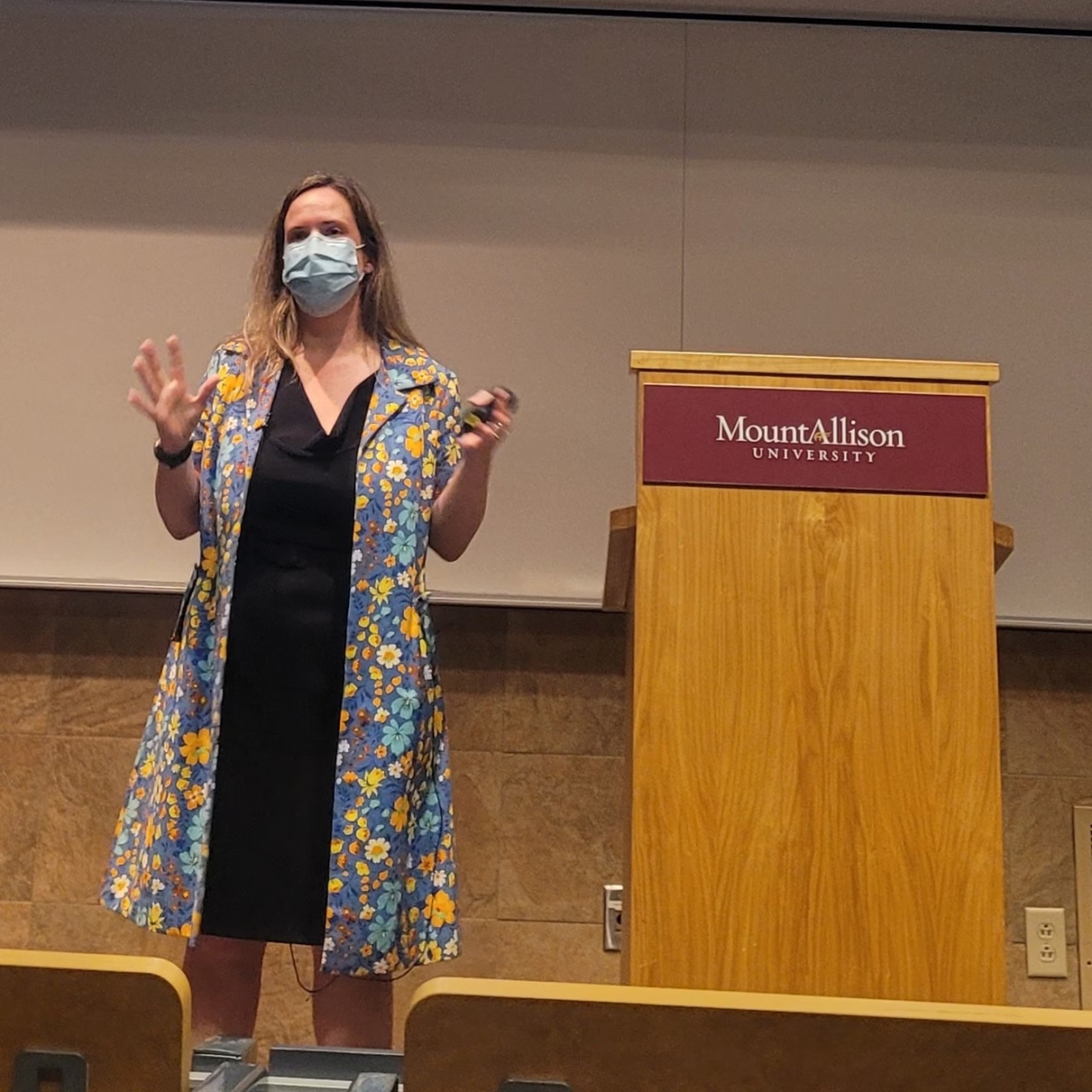
This is part one of a six-part interview
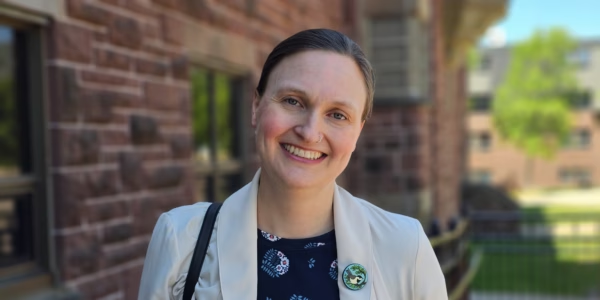
Lisa Dawn Hamilton is an associate professor in the psychology department at Mount Allison University in Sackville, where she teaches neuroscience and human sexuality. She has been teaching at Mount Allison since 2010 and is the current head of the psychology department.
Hamilton is also a public educator, working with students, parents, health professionals, and community groups across New Brunswick on questions of sex, consent, and communication. She runs Sex Ed East, an adult sex education initiative based in the province, and previously, was a podcast voice on CHMA with the show “Do We Know Things”.
This six-part interview looks at how Hamilton’s academic research and public education work intersect, and why those conversations matter locally. It begins with the story of how her work in sexuality education started long before she arrived in Sackville, with an experience that shaped how she thinks about answering people’s most private questions.
From British Columbia to New Brunswick
“I’m originally from Vancouver, British Columbia, and I did my undergraduate degree at Simon Fraser University,” she said.
While she was a student, Hamilton began volunteering with a sexual health organization that provided public education and anonymous support.
Hamilton says some of her earliest experience came from volunteering in Vancouver with an organization that took anonymous questions from the public about sex over a telephone hotline.
“I started volunteering for an organization called Options for Sexual Health.”
Taking questions from strangers
As part of that work, Hamilton volunteered on a phone-based program where people could call in with questions about sex.
“I worked on their Facts of Lifeline, which is now called Sex Sense.”
The experience, she said, shaped how she thinks about sexuality education.
“Being able to be a neutral, non-judgmental voice for people asking really personal questions was a big part of that work.”
She said many callers were not looking for permission or judgment – just reliable information.
From public questions to brain science
That early work sparked a deeper interest in research.
“I got interested in hormone research,” she said. “I wanted to understand what was happening biologically, and how the brain and hormones shape sexual behaviour.”
She said working with people who were looking for clear, non-judgmental information made her more aware of how little reliable information many people had access to.
“That experience really stayed with me,” Hamilton said. “It shaped the kinds of questions I wanted to ask as a researcher.”
Hamilton went on to study behavioural neuroscience, focusing on how biology, psychology, and lived experience intersect. Over time, that research began to overlap with her teaching and public education work.
Looking ahead in our chat
This story is the first in a six-part interview with Hamilton. Later parts of the series explore common questions she hears from students about “being normal,” how consent is taught in a culture of mixed messages, and how adults in New Brunswick are still looking for better ways to talk about sex and relationships.
“I still hear many of the same questions,” Hamilton said. “They just show up in different forms.”
The next part of the series focuses on one of the most common questions Hamilton says she hears from university students.
View Parts II-V of my interview with Lisa-Dawn Hamilton:
Clinton Davis is a community journalist and audio producer covering the people, events, and ideas shaping the Tantramar region.