
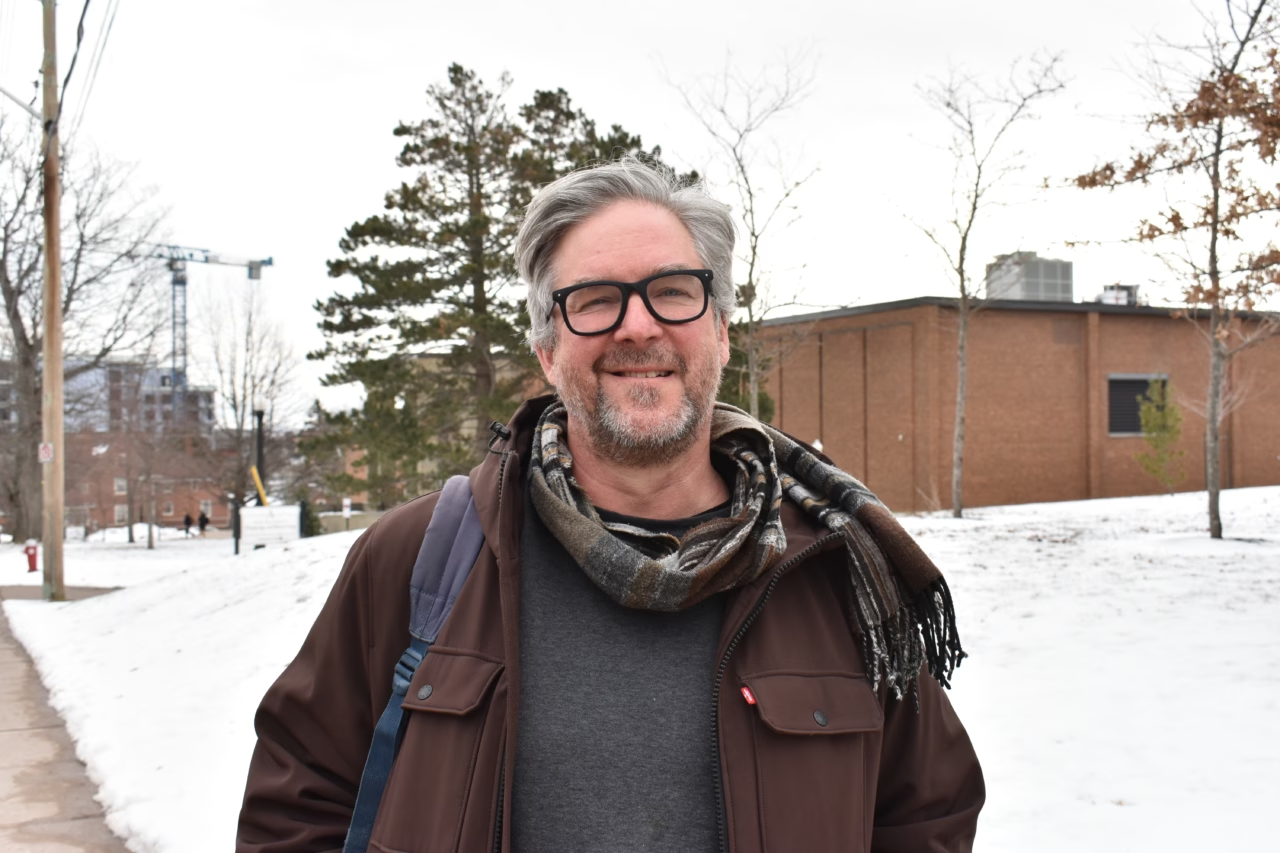
One night in 1986, Jon Claytor was loaded into his family’s vehicle along with his pets and ferried to yet another new town. This time, Sackville.
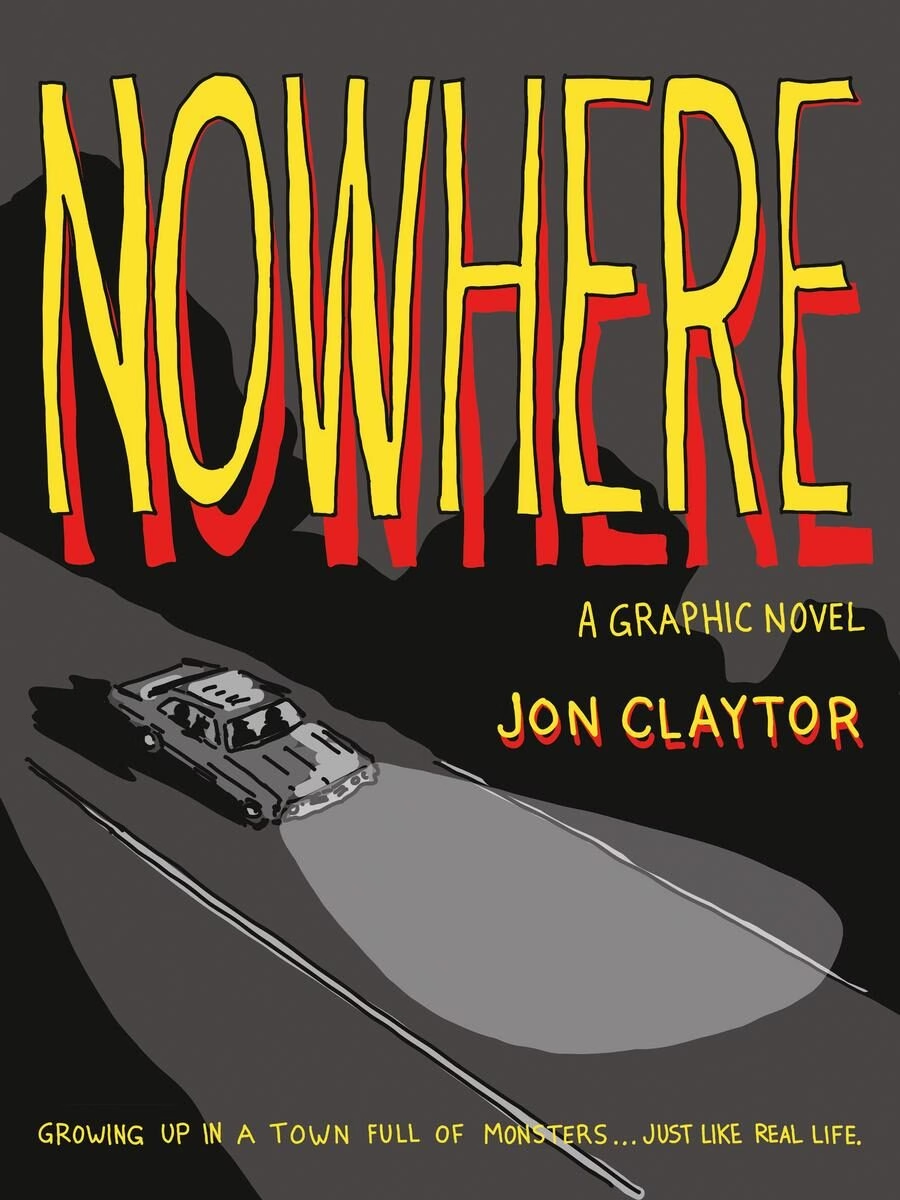
It’s the same situation Joel, the main character of Claytor’s new graphic novel Nowhere, finds himself as the story begins. Except Joel isn’t heading to Sackville.
“It’s called Beauséjour,” said Claytor, “and once they arrive, they realize that well, there’s a giant cube, which we actually have. And there are all these monsters and zombies and the residents of the town have just sort of become accustomed to it.”
Listen to the audio below:
The book, to be released today by New Brunswick publisher Goose Lane, is Claytor’s first work of fiction. And while the world he’s constructed in its pages is fantastical and tinged with horror, it was shaped, much like himself, by the small town that inspired it.
“But when you know someone or somewhere very well, you also see all the flaws and you see all the things that aren’t necessarily as comfortable. So if anybody reads Nowhere and thinks like, oh this guy doesn’t like Sackville, it really is a love letter to this place.”
To celebrate the release, there will be a free event at 25 Lorne Street on March 23 at 7 pm that Claytor is calling International Sackville Cube Day: Nowhere Book Launch and Variety Show.
“ I’ve invited basically an open call to local artists if they’ve been making any cube-related art, songs or poems, that this is a chance to come down and present them and we can all get together and celebrate the cube.“
Growing up, Claytor moved a lot, never staying in one place for more than six months to a year. His first stay in Sackville, back in ’86, lasted about nine months, but it had a significant impact on him, and provided the initial feeling that inspired Nowhere.
“ It’s sort of the first place where I moved that I had like really like strong creative friendships with people and I met some people that really changed my life,” he said. “And then we moved to Moncton, and I came back five or six years later for university. And it was just like I had been completely forgotten. Like nobody remembered me. At least that’s how I felt.”
Though Claytor used that feeling of fear at having been forgotten in his novel, he hadn’t intended to put so much of himself into another work.
He had done that with his memoir The Long Way Home, which he said was an intense experience after which he needed to escape himself. So he did a series of comic journalism interviews for the CBC.

He enjoyed the work and learned much from it, but eventually the heaviness of some of the interviews started to weigh on him and he felt like he needed another escape.
“ So I thought fiction would be super easy and it would just be a wonderful escape and a change. But fiction’s sneaky and the project found a way to work its way into the deeper parts of my psyche despite my sort of resisting it.”
While Nowhere holds no easy answers, there are lessons for those looking, said Claytor, especially in the way Joel uses his sketchbook to process the bizarre happenings in Beauséjour.
“One of the takeaways that for me is just like how important creativity is, how important just like having a sketchbook is and just the effect that small acts of creativity can have a huge effect on your own life.”
And Claytor intends to use his creativity to head back to Beauséjour in the future following a different set of characters, as he’s working on a new book with the working title Swamp Magic.
“ There’s an element of like a fascist invasion. But it’s also a romance. And I’m having a great time, just I need to remind myself, just do a drawing a day. Don’t try to plan too much ahead.”