
EOS Eco-Energy is putting together about 50 emergency kits for people in Tantramar, five times as many as the organization originally planned.
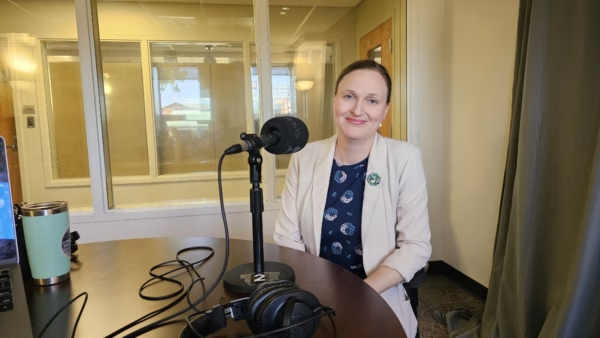
EOS had expected to buy about 10 pre-made kits. Climate Change Projects Manager Janie Brooks said that changed once staff saw how expensive they were.
“It turns out those are really expensive, so if we had done that, we would not have been able to reach nearly as many people,” said Brooks.
After speaking with Dorchester fire chief Greg Partridge, EOS decided to take a do-it-yourself approach and purchase the supplies separately. The kits are part of a wider emergency preparedness program that also includes public information sessions in Dorchester and Sackville.
Building the kits locally
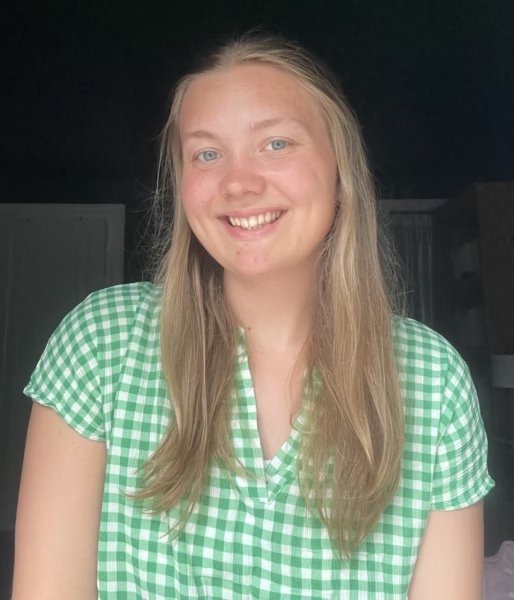
Much of the work of turning that idea into 50 backpacks has fallen to EOS summer climate change projects intern Amber McDonald.
Before the kits could be assembled, McDonald had to find the supplies and figure out what EOS could afford. She reached out to several local businesses, including Jonquille II, The Guardian, The Independent, PEDVAC and Second Chances, to discuss prices and what they could provide.
“They were all very helpful and amazing, so I just reached out to them about, like, pricing and everything,” said McDonald. “And then I did a bit of budgeting and figured out what we could order.”
From there, McDonald placed the orders and picked up the supplies before sorting everything for assembly. She put items into smaller bags where needed to help keep them dry, including first-aid supplies and the different light sources. With everything sorted ahead of time, she could work through each backpack and add what it needed.
Some parts took more figuring out than others. Backpacks were particularly difficult to source locally at a price that worked with the budget, and McDonald said there were also decisions about what EOS wanted to provide and what it could realistically afford.
“There has been like a, there’s been a lot of learning curves throughout this whole process ’cause it hadn’t been done before, by us at least,” she said.
The work involved in building the kits has also made the project considerably cheaper. McDonald calculated that each one costs EOS a little less than half the price of buying a pre-made kit.
“By building the kits ourselves, we were able to save a lot of money,” she said. “So originally, I think the budget had planned for about 10 kits that we were able to give away. And since then we’ve been able to go up to 50.”
More people signed up than EOS expected
There is already more demand than EOS can meet. Brooks said about 55 people signed up, while the organization is aiming to make roughly 50 kits. A waiting list has been started for anyone who could not get one in the initial round.
The way people pay for the kits has changed too. EOS initially planned to give 10 away to people with low incomes, but the savings from building them opened up another option.
EOS asked people signing up how much they could afford to contribute and did not require proof of income. Between 20 and 25 people requested a kit for free, while others offered to make a donation.
“It’s a bit more complicated budget-wise, but we’re essentially, by doing this sliding scale, it’s kind of meeting people where they’re at and understanding that these times are quite tough financially,” said Brooks.
Brooks said EOS is hoping to provide a kit to everyone who initially asked to receive one for free. She said having one can be particularly important for people who may not have a generator at home or reliable transportation if they need to evacuate.
With more names on the list than kits being made, Brooks said EOS would like to find funding to run the program again.
What’s in the backpack
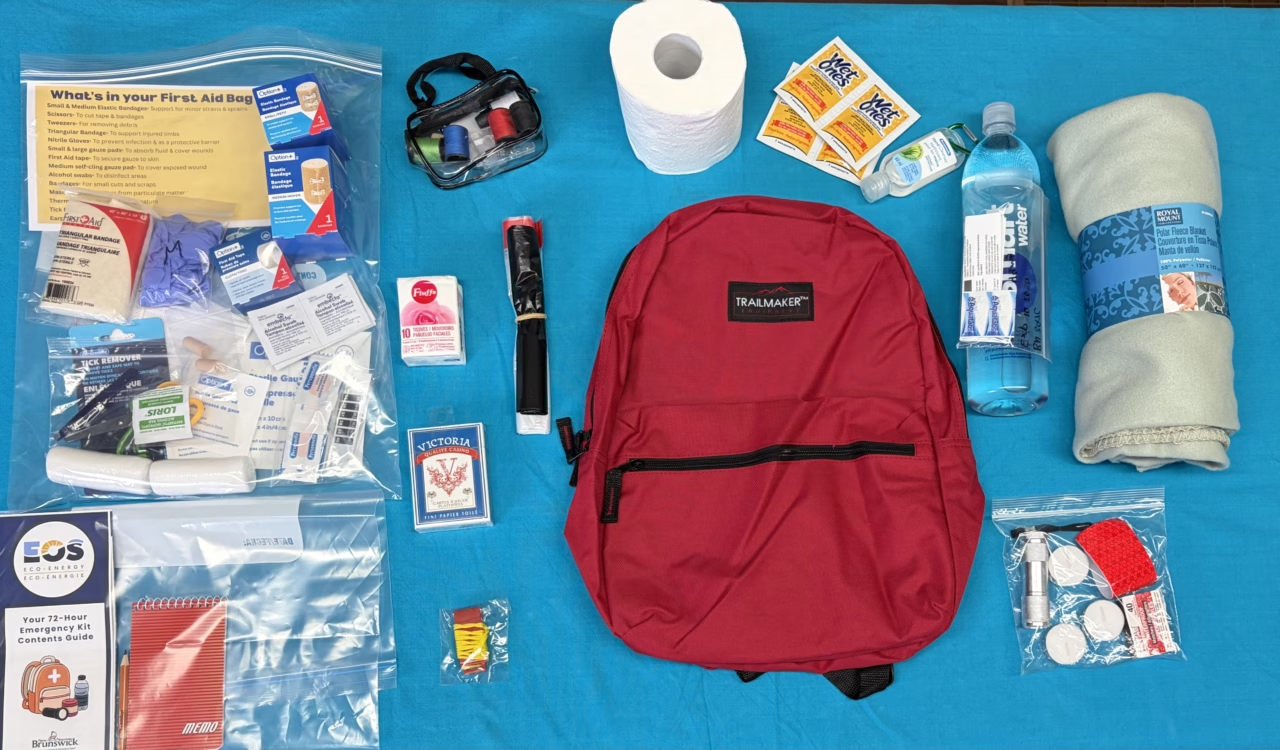
The backpacks are designed for the first few days of an emergency, including a power outage or evacuation. Each one contains first-aid supplies and several other items chosen with input from the local fire department, including a flashlight and batteries, water purification tablets and toilet paper.
EOS has also shared an Instagram video showing what goes into one of the 72-hour emergency kits.
But the backpacks are only a starting point.
EOS includes one litre of water because there is only so much room in the bag. Brooks said people should add more themselves and make sure the kit reflects what they would actually need if they had to rely on it.
That could mean adding prescription medication or copies of important documents. Someone preparing a kit may also need to account for children or pets.
“Everyone has unique needs and an emergency kit should really reflect what each person needs,” said Brooks.
Making preparedness less abstract
EOS has promoted 72-hour emergency preparedness before, but Brooks said the organization has recently noticed more interest in the subject. She pointed to concerns about wildfires, hot weather and power outages.
EOS heard similar concerns while speaking with people about climate risks in Tantramar. Brooks said some weren’t sure what they would do if they had to evacuate or how an evacuation would work in their area.
That came up in Dorchester and Rockport, where Brooks said people have worried about being cut off during severe weather. Those conversations also showed EOS that knowing about emergency preparedness doesn’t necessarily mean someone is ready for an emergency.
Someone might already own many of the things they would need, Brooks said, but those supplies could be scattered around the house or packed away somewhere when an emergency happens.
“Essentially what we’re trying to do is create like a change in habits of people, so it’s more kind of, uh, an annual or seasonal check-in,” said Brooks.
She said people should keep their emergency kit accessible and revisit it as their needs change. The goal is to move preparedness from an abstract idea to what Brooks described as “a very tangible backpack in their house” that is ready when needed.
EOS will also hold two public information sessions with local firefighters this week. The first takes place Tuesday, Aug. 25 from 5 to 6 p.m. at 8 Station Road in Dorchester, while the Sackville session follows Thursday, Aug. 27 from 5 to 6 p.m. at Sackville United Church.
EOS will unpack one of its kits during the sessions and explain what’s inside. Firefighters will offer emergency preparedness advice, while EOS staff will discuss how people can personalize their own kits. Both sessions are open to the public and no registration is required.