
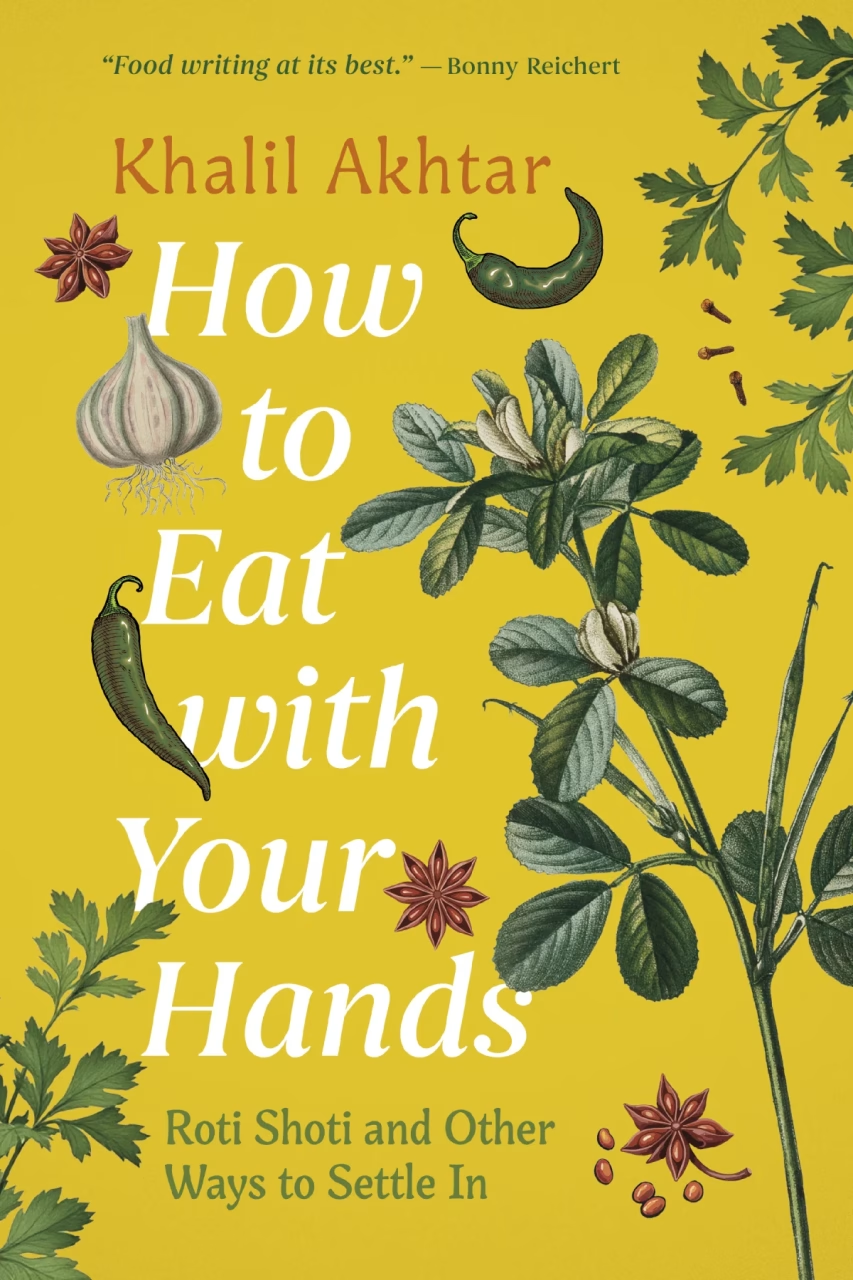
Khalil Akhtar, host of CBC Radio’s Information Morning Moncton, is bringing his first book to Mount Allison University this week.
How to Eat with Your Hands: Roti Shoti and Other Ways to Settle In introduces readers to the Punjabi home cooking Akhtar grew up with and still cooks for his own family.
“It is a cookbook for sure,” Akhtar said. “It’s an instruction manual on a particular kind of cooking, a particular kind of cuisine, specifically Punjabi household cuisine and domestic cuisine.”
The idea began with Akhtar thinking about constraint in his own kitchen. He found there was an advantage to knowing what was already in the pantry and having meals he could make without much planning.
Akhtar was born in the United Kingdom and moved to the Maritimes when he was young, growing up largely in small-town Nova Scotia and New Brunswick. His father was a pharmacist, while his mother was a homemaker who taught him what he calls his earliest “elemental skills” in the kitchen.
“Dinner almost invariably would have been what we call a curry in a plate, with a roti on the side,” he said.
There might also be salad, pickle or chutney. The curry changed from day to day, but the basic framework remained familiar. Akhtar compared the word “curry” to calling something a taco, since both can describe many different dishes.
As he got older, he also became more aware that the food and habits he knew at home stood out when he was elsewhere. Akhtar described himself as becoming a “third culture kid,” not entirely fitting into either world and learning to change how he behaved depending on where he was.
“You eat with your hands among your family, but you wouldn’t go to the school cafeteria, for example, and eat a plate of rice and dal with your hands among the people eating their egg salad sandwiches,” he said. “You learn pretty fast to code switch.”
Akhtar said food changes as people move, adapt to what is available and interact with other cultures. Some practices he said would have been mocked when he was young have since become more familiar.
“Many of the things that I grew up with wouldn’t have blended in the 1980s,” he said. “They would’ve been mocked. And then decades later, people are drinking turmeric lattes at cafes.”
When asked whether today’s access to different cuisines gives people greater opportunities to learn about food and other cultures, Akhtar was quick to agree.
“One hundred per cent. This is a golden age,” he said.
Akhtar isn’t arguing against that choice. Where he sees a difficulty is at home, when Tuesday’s dinner has little connection to Wednesday’s and each one sends the cook back to another recipe or another trip for ingredients.
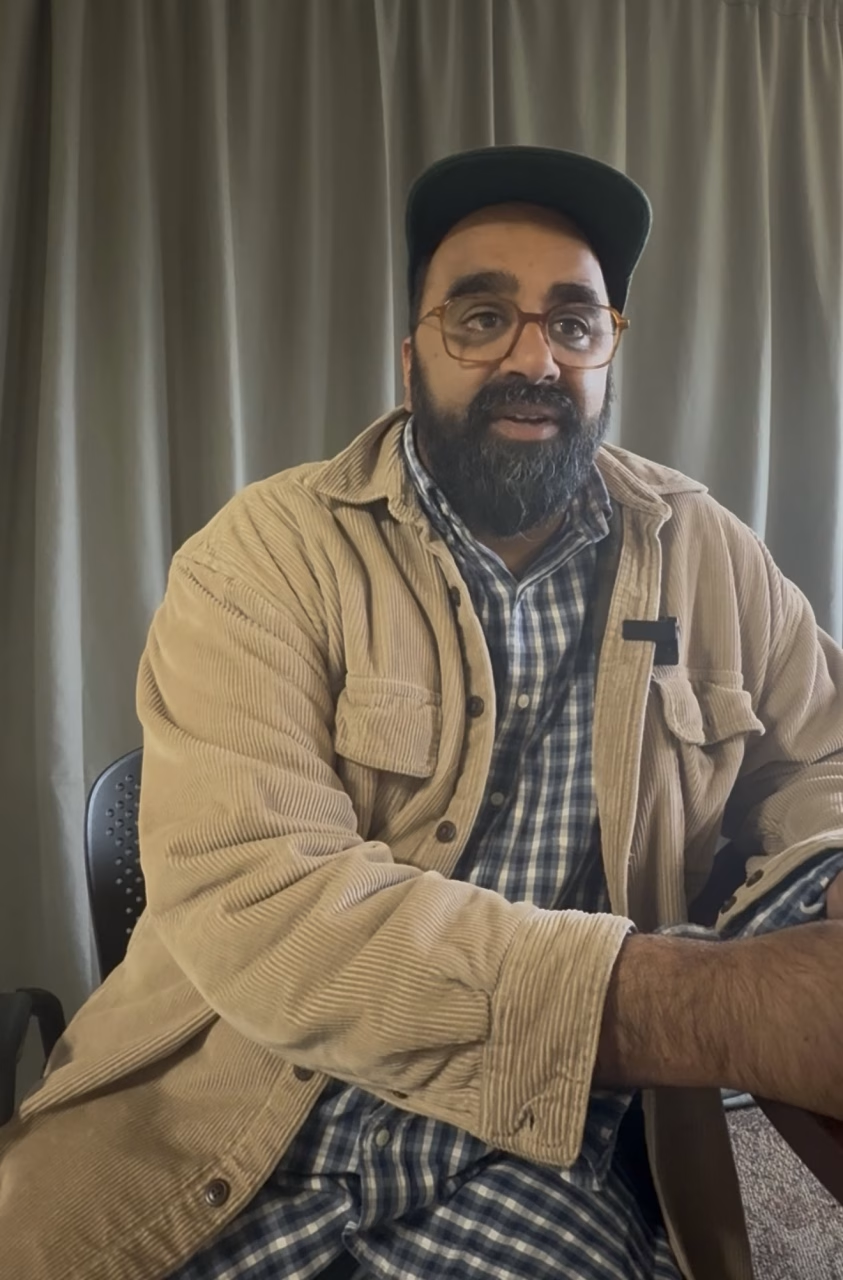
He describes what can be lost in that process as a common “syntax” in the kitchen — a familiar system of ingredients and techniques that a cook understands well enough to combine and adapt without starting from a new recipe each time.
Akhtar said that could mean having seven, eight, nine or a dozen dishes you know well, while still trying something different when you have the time.
“Trying new things is great. It’s fun,” he said. “But to make that the basic way of functioning of a kitchen I think is problematic, because then you’re always referring to recipes.”
Roti is the first recipe in the book, and Akhtar said making it repeatedly is one way a cook can develop that familiarity. Someone making roti regularly for a family can make thousands over time, learning what the dough should feel like through practice rather than continually relying on measurements.
“You get to know them in your muscles in the way that, you know, a piano player plays a piano,” Akhtar said of familiar cooking techniques. “They’re not thinking anymore.”
Akhtar keeps roti dough in his refrigerator and said that can put fresh bread on the table in about five minutes.
His own preferred meal is similarly simple: fresh roti and dal with raw onion, lemon and hot green chilies.
“That’s a meal, and it costs literally pennies,” he said.
Akhtar estimated a thin dal with one roti could cost less than a dollar to make, an example of the kind of inexpensive and practical home cooking he wants the book to make approachable.
How to Eat with Your Hands was the title before Akhtar had settled on the book’s final form. He said it is partly a nod to food writer M.F.K. Fisher’s How to Cook a Wolf, but he also means the instruction literally.
Using pieces of roti to pinch, scoop and combine different parts of a meal, Akhtar said, creates an experience that is difficult to reproduce with a knife and fork.
“It makes the food taste better, weirdly,” he said.
Akhtar compared it to a sandwich, saying the experience would change if you took it apart and ate each ingredient separately with a knife and fork.
“There is something about eating with your hands that allows you to sort of integrate the things that you’re eating together in unique ways,” he said.
Akhtar said the book is for readers interested in Punjabi home cooking, but also for people thinking about how they cook in their own kitchens. Along with roti, the book works through the ingredients, dishes and techniques that make up the everyday cuisine he is describing.
“If you want to truly understand and make Punjabi cuisine part of your daily domestic practice, you do have to devote your kitchen to it somewhat,” he said.
Akhtar isn’t asking readers to cook this way forever. He suggested sticking with one cuisine for a while, making its food often enough that the ingredients and techniques start to feel familiar.
The book release is also bringing Akhtar back to Mount Allison, where he was involved with CHMA in the early 2000s. He served as the station’s music director in 2001 and 2002, when CHMA operated out of a different building.
Walking through the station today, Akhtar said he can still find CDs in the library that he helped catalogue more than two decades ago.
“I love radio,” he said. “And this is where it started.”
How to Eat with Your Hands: Roti Shoti and Other Ways to Settle In launches Thursday, Oct. 8 at 6:30 p.m. in Tweedie Hall at Mount Allison University.
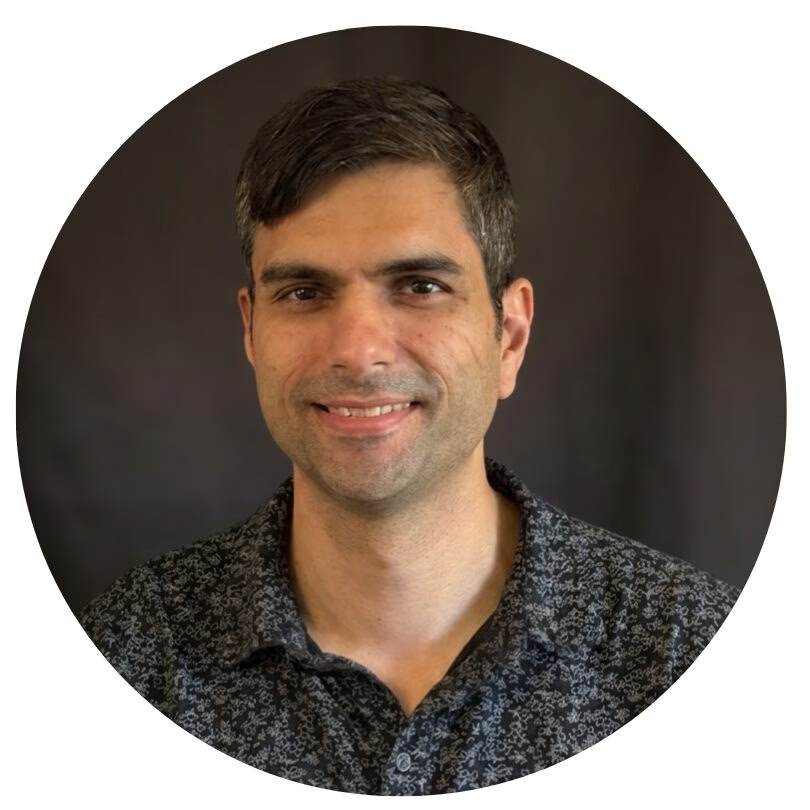
Theodore Ramharack holds a Bachelor of Arts in Political Science from Western University and a diploma in Broadcast Journalism. He recently completed an internship with CBC News’ The National.
Originally from Ontario, he moved to Sackville to join CHMA as a local journalist and is excited to get to know the Tantramar region and share stories from the community.