
It isn’t what you might think
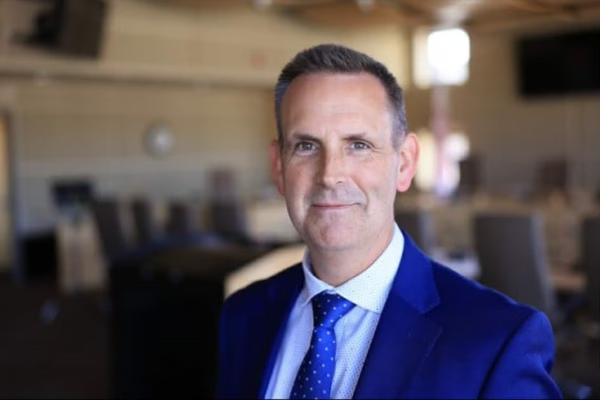
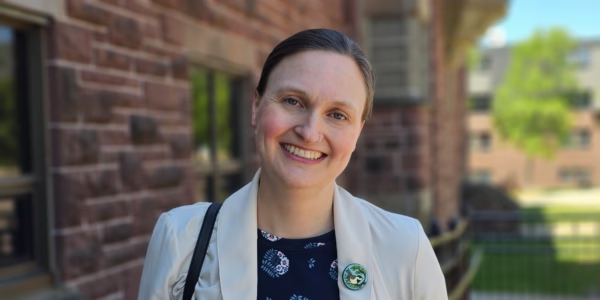
For Mount Allison professor Lisa Dawn Hamilton, one of the most common questions she hears from students may or may not surprise you.
It is not about technique, timing, or experience.
It is simply this – “Am I normal?”
Hamilton teaches neuroscience and human sexuality in Sackville, where she says the question often sits underneath more specific worries about bodies, desire, and where students think they should be by now.
A question students rarely ask out loud
Hamilton teaches neuroscience and human sexuality at Mount Allison University in Sackville. The question comes up again and again, often beneath more specific concerns about bodies, desire, experience, or timing.
“It’s one of the most common questions I get from students,” Hamilton said. “They might not always ask it directly, but that’s what they’re really trying to figure out.”
Learning from comparison
Many students arrive at university with limited formal sex education, and a lot of informal learning shaped by peers, media, and the internet.
“They’re comparing themselves to what they see around them,” she said. “And often what they see is not realistic.”
Students frequently worry they are falling behind, doing something wrong, or missing a milestone everyone else seems to have reached.
“A lot of them think there’s a timeline they’re supposed to be following,” Hamilton said. “And if they don’t match it, something must be wrong with them.”
When media becomes the benchmark
Those worries can be intensified by pornography and social media, where bodies and sexual experiences are often presented without context, Hamilton says.
“There’s very little conversation about diversity, so people assume what they’re seeing is the norm.”
Creating space for reassurance
In her classes, Hamilton works to slow those comparisons down and remind students that sexual development is highly individual.
“There’s a huge range of what’s typical, and that’s something students often don’t hear enough.”
According to Hamilton, creating space for open, honest questions can relieve a lot of anxiety.
“Just hearing that they’re not broken, or behind, or alone can make a big difference.”
Missed Part One?
This story is part two of a six-part interview series with Hamilton, you can find the story on how Hamilton found her calling, here. The next part looks at how lessons about consent can become confusing when people are surrounded by mixed messages about sex and relationships.
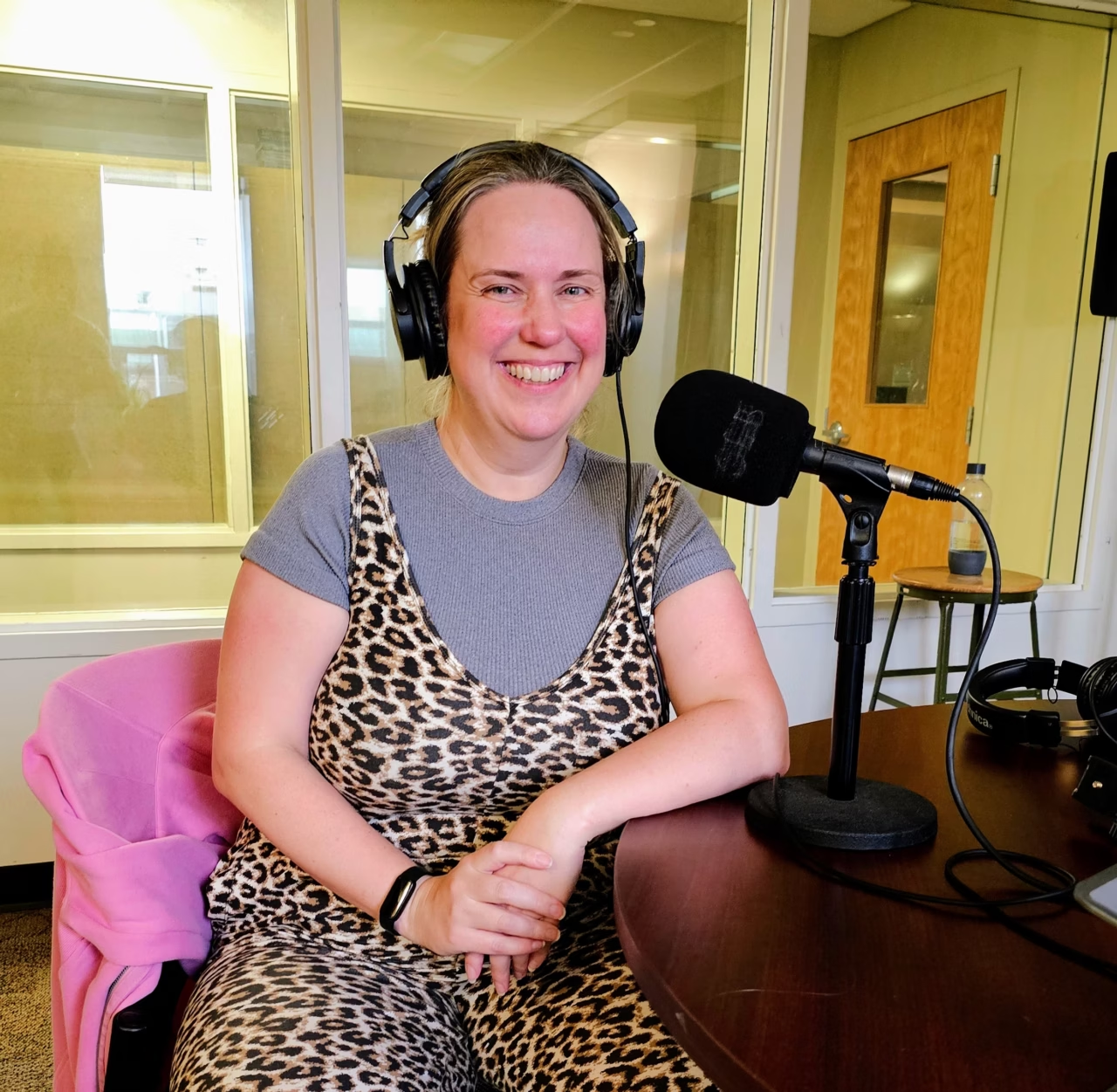
Clinton Davis is a community journalist and audio producer covering the people, events, and ideas shaping the Tantramar region.