

Brown leaves appeared months before fall, despite a summer with plenty of rain
Many maple trees across Tantramar started turning brown, shrivelling and losing leaves in July, months before the usual arrival of fall colours. Similar symptoms appeared during last year’s drought, but this summer has brought considerably more rain.
So, what’s going on?
Hear the story below:
John Haney lives in Wood Point, where he describes himself as a steward of the forest. He maintains trails, creates land-based art projects on his wooded property and plants and observes numerous species of trees.
Haney is not a certified arborist. He has, however, worked with Woodpecker Tree Care for seven years and says trees are both his day job and his passion.
It’s not an early fall
Haney says the browning can resemble an early change of seasons, but the leaves aren’t displaying their usual autumn colours.
“They’re not changing beautiful red or orange or yellow, they’re just turning brown and dry and falling off.”
The browning has also drawn attention to black spots appearing on many maple leaves.
Haney identifies those as tar spot, a fungus commonly found on Norway maples. He says it can look concerning but generally doesn’t cause significant distress to the tree.
Haney suspects another fungal disease, anthracnose, could also be contributing to the browning following this year’s wet spring.
“When the trees get wet and there’s a lot of dampness, it allows the fungal spores to take hold.”
But this year’s moisture follows a very different growing season.
Haney says last year’s drought may have weakened some trees, leaving them more susceptible to other stresses.
“Last year was such a dry year, it was like a drought, and it really made a lot of trees sensitive,” he said. “And then they become susceptible to things like mildew and mold and fungus and insect attacks.”
The struggling maples aren’t from here
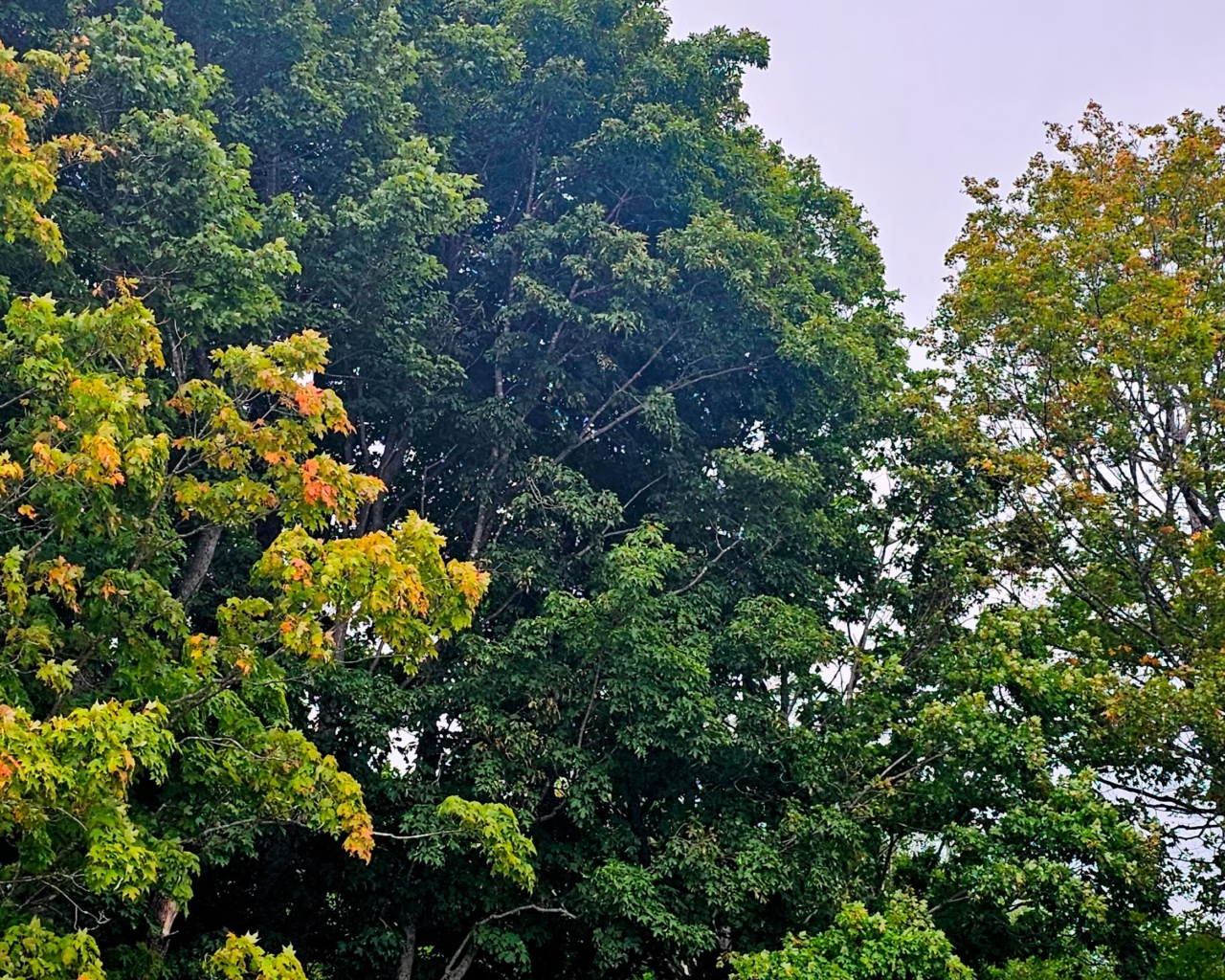
There’s another distinction. The maples he says are experiencing the widespread browning are Norway maples, an introduced species rather than one of New Brunswick’s native maples.
Norway maples are native to Europe and parts of western Asia and were introduced to North America as shade trees. They grow quickly, develop dense canopies and spread aggressively.
Some Canadian municipalities restrict their use in public planting programs and protected natural areas.
Meanwhile, Haney says the native maples he is observing aren’t showing the same widespread problem.
“The native sugar maples, the red maples, and the silver maples seem to be totally fine.”
‘Boring, unprecedented normal stuff’
Despite the dramatic appearance and condition of some Norway maples this summer, Haney is cautiously optimistic.
“Even when they get hit with this kind of dryness, the leaves are falling off like this, often they come back the next year and they’re okay.”
Haney says Norway maples are hardy and spread readily – characteristics that have contributed to their classification as an invasive species.
“Fortunately these maples grow like weeds. They spread like crazy.”
For Haney, there’s also a small silver lining to the attention the browning trees have received.
“If there’s any silver lining here, it’s nice that people notice trees and notice when there’s problems, you know? We don’t take them for granted anymore when we see so many having problems.”
Asked what weather would help the trees next year, Haney said he would like some “boring, unprecedented normal stuff.”
But what constitutes normal weather has become harder for Haney to predict.
“Predictability seems like the one thing that there isn’t anymore, you know?”
Time will tell.

About the reporter
Clinton Davis is a PT journalist/producer with CHMA News covering Tantramar (including Sackville, Dorchester, Port Elgin, Midgic and surrounding communities). He reports on municipal government, public safety, community events, local business, regional issues and ideas across Tantramar.