
The proposed generating station near Centre Village has sparked new interest in the Chignecto Isthmus.
For many people, the project has prompted a closer look at the landscape surrounding it.
Researchers say they’ve been paying attention to it for decades because of the role it plays in supporting wildlife across Atlantic Canada.
“It’s a one-of-a-kind habitat and environmental zone within Canada,” said Barry Rothfuss, executive director of the Atlantic Wildlife Institute.
Drive across the Isthmus and it’s easy to miss what makes it different.
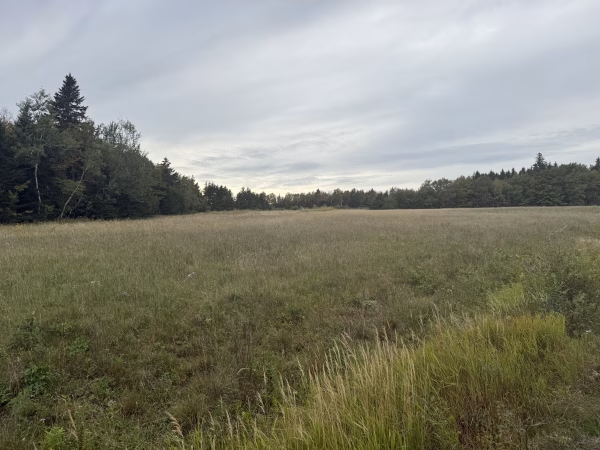
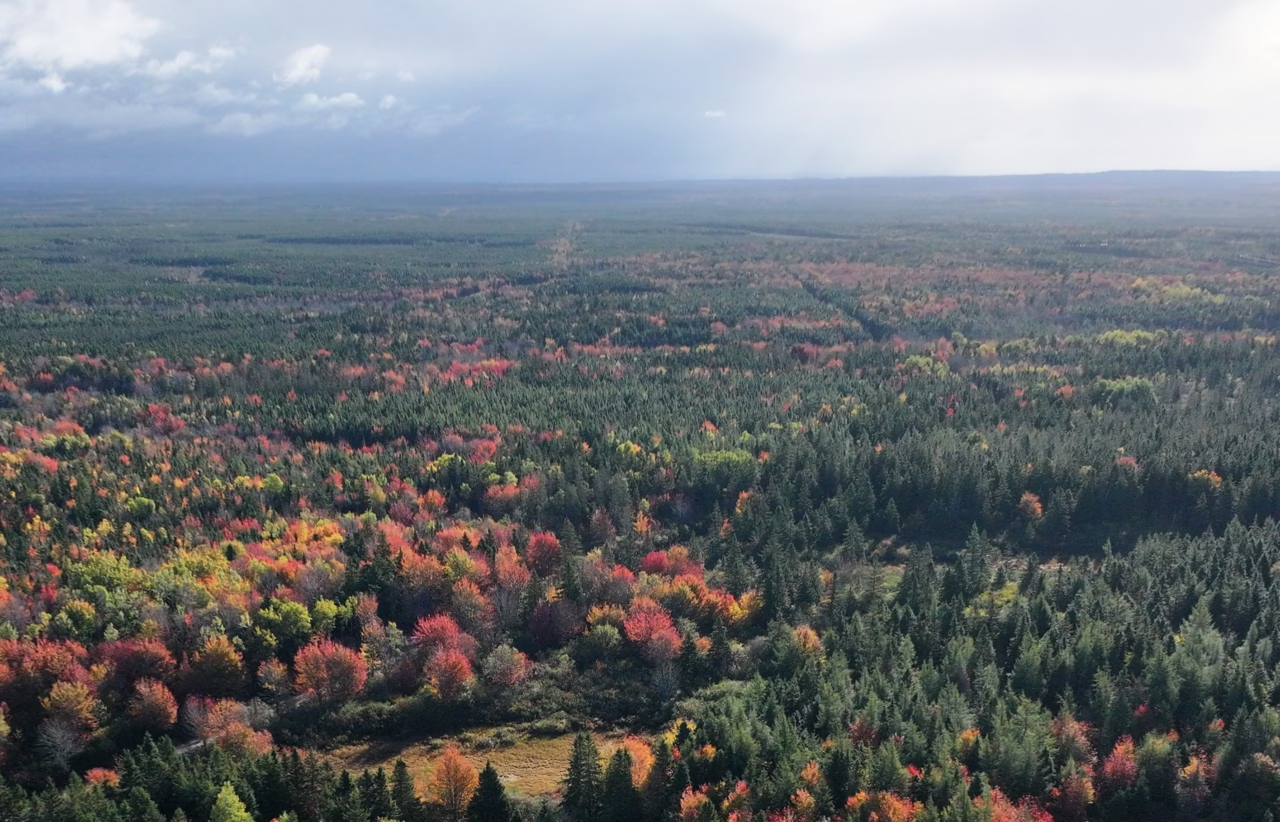
The highway crosses open marshes and low fields before reaching Nova Scotia. From the road, it doesn’t look like one of Atlantic Canada’s most important ecological landscapes.
Environment and Climate Change Canada says the Isthmus contains Atlantic Canada’s largest remaining saltmarsh tidal wetlands.
Rothfuss said no single marsh explains why the landscape is important.
“The habitats . . . are critical to maintaining ecological stability. Again, not only in this specific location, but throughout all of the Maritime region.”
The Isthmus also serves another important purpose.
It’s the only natural land route connecting Nova Scotia to mainland North America.
Pam Novak, director of wildlife care at the Atlantic Wildlife Institute, said wildlife has relied on that narrow strip of land for generations.
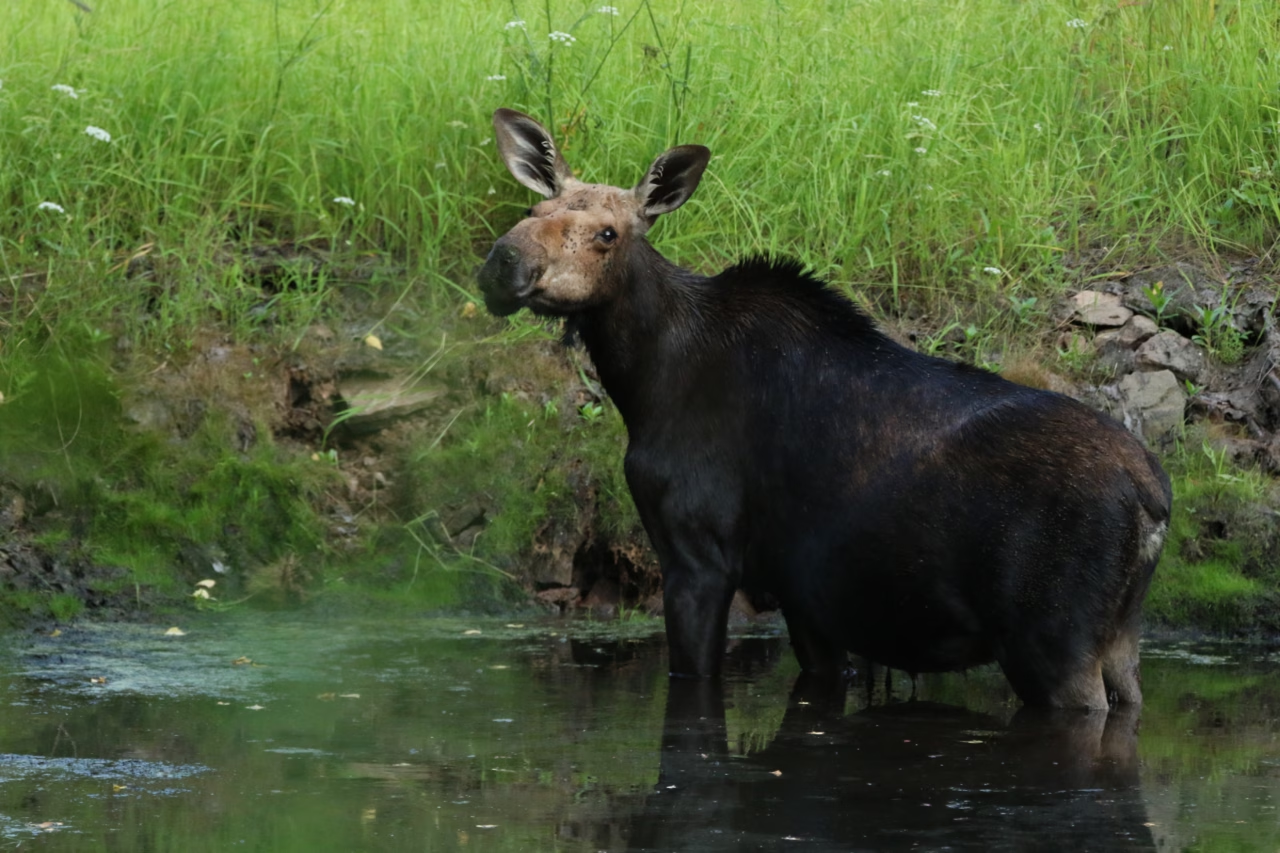
For endangered mainland moose, it’s one of the few places where populations can remain connected.
“It is the crucial and critical wildlife corridor that connects Nova Scotia to the rest of North America,” Novak said.
She said interrupting that movement doesn’t affect only one species.
“It’s like a cascading event that could happen in an area that’s very crucial to keep protected.”
The landscape changes with the seasons.
Every spring and fall, millions of birds move through the region as they travel between South America and the Arctic.
“It’s also a really important junction of what we would call the Atlantic Flyway that supports migrating birds,” said Kelsey Butler, Atlantic and Quebec director with Birds Canada.
One particular species returns to the upper Bay of Fundy in remarkable numbers each year.
Butler said about 75 per cent of the world’s semipalmated sandpiper population stops there during migration.
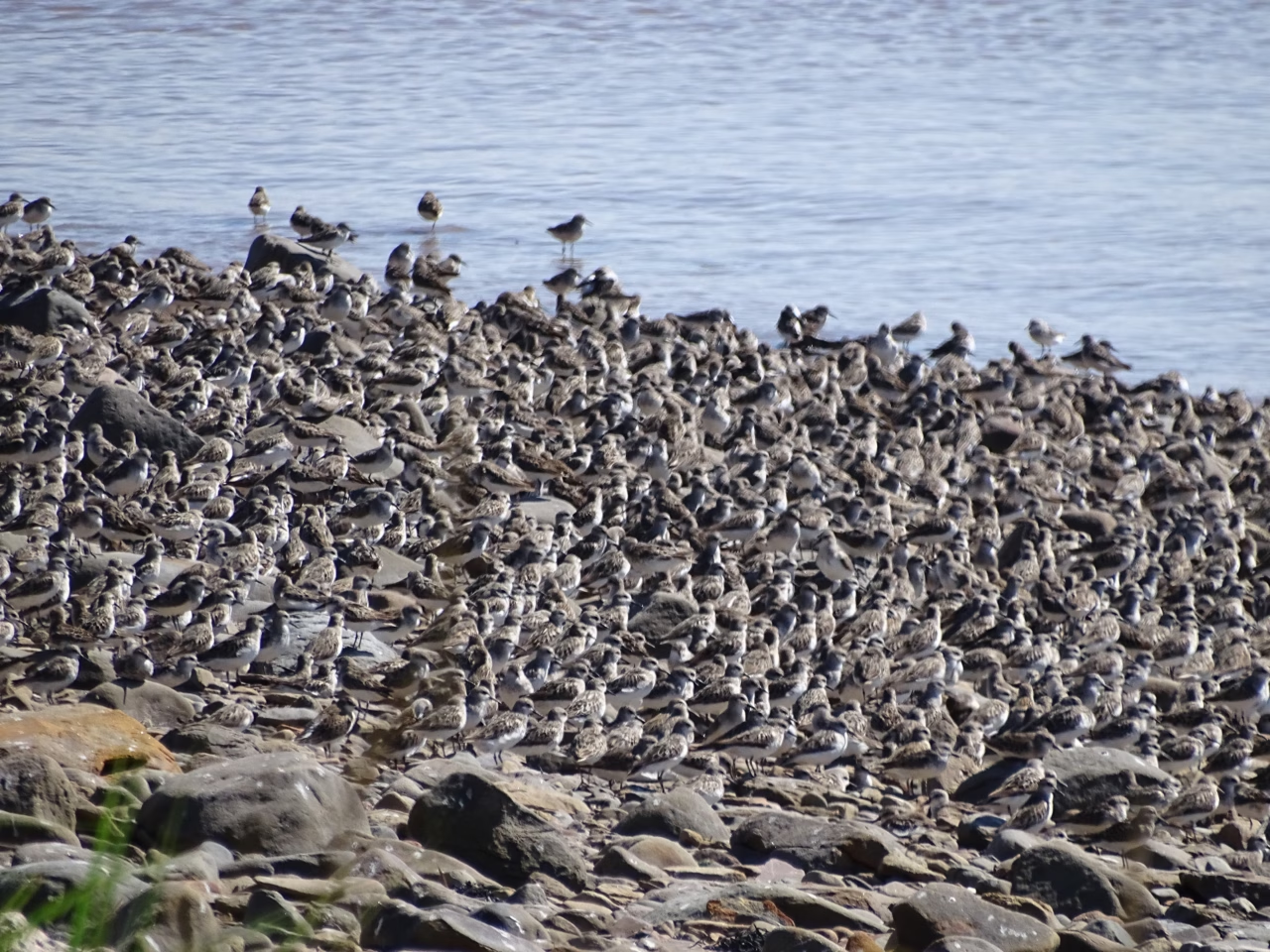
After flying for days, the birds feed almost constantly on the mud shrimp, nearly doubling their body weight before continuing their journey.
“They double their body weight so that they can continue on for days to reach their final destination,” Butler said.
The Isthmus supports far more than sandpipers.
Environment and Climate Change Canada says some birds stop during migration, while others stay to breed, including Canada warblers, olive-sided flycatchers, rusty blackbirds, lesser yellowlegs and short-billed dowitchers.
For Butler, that’s what makes the landscape remarkable. A semipalmated sandpiper stopping to feed and a Canada warbler nesting in the wetlands may be doing different things, but both depend on the same place.
“They’re a buffer,” Rothfuss said. “As soon as you start destroying that buffer, you are taking some of the key elements out of our battle to protect and preserve our overall climate.”
Today, that same landscape is at the centre of a different debate.
NB Power wants to build a natural gas-fired generating station near Centre Village as part of its Renewables Integration and Grid Security Project.
The proposed site is near Centre Village, surrounded by a mix of wetlands, forests and agricultural land on the Chignecto Isthmus.
The utility says the project is needed as electricity demand grows and more renewable energy is added to New Brunswick’s electricity system. According to NB Power, Centre Village was selected because it is close to existing natural gas and electrical transmission infrastructure and could help avoid an energy shortfall by 2028.
The proposal is now undergoing New Brunswick’s environmental impact assessment process.
Environment and Climate Change Canada is providing expertise on migratory birds, species at risk and their habitats while the Province of New Brunswick leads the review.
Butler said Birds Canada believes there’s still more to learn about how the project could affect the surrounding landscape before decisions are made.
“We’re worried that there’s not enough data to really assess the impacts of this,” Butler said.
The environmental assessment will determine whether the project proceeds.
For the researchers interviewed for this story, though, the proposed generating station has already changed one thing.
It’s introduced more people to a landscape they’ve spent years trying to understand.

Theodore Ramharack holds a Bachelor of Arts in Political Science from Western University and a diploma in Broadcast Journalism. He recently completed an internship with CBC News’ The National.
Originally from Ontario, he moved to Sackville to join CHMA as a local journalist and is excited to get to know the Tantramar region and share stories from the community.