
As the province prepares new water legislation, Mitton says drought, private wells and growing industrial demand need to be considered.
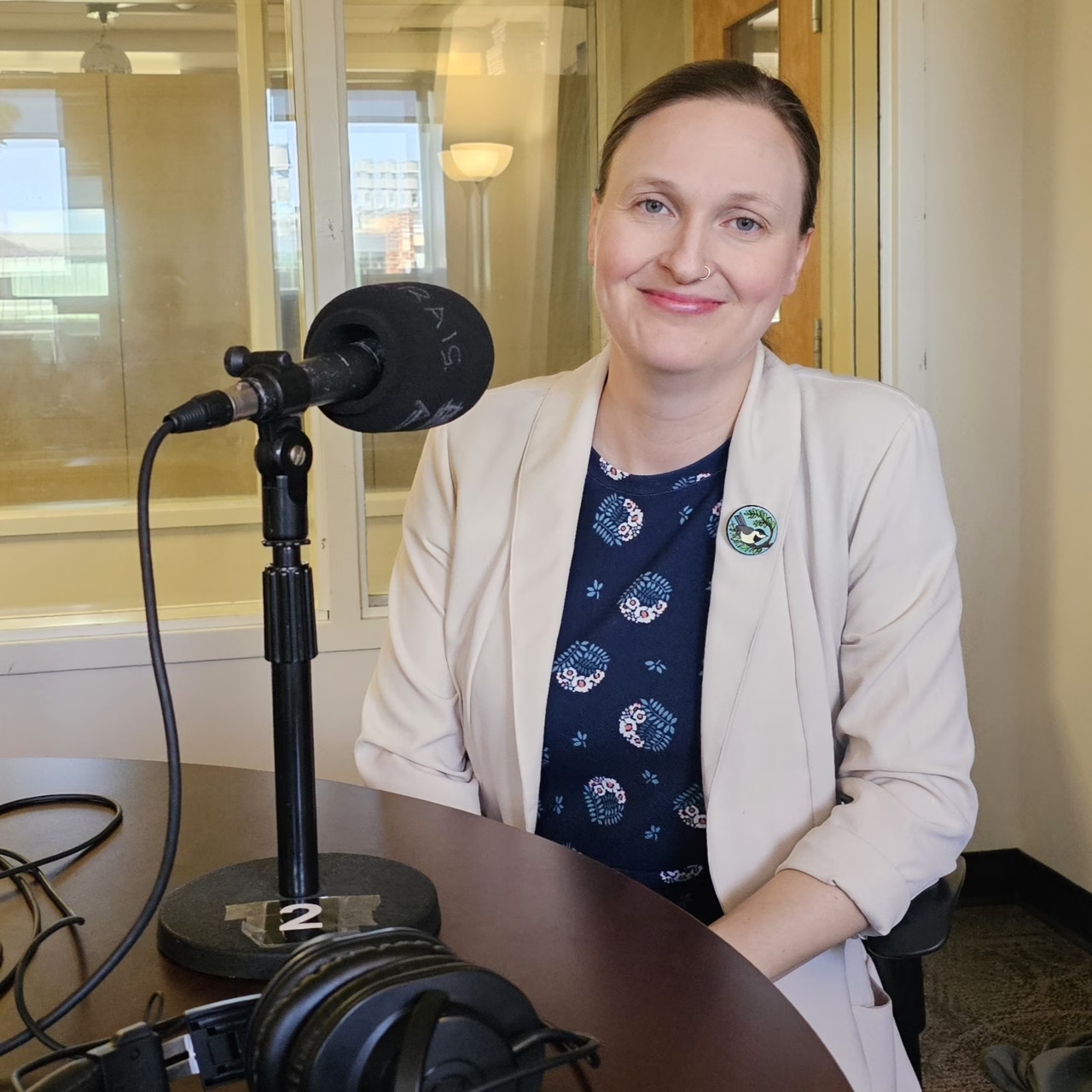
Last year’s drought left some Tantramar residents struggling with dry private wells. Now, as New Brunswick works to modernize its Clean Water Act, Tantramar MLA Megan Mitton says the province needs to consider not only whether water is clean, but how much is available.
Hear the story below:
Mitton said people contacted her constituency office during last year’s drought after their wells ran dry.
“Last year I did have some people reaching out to my office saying that their wells had run dry, and they were struggling to, you know, sort of live day to day. Like, how do you cook and shower and survive?”
Mitton said her office put out a call asking residents to report their experiences, but she believes those reports likely captured only part of the problem.
Many people relying on private wells find their own solutions, she said, including getting help from neighbours or family.
Mitton said the province needs to do more to help individual well owners plan for water shortages and support municipalities asking residents to conserve water.
Water quality isn’t the only concern
The province is currently working on changes to New Brunswick’s Clean Water Act.
Mitton took part in the legislative review. She said testimony presented during the process repeatedly raised an important distinction between water quality and water quantity.
“Through that review, one of the things that became clear with the witnesses that came into committee was that it’s not just the quality of the water, but the quantity of the water that government needs to be looking at, and looking at the whole watershed when decisions are being made.”
Mitton said she wants that approach reflected when the revised Clean Water Act comes forward.
The province has since released a report summarizing what it heard during consultations. Issues raised included water quantity, support for private well owners, watershed management and planning for drought and climate change.
Revised legislation has not yet been introduced.
“At this point, the government has put out what are essentially ‘what we heard’ reports, but legislation hasn’t come forward yet,” Mitton said, “And so that will really be where the rubber hits the road, and where we’ll see if they have adopted some of the recommendations that came from experts, stakeholders and rights holders.”
‘I’m always anxious about water’
For people who depend on groundwater, the availability of water can become a very personal concern.
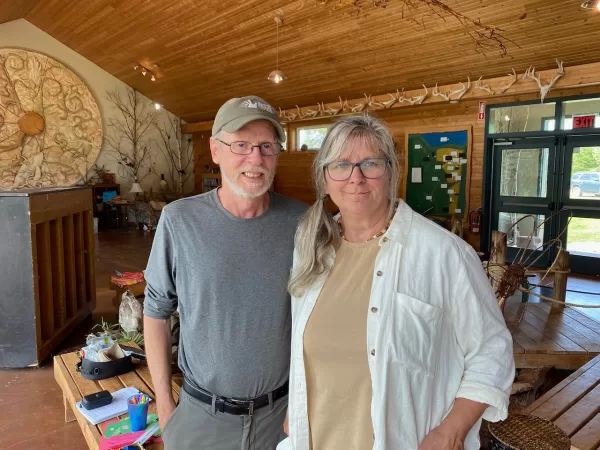
John Haney lives on a rural property in Wood Point and describes himself as a steward of the forest. While speaking with CHMA News earlier in the week about the region’s browning Maple trees, the topic of his own well came up.
“My well ran dry in 2017. I had to drill a new well. So I’m always anxious about water,” Haney said.
That experience changed the way Haney looks at rainfall.
“I’m much happier if it rains too much than if it doesn’t rain enough, you know? I want to fill that water table up. I want everyone’s gardens to grow and the forest to be healthy, and I worry about forest fires as much as anybody.”
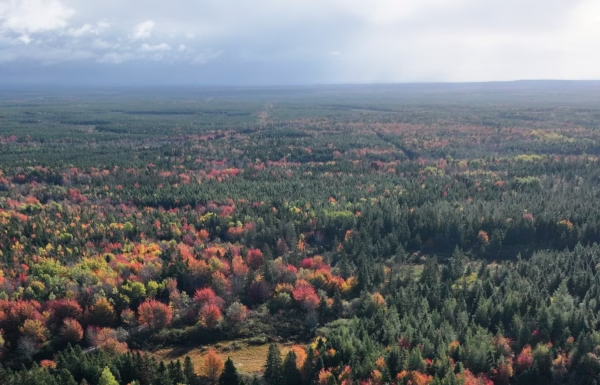
Haney has also been watching the effects of last year’s drought on trees around Tantramar. He says some spruce and tamarack that survived last summer are now dying after being weakened by the dry conditions.
This year’s greater rainfall has brought some relief but Haney said predictability is increasingly difficult.
Looking at the whole watershed
Mitton says questions about water quantity will become increasingly important when governments consider developments that could require large amounts of water.
She said decisions should look at an entire watershed and consider how one user’s consumption could affect people and ecosystems downstream.
“I think looking at the quantity of water and taking a watershed perspective when they’re considering these things is important,” Mitton said.
“For example, should we be having large industrial users of water? AI data centers are coming to mind. Is that how we want to be using our water? And what will the impact be downstream?”
The province says changes to the Clean Water Act are expected to be introduced next spring.
For Mitton, that’s when it will become clear how far the province is prepared to go in addressing water quantity, private wells and planning for future droughts.

About the reporter
Clinton Davis is a PT journalist/producer with CHMA News covering Tantramar (including Sackville, Dorchester, Port Elgin, Midgic and surrounding communities). He reports on municipal government, public safety, community events, local business, regional issues and ideas across Tantramar.