
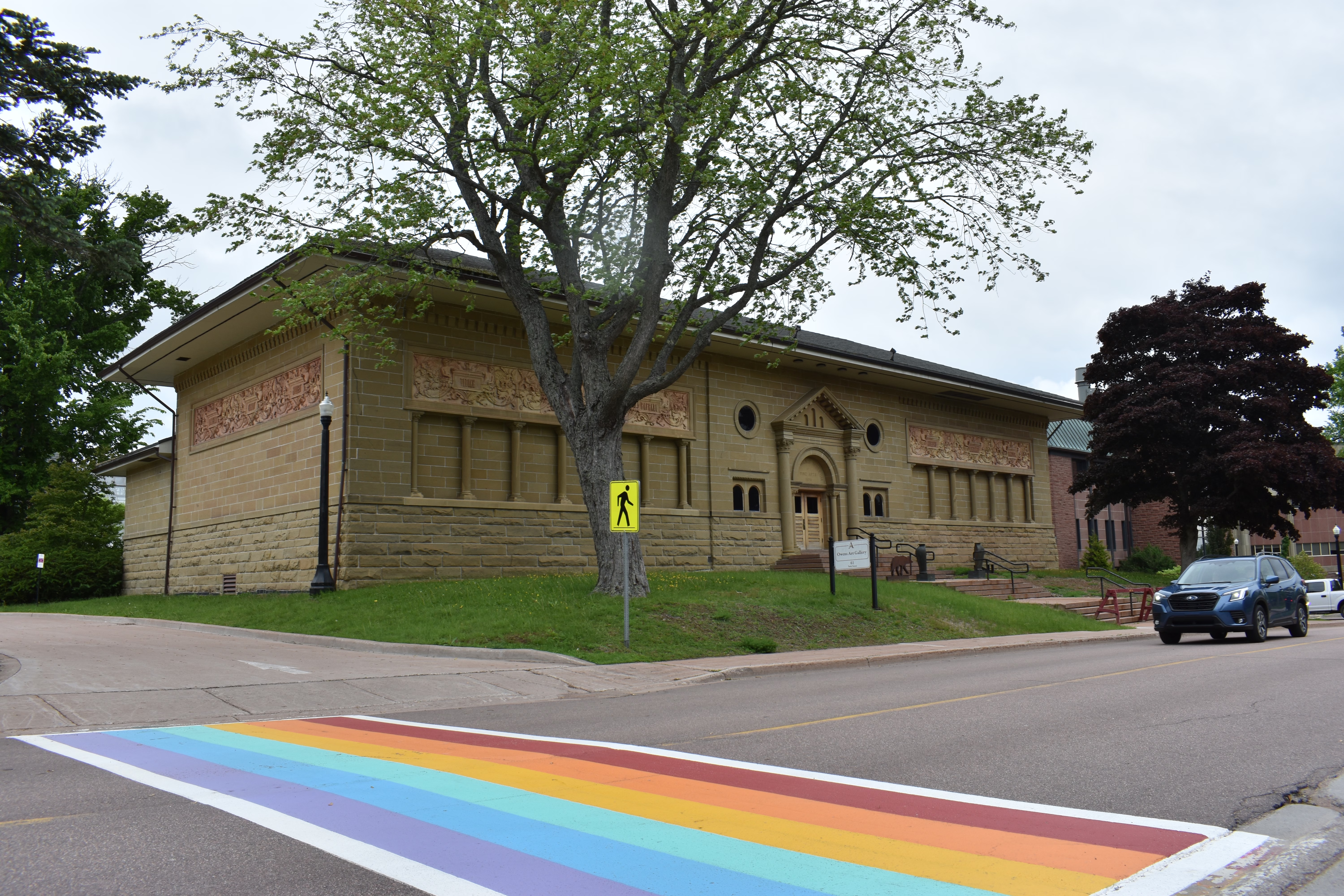
A new exhibit at the Owens Art Gallery highlights the work of Erica Rutherford, a painter, writer, filmmaker, and more, whose work often chronicled her own explorations of gender and community.
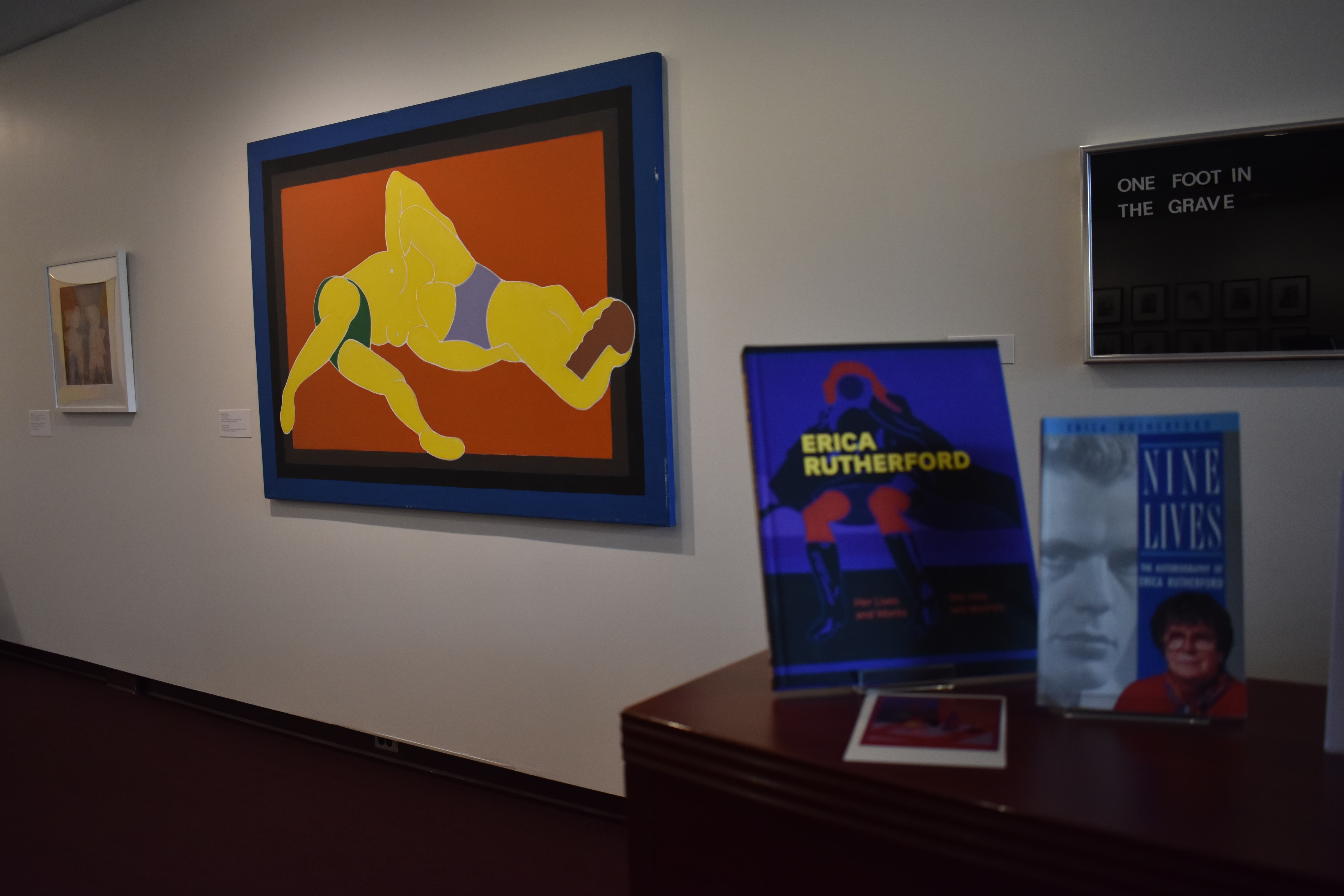
The touring exhibition, Erica Rutherford: Her Lives and Works, profiles the pioneering transgender artist through more than 100 works, personal photographs and memorabilia, and is on display at the Owens until Sept. 13.
Hers was a career marked by drastically different styles that evolved along with the artist, said Pan Wendt, curator of the exhibition and director of the Confederation Centre Art Gallery in Charlottetown.
“ It could be 10 different artists when you go. You see so many different styles and different kinds of imagery. What’s running through it is this sense of being shaped by society as your identity is being shaped, categorized,” he said. “In some sense, it’s mostly seen as negative, so she’s trying to create imagery about a more flexible world that’s more open.”
Listen to the audio below:
The show typically features five to seven chapters, chronicling Rutherford’s life, but due to the size of the Owens, attendees will experience a slightly truncated version, said Wendt.
”Emily Falvey, the director at the Owens, she knows the spaces much better than I do and knows kind of how to pull the best out of a larger show. It just couldn’t fit. So, for example, the South African episode is dropped.”
That South African episode occurred in 1949, when she designed sets and produced African Jim, the first feature film in the country to have an almost all-Black cast and meant for a Black audience.
Rutherford was born in Scotland in 1923 and grew up in Portsmouth, England, and from a young age, struggled with her gender. Eventually, she was drawn to theatre and visual arts.
When she was drafted during World War II, her discomfort with her gender was a red flag during her psychiatric evaluation, and she was assigned to the military theatre, entertaining the troops.
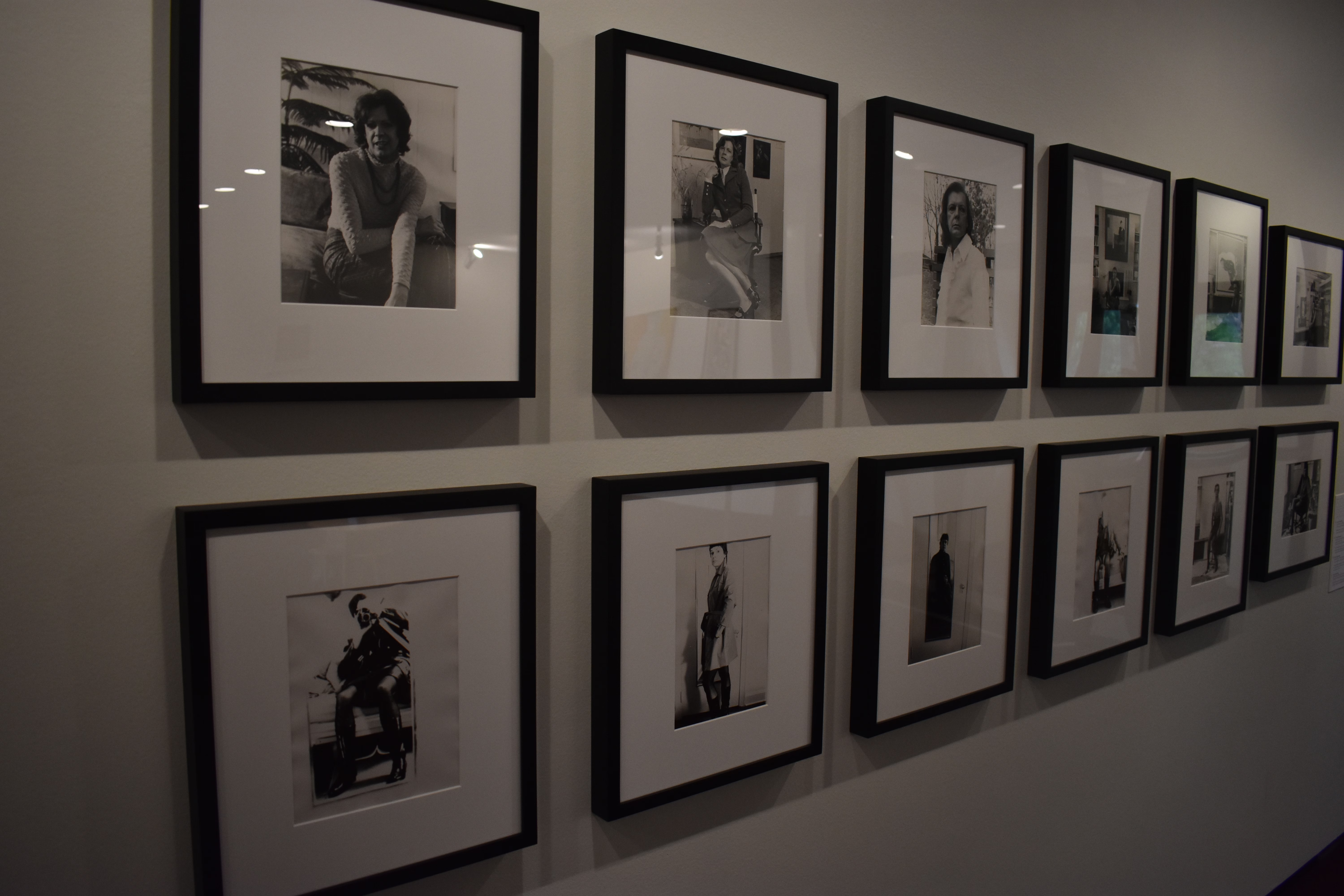
By the late 50s, Rutherford was back in London and refocused on painting seriously. She also, perhaps presciently, opened a women’s clothing store called Erika. At the end of that decade, in 1959, she met Australian artist Gail Turner, who would become her life partner.
They moved that year to Ibiza, Spain, to live as artists. In 1966, they had a daughter Susana. Two years later, with life becoming more expensive in Ibiza and London, they moved to the United States, where Rutherford and Turner began teaching.
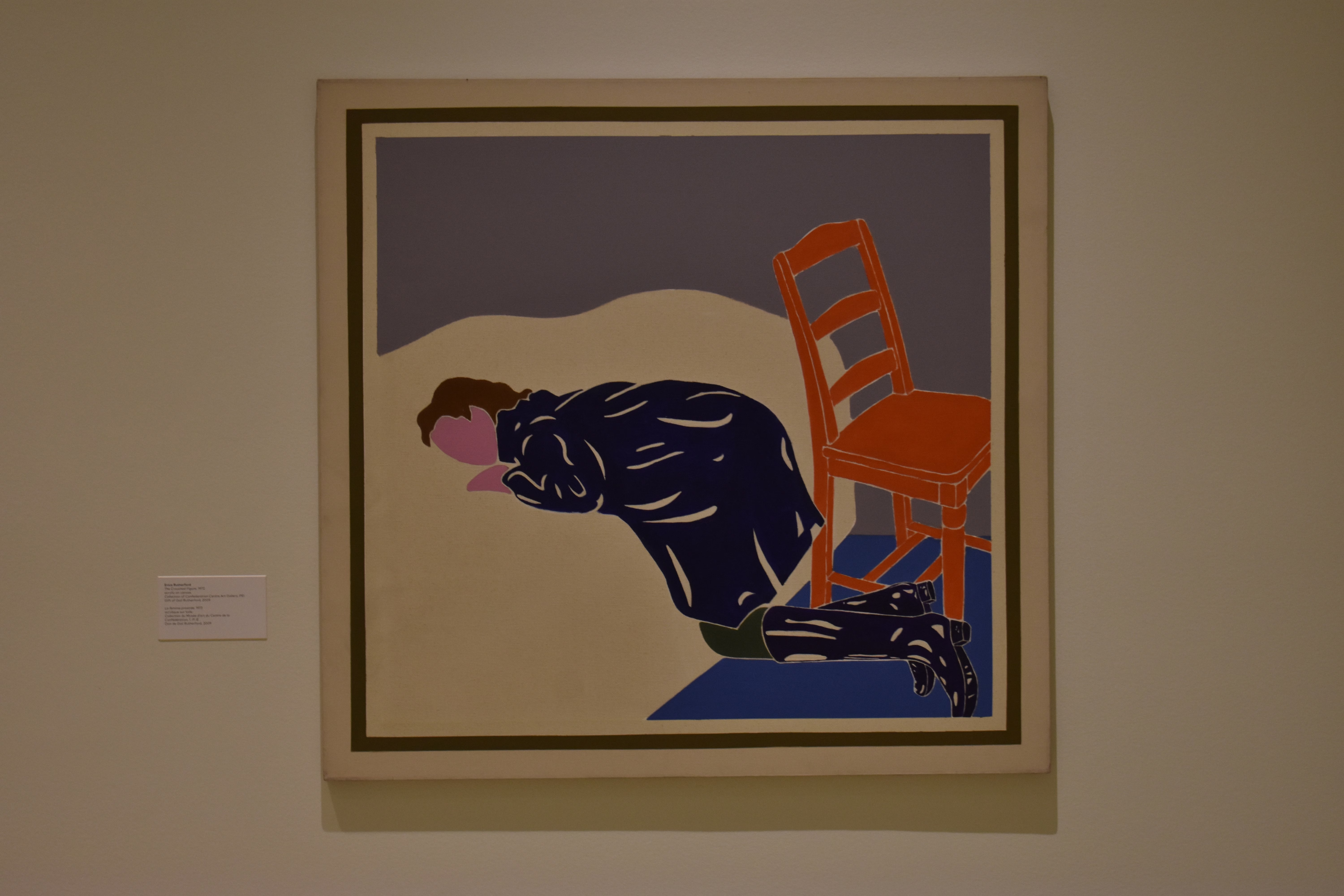
It was here that she learned about gender dysphoria and began the process of transitioning. Her work reflected this with a dramatic change in style and a focused exploration of gender. It is a period featured heavily in the exhibition, said Wendt.
” The paintings actually feature images of Erica as a woman in this kind of pop language—this very bright and graphic and accessible, striking visual language. Meanwhile, she’s also photographing herself in her studio,” he said. “She was an avid photographer, and us[ed] these photographs as the basis for paintings.”
During this time, a colleague from P.E.I. suggested the small province to the family for a vacation. Rutherford fell in love with the place, eventually buying a farm.
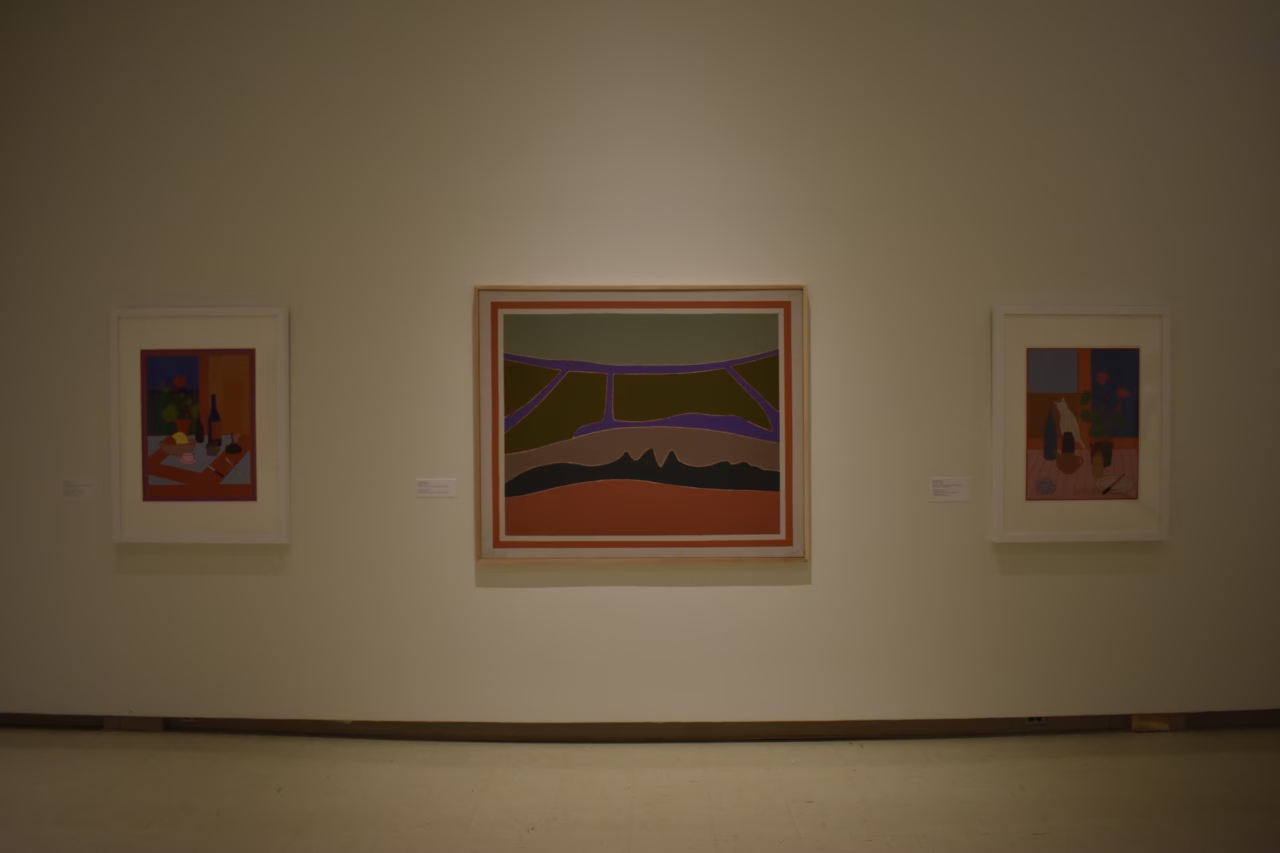
Again, her art changed, now to pastoral landscapes and domesticity. She also illustrated children’s books and got into printmaking. All the while, she was an inspiration for young people on the Island.
”To have an openly trans person in a place like P.E.I. was a new thing, really. She was also very influential on a lot of younger people who felt, in a certain sense, like she gave them permission to be themselves,” Wendt said. “I’ve heard that story from a number of people, particularly in P.E.I.’s queer community, that Erica was a kind of sign, ‘oh, you can live like this and you can be happy.'”
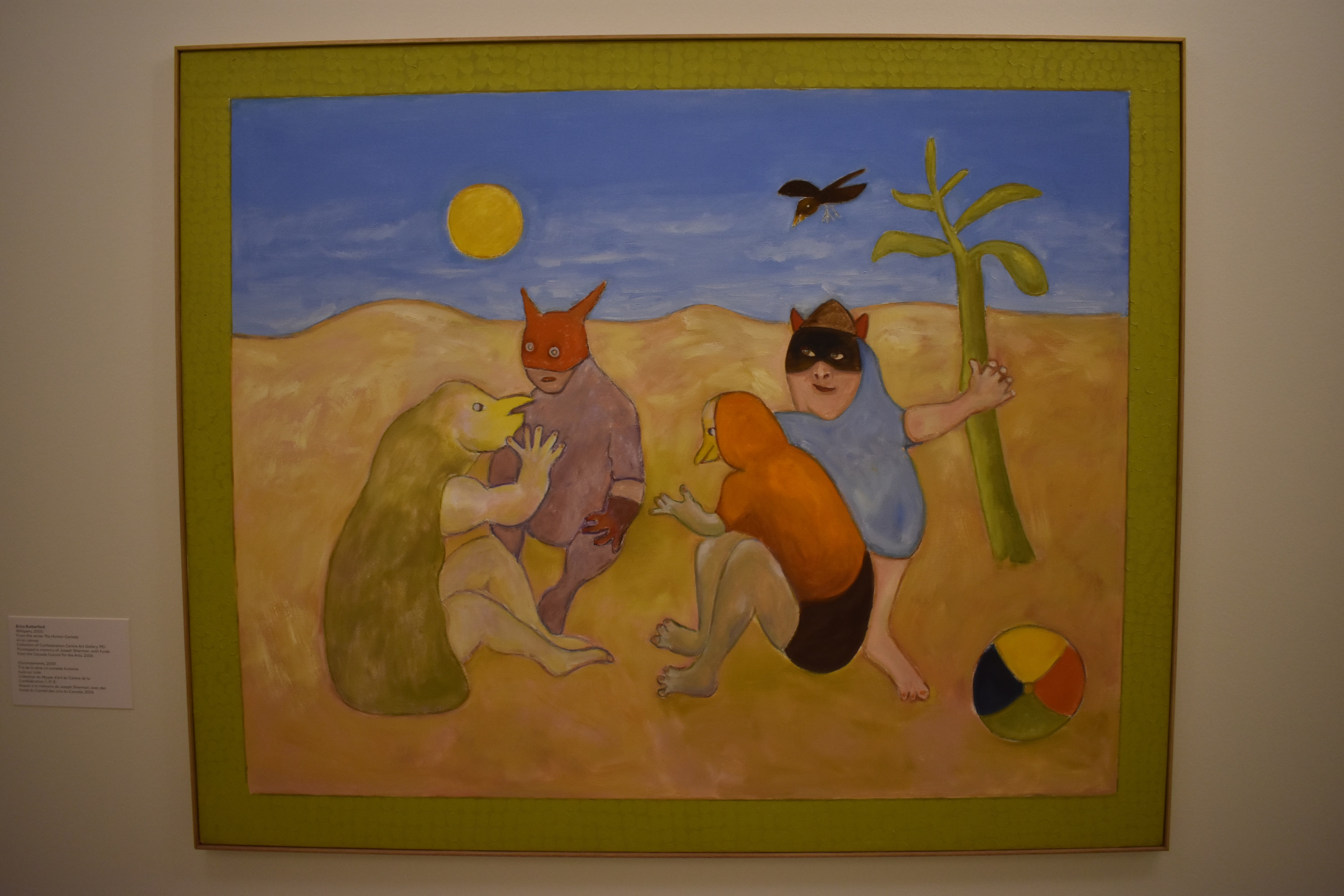
The final stylistic shift in Rutherford’s work took place in her 70s, after she wrote Nine Lives: The Autobiography of Erica Rutherford. That period, called The Human Comedy, is a kind of summation of her career.
”They’re really her magnum opus and we gave them a ton of space in the exhibition for that reason. They kind of comment on her whole life and on the difficulty of being human and the difficulty of the social world in many ways, and how we assign each other to categories,” said Wendt. “She kind of uses the animal-human divide to talk about gender as well, but also to talk about the environment, because she had become a sort of environmentalist by that point.”
Despite the recognition her work has received in recent years—Rutherford is the first P.E.I. artist to have a retrospective at the National Gallery of Canada and to be featured at the Venice Biennale—it is only thanks to her family that she can be appreciated at all, said Wendt.
”Erica could easily have been lost to us. She was not super well-known in her lifetime, and her work was not highly valued until recently. So, you know, there would always be the temptation to just kind of let go of this legacy, especially if you’re the family having to look after so much valuable stuff that you have to store somewhere and take care of,” Wendt said. “So it’s really important to mention the Rutherford family. And they’ve supported me in making this happen the whole way.”
Copies of Rutherford’s autobiography can be purchased at the exhibition, as well as a catalogue for the exhibition. Put together by Wendt and published by Goose Lane Editions, the catalogue won an Atlantic Book Award for Best Atlantic-published book earlier this month.