

The provincial government has announced it is freezing operating grants for post-secondary institutions as part of its 2026-2027 budget.
The budget, tabled last week in the legislature, is set to be voted on Friday. If it passes in its current form, Mount Allison will be one of four universities affected by the freeze.
Though relieved there were no outright cuts, comments from Finance Minister René Legacy that the government will be looking at further cuts over the next year mean faculty and student groups are already planning to continue the fight, said Laurie Ricker, Mount Allison professor and president of the university’s faculty association.
“ This is not a fight we’re in alone, and it’s not over because there was a freeze, quote unquote, this year. There’s the long-term health of the sector at stake, and ourselves, along with student associations and other parts of the labour sector, it’s only just beginning for us.”
Listen to the audio below:
Premier Susan Holt’s Liberals spent $546 million on the post-secondary education sector last year and estimate they will spend $554 million this year. That spending includes programs for things like recruitment, experiential learning, financial assistance and grants.
Last year, grants accounted for $302 million, while this year the budget allocates $307 million.
With inflation estimated at around 2.4 per cent, according to the Consumer Price Index, the freezing of funding amounts to a cut equal to that, said Geoff Martin, another professor at Mount Allison and executive director of the faculty association.
“ So you’re looking at, to maintain operations as they are, you’re looking at two-and-a-half or 3 per cent more. And yet, if you’re looking at a freeze, so that’s a de facto cut,” he said. “They’re really still talking about transformation, which is likely to be negative for the sector.”

Tantramar MLA Megan Mitton is also worried about what the budget has left on the table, some of which include ideas floated by the Holt government in the days leading up to the budget announcement.
“ I’m thinking about like property taxes for universities, for example. So, yeah. I think there’s still an axe hanging over a lot of things right now, and so we’re kind of waiting to better understand exactly what’s going to happen.“
Last Tuesday saw students from across the province show up outside the legislature to protest what were originally thought to be potentially much steeper cuts.
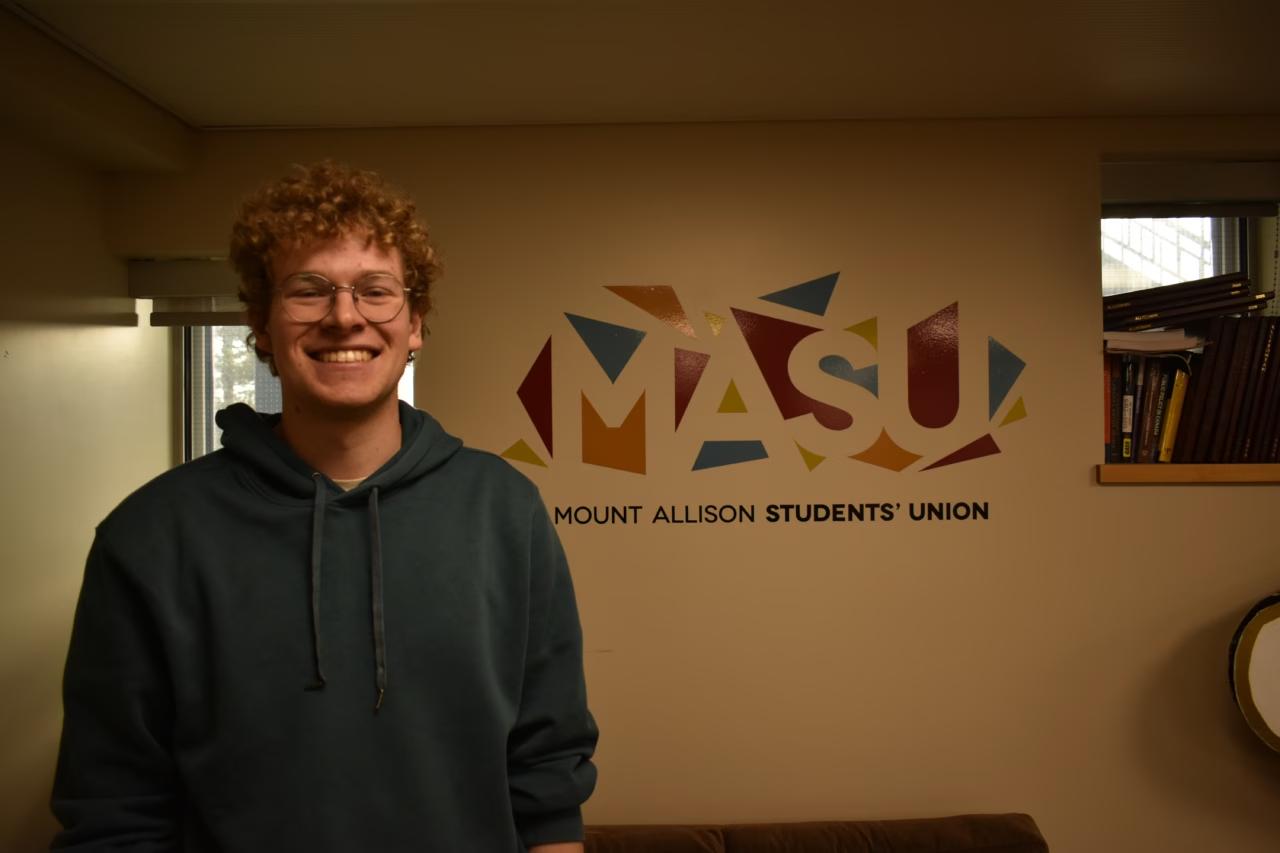
Wilson Paluch, president of the Mount Allison Students’ Union, helped organize that protest. He says he and his counterparts were relieved, but not satisfied, with what the government proposed. And he remains concerned the freeze could still lead to program cuts. However, he’s hopeful the students will continue to raise their voices together.
“ Freeze is a great word for it. Because this is gonna thaw out eventually, right? Our work as student unions will not stop here. It will not stop when my term ends on April 30. It is going to be a long-term fight for us to get through things,” said Paluch. “I suspect the government will propose another cut next year and I think students will act up again.”
One of the big uncertainties for faculty at Mount Allison is whether the freeze in grants applies to special projects at the institution. For her part, Ricker expects to have some answers by the end of this week from the university’s president Ian Sutherland.
“ You know, they’re talking about wanting to bring in a Bachelor of Education program that’s clearly an investment in the university as opposed to austerity cuts because now we’re gonna have like a slow down on our hiring or what have you,” she said. “So hopefully those questions will be clarified once they understand the impact on the budget from their perspective. So we’re in the dark until Friday.”